Lalan Singh Chairs Odisha Fisheries Review Meet in Bhubaneswar
Synopsis
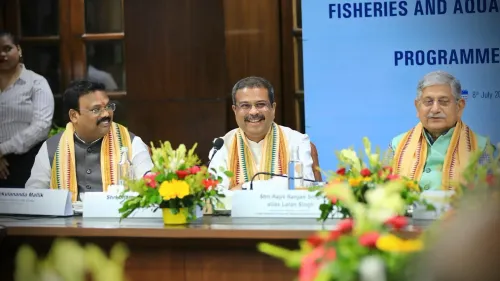
Union Fisheries Minister Lalan Singh visited Bhubaneswar on 8 July 2026 to chair a review of central fisheries and aquaculture schemes in Odisha. Education Minister Dharmendra Pradhan also attended. Discussions focused on scheme implementation, infrastructure strengthening, and boosting fishermen's incomes.
Key Takeaways
Lalan Singh chaired a fisheries scheme review meeting in Bhubaneswar on 8 July 2026 .
Union Education Minister Dharmendra Pradhan attended the meeting, reflecting inter-ministerial coordination.
Discussions covered effective implementation of schemes, infrastructure strengthening, and enhancing Odisha fishermen's livelihoods.
The Pradhan Mantri Matsya Sampada Yojana (PMMSY) , with an outlay of Rs 20,050 crore , is the primary central scheme under review.
Odisha has been a major PMMSY beneficiary, receiving funds for hatcheries, cold chains, and harbour modernisation.
The meeting signals continued federal focus on the Blue Economy and aquaculture sector growth in eastern India.
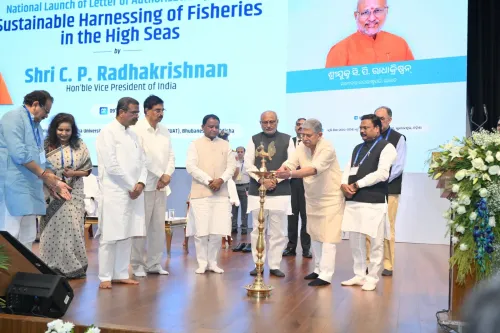
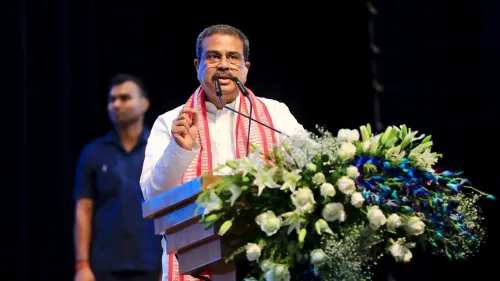
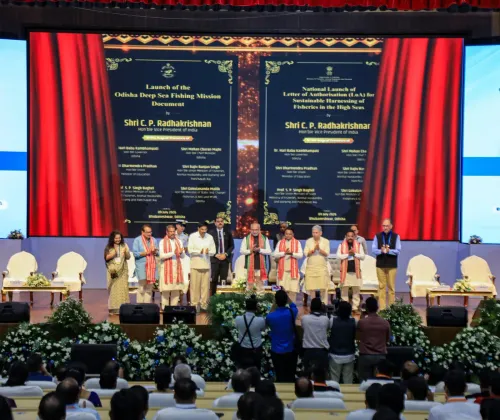
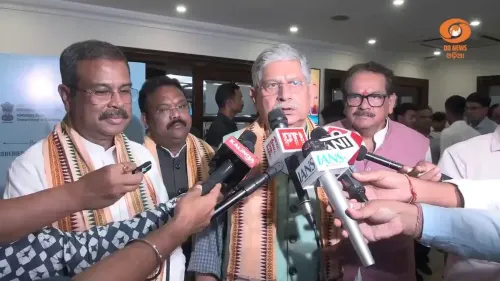
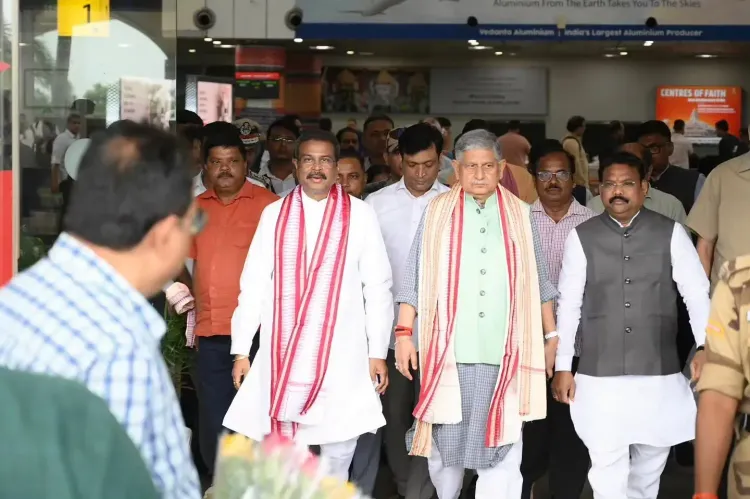
Union Minister for Fisheries, Animal Husbandry and Dairying Rajiv Ranjan Singh, popularly known as Lalan Singh, arrived in Bhubaneswar on Wednesday, 8 July 2026 and chaired a high-level review meeting to assess the progress of central fisheries and aquaculture schemes being implemented across Odisha. The meeting was also attended by Union Education Minister Dharmendra Pradhan, a senior BJP leader from Odisha, lending inter-ministerial weight to the deliberations.
Posting on X, Singh expressed gratitude for the warm reception on his arrival and confirmed that the meeting covered a wide range of subjects aimed at the 'matsya kshetra ke samagra vikas' (holistic development of the fisheries sector) in the state. Discussions centred on the effective implementation of ongoing schemes, strengthening of infrastructure, and enhancing the income and livelihoods of the fishing community.
Context
Odisha occupies a strategic position in India's fisheries map, with an extensive coastline along the Bay of Bengal and substantial inland water resources. The state is home to a large fishing community whose economic well-being is closely tied to central government outlays and state-level programme delivery. Singh's visit signals continued federal attention to Odisha's fisheries sector at a time when the 2026-27 implementation cycle for central schemes is under active monitoring.
The presence of Dharmendra Pradhan — who represents Odisha politically and holds the Education portfolio — underscores an effort to link skill development and vocational training with fisheries sector growth, a convergence that policymakers have been pushing to improve workforce quality along the value chain.
Policy Backdrop
The primary vehicle for central investment in fisheries is the Pradhan Mantri Matsya Sampada Yojana (PMMSY), approved in 2020 with a total outlay of Rs 20,050 crore — the largest-ever investment in the sector. The scheme targets modernisation of fish production, post-harvest infrastructure, cold-chain logistics, and harbour development across coastal and inland states.
Odisha has been a significant beneficiary under PMMSY, receiving central funding for hatcheries, cold storage facilities and harbour modernisation projects. The review meeting in Bhubaneswar is consistent with the Ministry's practice of conducting state-level assessments to track fund utilisation and on-ground impact. Before PMMSY, the Blue Revolution scheme (2015-2020) laid the groundwork by focusing on aquaculture productivity in states like Odisha.
Stakeholders and Impact
The most direct beneficiaries of the schemes under review are Odisha's fishermen and aquaculture farmers, who depend on central infrastructure support, subsidised credit, and market linkages to sustain their livelihoods. Improved cold-chain and harbour facilities directly reduce post-harvest losses, which can erode a significant share of fishers' earnings.
Inter-ministerial coordination — as demonstrated by Pradhan's participation — also points to efforts to channel skill-development programmes under the Education Ministry toward fishing communities, potentially improving employment quality and incomes along the processing and export value chain. Aquaculture entrepreneurs and fish-processing units in the state stand to benefit from any infrastructure upgrades that flow from the review's recommendations.
What's Next
The outcomes of the Bhubaneswar review are expected to inform the Ministry's assessment of PMMSY utilisation in Odisha for the current financial year. Observers will watch for any follow-up announcements on additional central allocations, project approvals, or directives on accelerating pending infrastructure works in the state.
With fisheries increasingly framed as a pillar of India's Blue Economy agenda, high-level ministerial visits of this nature typically precede targeted fund releases or scheme expansions. The next PMMSY utilisation report for Odisha and any state budget announcements on fisheries infrastructure in 2026-27 will be key indicators of how the deliberations translate into action on the ground.
Point of View
Signalling that the NDA is keen to project coordinated governance in a state it won decisively. For JD(U), a key NDA partner, such ministerial visibility in a BJP-governed state also serves to demonstrate the coalition's cohesion. The broader arc points to fisheries being elevated beyond a welfare portfolio into a Blue Economy growth lever, with inter-ministerial convergence as the new operational model.
NationPress
7 Oct 2026
Frequently Asked Questions
Why did Lalan Singh visit Bhubaneswar in July 2026?
Union Fisheries Minister Lalan Singh visited Bhubaneswar on 8 July 2026 to chair a review meeting on the implementation of central fisheries and aquaculture schemes in Odisha, focusing on infrastructure and fishermen's livelihoods.
What is the Pradhan Mantri Matsya Sampada Yojana (PMMSY)?
PMMSY is a central government scheme launched in 2020 with an outlay of Rs 20,050 crore to modernise India's fisheries sector, boost fish production, and develop post-harvest infrastructure including cold chains and harbours.
Why was Education Minister Dharmendra Pradhan at a fisheries meeting?
Dharmendra Pradhan's presence reflects an inter-ministerial effort to link skill development and vocational training programmes with fisheries sector growth, improving workforce quality along the value chain in Odisha.
How has Odisha benefited from central fisheries schemes?
Odisha has received central funding under PMMSY for hatcheries, cold storage facilities, and harbour modernisation, making it one of the significant beneficiary states under India's flagship fisheries investment programme.
Who is Lalan Singh and which ministry does he head?
Lalan Singh, formally known as Rajiv Ranjan Singh, is a senior JD(U) leader and Union Minister holding the portfolios of Panchayati Raj, Fisheries, Animal Husbandry and Dairying in the NDA government.