Pilot demands fuel price cuts as global crude falls
Synopsis
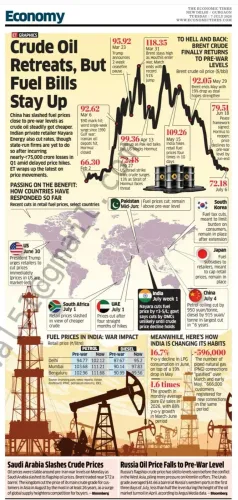
Congress general secretary Sachin Pilot on 8 July 2026 questioned why falling international crude prices have not translated into lower petrol and diesel rates for Indian consumers, alleging the government is prioritising tax revenue and oil company profits over public relief.
Key Takeaways
Sachin Pilot , Congress general secretary and Chhattisgarh in-charge, on 8 July 2026 publicly demanded fuel price relief as global crude costs have declined.
Pilot alleged the central government is 'earning through taxes' rather than passing on lower crude costs to consumers.
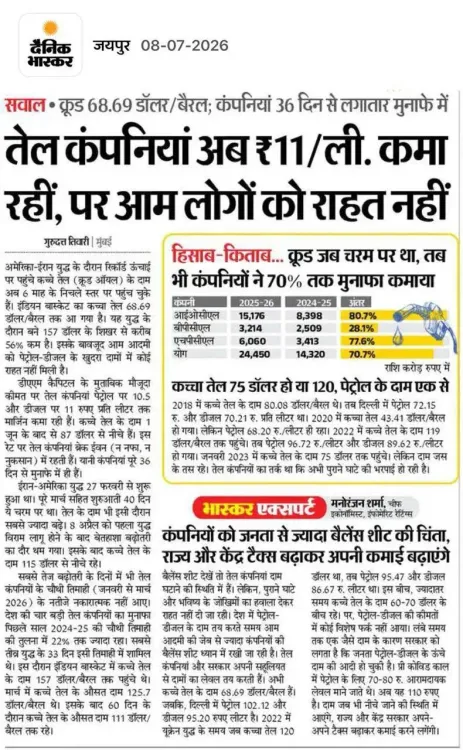
He also noted that oil marketing companies — IOC, BPCL, and HPCL — continue to post profits while common households bear a heavy fuel burden.
India's dynamic fuel pricing system, introduced in 2014 , has not prevented successive excise duty hikes from widening the gap between international and domestic prices.
Any relief is most likely to come through a central excise cut in the next Union Budget or a state-level VAT reduction ahead of assembly elections.
Fuel pricing is expected to remain a key opposition campaign issue, particularly in states like Chhattisgarh where Pilot holds party responsibility.
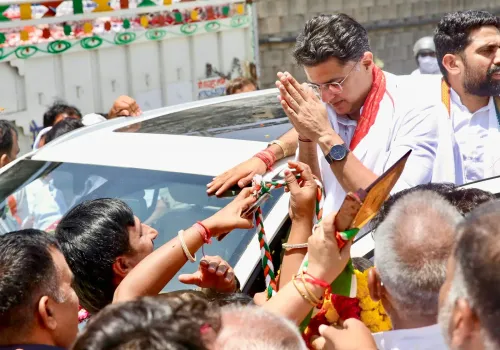
Congress leader Sachin Pilot, general secretary of the Indian National Congress and party in-charge for Chhattisgarh, on Wednesday, 8 July 2026, publicly challenged the central government over its failure to pass on the benefits of falling international crude oil prices to ordinary consumers, asking why petrol and diesel rates continue to burden household budgets even as global crude costs have declined.
Context
Posting in Hindi on X, Pilot asked: 'अंतर्राष्ट्रीय बाजार में कच्चे तेल की कीमतें घट चुकी हैं तो फिर जनता को राहत कब मिलेगी?' ('International crude oil prices have already fallen — so when will the public get relief?'). He argued that petrol and diesel prices have 'touched the sky' and are 'putting a heavy burden on the common man's pocket.' He further alleged that instead of passing relief to the public, the government is 'busy earning through taxes' while oil companies 'continue to make profits.'
The post frames the issue as a direct policy choice by the ruling dispensation — prioritising revenue and corporate profitability over consumer welfare at a time when global crude markets have softened.
Policy Backdrop
India moved to a dynamic daily pricing system for diesel in 2014, theoretically linking pump prices to international benchmarks. However, between 2014 and 2021, the central government progressively raised excise duties on both petrol and diesel, creating a wide gap between international price movements and domestic retail rates.
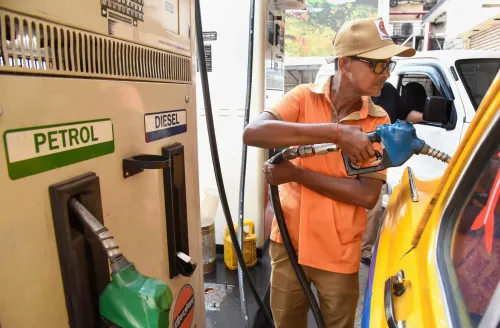
Public-sector oil marketing companies (OMCs) — including Indian Oil Corporation (IOC), Bharat Petroleum Corporation Limited (BPCL), and Hindustan Petroleum Corporation Limited (HPCL) — determine retail prices after accounting for central excise duties and state-level Value Added Tax (VAT). This layered tax structure means that even when crude prices fall sharply in global markets, the full benefit does not automatically reach consumers at the pump.
Opposition parties, including the Congress, have consistently argued that the government uses fuel taxation as a revenue buffer, adjusting duties upward when crude prices fall rather than allowing pump prices to drop proportionately.
Stakeholders and Impact
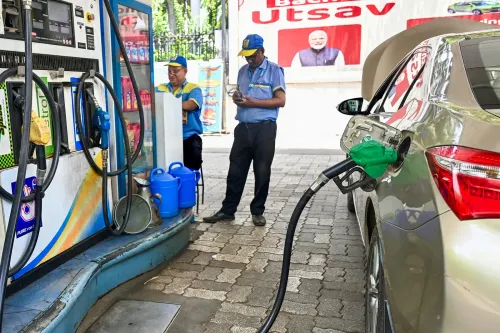
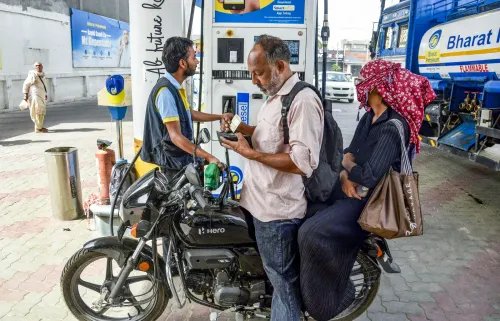
The burden of elevated fuel prices is most acutely felt by vehicle owners, daily-wage workers, small transporters, and common households that depend on two-wheelers and public transport. High diesel prices also feed into broader inflation by raising the cost of freight, which in turn pushes up prices of essential goods.
For the central government, motor fuel taxes represent a significant and relatively stable revenue stream. OMCs, which had reported losses during periods of price suppression in earlier years, have returned to profitability — a dynamic Pilot's post explicitly highlights as a point of contrast with consumer hardship.
What's Next
Political pressure on fuel pricing typically intensifies ahead of state assembly elections, and any revision in central excise duties is most likely to be signalled during the next Union Budget or through a mid-year executive notification. State governments retain the option of cutting VAT on fuel independently, and several have done so in the past ahead of electoral cycles.
With Pilot serving as the Congress's in-charge for Chhattisgarh — a state where fuel costs directly affect rural and semi-urban households — his intervention signals that fuel pricing will remain a live opposition campaign issue in the months ahead. Whether the central government responds with a duty cut or holds its revenue position will be closely watched by consumers and markets alike.
Point of View
The fiscal arithmetic points squarely at duty retention. By pairing consumer hardship with OMC profitability in the same breath, Pilot is building a two-pronged political narrative — government greed and corporate gain at the public's expense — that is designed to resonate in both urban and rural constituencies. The timing, with Chhattisgarh in his charge, suggests this is as much electoral groundwork as it is economic commentary.
NationPress
8 Jul 2026
Frequently Asked Questions
Why have petrol and diesel prices not fallen in India despite lower global crude oil prices?
India levies high central excise duties and state VAT on motor fuels, which means that even when international crude prices fall, the reduction is often absorbed by the government as revenue rather than passed on to consumers at the pump.
What did Sachin Pilot say about fuel prices on 8 July 2026?
Sachin Pilot posted on X demanding to know when the public would get relief from high petrol and diesel prices, alleging the government is profiting from fuel taxes while oil companies continue to earn profits even as global crude costs have fallen.
How does India's fuel pricing system work?
Since 2014, India uses a dynamic daily pricing mechanism for diesel linked to international crude benchmarks. However, central excise duties and state VAT are added on top, and the government can adjust these duties independently of global price movements.
Which oil companies does Sachin Pilot's criticism target?
Pilot's post refers broadly to oil companies continuing to make profits. The major public-sector oil marketing companies in India are Indian Oil Corporation (IOC), Bharat Petroleum (BPCL), and Hindustan Petroleum (HPCL).
When could India see a reduction in petrol and diesel prices?
A cut in central excise duties is most likely to be announced during the next Union Budget or through a mid-year government notification. State governments can also independently reduce VAT on fuel, which some have done ahead of assembly elections.