Excise duty cut holds India's petrol price hike to 4.4%, lowest globally
Synopsis
While Pakistan, Malaysia, and the UAE saw fuel prices surge 50 per cent or more, India held its petrol and diesel hike to just 4.4 per cent — absorbing nearly ₹94,500 crore across government revenue foregone and oil company losses. The restraint is real, but so is the fiscal cost, and with crude still above $100 a barrel, the question is how long this buffer can hold.
Key Takeaways
India's petrol and diesel prices rose by just 4.4 per cent — the lowest increase among major economies — after crude surged past $100 a barrel .
The Centre sacrificed ₹30,000 crore in revenue by cutting excise duty on the two fuels.
Public sector oil companies absorbed ₹24,500 crore in under-recoveries on petrol and diesel, plus ₹40,000 crore to hold LPG prices steady.
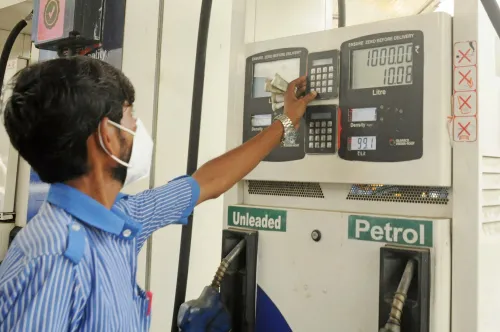
The actual pump price increase was ₹3.91 per litre , applied in two tranches after 76 days of full cost absorption.
By comparison, petrol prices rose roughly 55% in Pakistan, 56% in Malaysia, 45% in the US, and up to 65% for diesel in Singapore.
Pump prices vary by state due to VAT ; Telangana, Kerala, Karnataka , and Tamil Nadu have the highest rates.
India's petrol and diesel prices rose by just 4.4 per cent — the smallest increase among major economies — as the Centre slashed excise duties and directed public sector oil companies to absorb massive under-recoveries, even as global crude costs surged past $100 a barrel. The controlled hike stands in stark contrast to fuel price increases of 10 to 90 per cent seen across much of the rest of the world.
How the Government Contained the Hike
The Centre reduced excise duty on petrol and diesel, forgoing an estimated ₹30,000 crore in revenue. Simultaneously, public sector oil marketing companies were directed to absorb under-recoveries of ₹24,500 crore on petrol and diesel before any price revision was passed on to consumers.
On domestic liquefied petroleum gas (LPG), oil companies absorbed an additional ₹40,000 crore in losses to keep cylinder prices unchanged for household consumers, according to a senior government official.
The Actual Price Increase
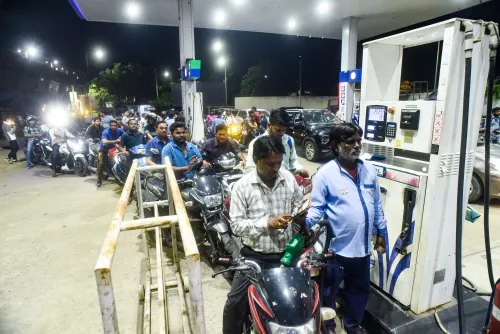
India's oil marketing companies raised petrol and diesel prices by ₹3.91 per litre, implemented in two tranches — a hike of ₹3 per litre followed by 91 paise per litre. An Indian Oil official noted that this partial revision came only after 76 days of complete cost absorption by public sector companies, meaning consumers were shielded from rising crude costs for over two months before any adjustment was made.
The Central excise component of fuel pricing is uniform across all states. Pump prices vary due to the value-added tax (VAT) levied by individual state governments. States with the highest pump prices include Telangana, Kerala, Karnataka, and Tamil Nadu, while Gujarat, Uttar Pradesh, Delhi, Haryana, Goa, and Assam record the lowest prices.
Global Comparison: How India Fares
The scale of India's price containment becomes clear when set against international benchmarks. In Pakistan, petrol prices rose approximately 55 per cent over three months; in Malaysia, around 56 per cent; and in the United Arab Emirates, roughly 52 per cent. Myanmar also saw petrol prices climb by more than half their pre-conflict levels, with diesel rising even more sharply given its direct link to global freight costs.
In advanced economies, the increases were smaller in percentage terms but still substantial. American petrol prices — which respond quickly to crude movements because federal and state excise loadings are modest — rose by close to 45 per cent, with diesel up 48 per cent. In Europe, where higher excise duties cushion the swing, the United Kingdom recorded increases of about 19 per cent on petrol and 34 per cent on diesel; Germany saw rises of about 14 per cent and 20 per cent respectively; and France posted increases of around 21 per cent on petrol and 30 per cent on diesel.
In Asia, Japan, South Korea, and Singapore kept petrol price hikes below 20 per cent, though diesel rose considerably faster — Singapore registered a 65 per cent jump in diesel prices.
What This Means for Consumers and the Exchequer
The combined fiscal cost of this policy — government revenue foregone plus oil company under-recoveries — amounts to roughly ₹94,500 crore across petrol, diesel, and LPG. This is a significant short-term burden on both the exchequer and state-owned energy firms, raising questions about the sustainability of the subsidy approach if crude prices remain elevated. With global oil markets still volatile, the government's next move on fuel pricing will be closely watched by both consumers and financial markets.
Point of View
But it rests on a ₹94,500 crore combined fiscal and corporate subsidy — a number that does not appear in the headline. State-owned oil companies absorbing tens of thousands of crores in under-recoveries is not a costless intervention; it pressures their balance sheets and, ultimately, their capacity to invest in energy infrastructure. The global comparison is instructive but also selective — most of the countries cited have far weaker social safety nets, making direct price pass-through politically easier. India's challenge is to eventually normalise prices without a demand shock, something past fuel subsidy unwinds have struggled to manage cleanly.
NationPress
22 Sept 2026
Frequently Asked Questions
Why did India's petrol and diesel prices rise by only 4.4 per cent?
The Centre reduced excise duty on petrol and diesel, forgoing ₹30,000 crore in revenue, and directed public sector oil companies to absorb ₹24,500 crore in under-recoveries before passing any cost to consumers. This combined intervention kept India's fuel price hike at 4.4 per cent, the lowest among major economies, even as crude oil crossed $100 a barrel.
By how much did petrol and diesel prices actually increase in India?
Oil marketing companies raised petrol and diesel prices by ₹3.91 per litre, implemented in two instalments — ₹3 per litre followed by 91 paise per litre. The hike came after 76 days during which public sector companies fully absorbed rising crude costs without any consumer-level revision.
What happened to LPG prices for domestic consumers?
Domestic LPG prices were kept unchanged. Oil companies absorbed approximately ₹40,000 crore in losses on LPG to hold cylinder prices steady for household consumers, according to official sources.
How does India's fuel price hike compare with other countries?
India's 4.4 per cent hike is the lowest among major economies. Pakistan saw petrol prices rise roughly 55 per cent, Malaysia about 56 per cent, the UAE about 52 per cent, and the United States close to 45 per cent. Even in Europe, where high excise duties cushion swings, the UK recorded a 19 per cent rise in petrol and 34 per cent in diesel.
Why do petrol prices differ across Indian states?
The Central excise component of petrol and diesel pricing is uniform across all states. Pump prices diverge because each state government levies its own value-added tax (VAT) on top. States like Telangana, Kerala, Karnataka, and Tamil Nadu have the highest pump prices, while Gujarat, Uttar Pradesh, Delhi, Haryana, Goa, and Assam have the lowest.