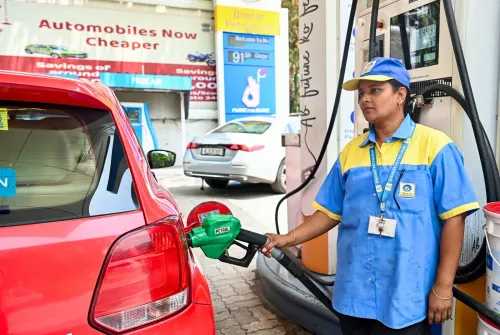
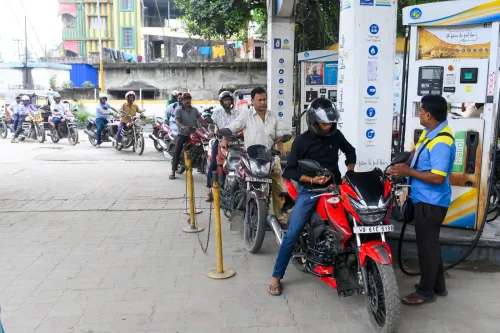
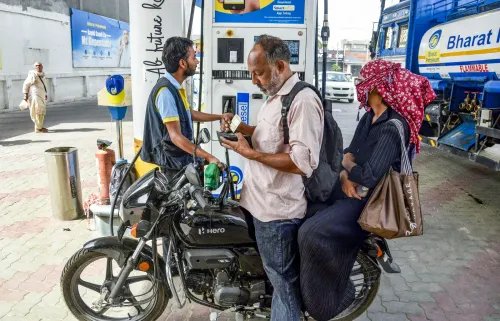
Indian oil firms lose ₹600 crore a day despite fourth fuel price hike
Synopsis
Four fuel price hikes in ten days and a ₹14,000 crore excise cut haven't been enough — India's state oil firms are still losing ₹600 crore a day as crude import costs hit $107.84 a barrel. With LPG losses piling on top, the gap between global prices and Indian retail rates remains dangerously wide.
Key Takeaways
Indian Oil , Hindustan Petroleum , and Bharat Petroleum are losing nearly ₹600 crore per day despite four successive price hikes.
The 25 May hike raised petrol by ₹2.61/litre and diesel by ₹2.71/litre , bringing the cumulative increase to ₹7.50/litre .
India's retail fuel hike ( 7.7% petrol, 8.6% diesel) is far below the global surge of 22–27% .
Crude import costs rose from $69.01/barrel in February to $107.84/barrel in May, per government data.
The Centre cut excise duty by ₹10/litre on both fuels, foregoing ₹14,000 crore in revenue.
Losses on domestic LPG sales are adding further pressure on under-recoveries, according to ICRA .
Government-owned oil marketing companies — Indian Oil Corporation, Hindustan Petroleum, and Bharat Petroleum — are still bleeding roughly ₹600 crore a day even after the fourth consecutive hike in petrol and diesel prices announced on 25 May, a senior government official confirmed. The losses persist as soaring global crude prices continue to outpace domestic retail adjustments.
Scale of the Losses
Before the latest round of price revisions, the three public sector oil companies were collectively accumulating losses of ₹1,000 crore per day. The 25 May hike — which raised petrol by ₹2.61 per litre and diesel by ₹2.71 per litre — has trimmed that figure, but under-recoveries remain 'slightly less than ₹600 crore per day', according to Sujata Sharma, Joint Secretary in the Ministry of Petroleum. The cumulative increase across the four hikes now stands at nearly ₹7.50 per litre for both fuels, following the resumption of daily price revisions after a prolonged freeze.
India's Hike vs Global Price Surge
'If you look at the global level, the price increase is in the range of 22 per cent for motor spirit (petrol) and 27 per cent for high-speed diesel,' Sharma noted. In contrast, India's retail increases amount to only 7.7 per cent for petrol and 8.6 per cent for diesel — a fraction of the international movement. Prior to raising retail prices, the government had already cut excise duty on both fuels by ₹10 per litre, resulting in a revenue foregone of ₹14,000 crore, she added.
Crude Prices: The Root Cause
Data from the Ministry of Petroleum's Planning and Analysis Cell shows that the average price at which Indian refiners imported crude oil surged to $107.84 per barrel in May, up sharply from $69.01 per barrel in February — before the outbreak of the conflict that has since roiled energy markets. Benchmark Brent crude has been especially volatile: it fell to around $90 a barrel on 17 April after a temporary ceasefire was announced, only to spike to $126.41 a barrel on 30 April amid fears of renewed hostilities. The monthly average for April settled at around $117 a barrel.
LPG Losses Add to the Pressure
Beyond auto fuels, domestic LPG sales are compounding the pain. Prashant Vasisht, Senior Vice President and co-group head of corporate ratings at ICRA, said under-recoveries remain 'stubbornly high' due to mounting losses on subsidised cooking gas, even as retail petrol and diesel prices have been partially corrected. Retail auto fuel prices had remained largely unchanged since early April 2022, steadily eroding the profit margins of state-owned oil firms over that period.
Government's Position Going Forward
Sharma emphasised that meeting domestic market requirements remains the government's foremost priority, and that oil companies will continue sourcing crude that is 'technically and commercially fitting' for their refineries. The government has not indicated any immediate further hike, though analysts warn that sustained crude prices above $100 a barrel will keep under-recoveries elevated for the foreseeable future.
Point of View
Creating precisely this kind of accumulated under-recovery when global prices move sharply. The LPG angle is the part mainstream coverage underplays: cooking gas losses are politically untouchable, yet they are quietly worsening the balance sheets of the same companies expected to fund India's energy transition. Until crude stabilises well below $100, the arithmetic simply does not work at current retail prices.
NationPress
27 Sept 2026
Frequently Asked Questions
Why are Indian oil companies still losing money despite the fuel price hike?
Despite four hikes totalling nearly ₹7.50 per litre, India's retail petrol and diesel prices still fall far short of the global price surge of 22–27%. Crude import costs have risen to $107.84 per barrel in May from $69.01 in February, keeping daily losses at roughly ₹600 crore for Indian Oil, HPCL, and BPCL combined.
How much have petrol and diesel prices risen in India recently?
Petrol and diesel prices have been raised four times in ten days, with the latest hike on 25 May adding ₹2.61 per litre for petrol and ₹2.71 per litre for diesel. The cumulative increase now stands at nearly ₹7.50 per litre for both fuels.
What has the government done to ease the burden on oil companies?
The Centre reduced excise duty on petrol and diesel by ₹10 per litre, resulting in a revenue impact of ₹14,000 crore. Even after this measure and the retail price hikes, under-recoveries remain near ₹600 crore per day.
How have global crude prices affected Indian refiners?
The average crude import price for Indian refiners rose from $69.01 per barrel in February to $107.84 per barrel in May, according to the Ministry of Petroleum's Planning and Analysis Cell. Brent crude hit a high of $126.41 a barrel on 30 April amid conflict-related supply fears.
What role does LPG play in the oil companies' losses?
Losses on subsidised domestic LPG sales are compounding the under-recoveries from auto fuels. ICRA's Prashant Vasisht noted that LPG-related losses are keeping overall under-recoveries 'stubbornly high' even as petrol and diesel prices have been partially corrected.