No petrol, diesel or LPG shortage in India, govt confirms; errant pumps being penalised
Synopsis
India's government has pushed back firmly against shortage fears — confirming full fuel supply, penalising errant pumps, and pointing out that the ₹3.91 per litre hike is the world's smallest among major economies. The real story: a customer stampede from private to public pumps, driven by a ₹20 price gap, is creating the illusion of scarcity.
Key Takeaways
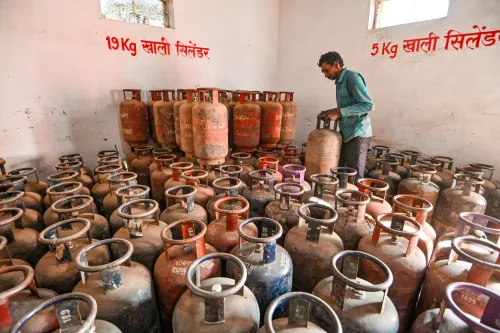
Senior government officials on 21 May confirmed no shortage of petrol, diesel, or LPG at retail outlets across India.
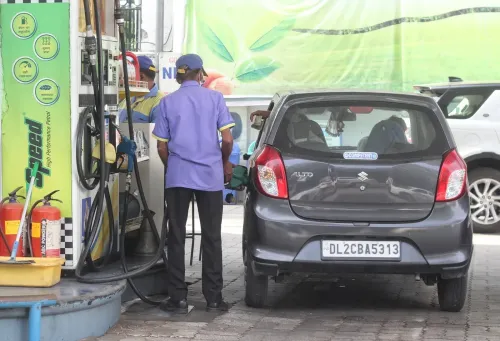
Petrol pumps withholding or rationing fuel are being penalised ; the government is tracking pump-level feedback nationwide.
No reduction in crude oil imports from Russia has occurred, keeping refinery feedstock adequate.
India's ₹3.91 per litre price hike (4.4%) is the smallest among major economies outside Gulf subsidy states, per GlobalPetrolPrices.com.
Public sector OMCs absorbed costs for 76 consecutive days before the hike; the increase only partially recovers the rise in crude costs.
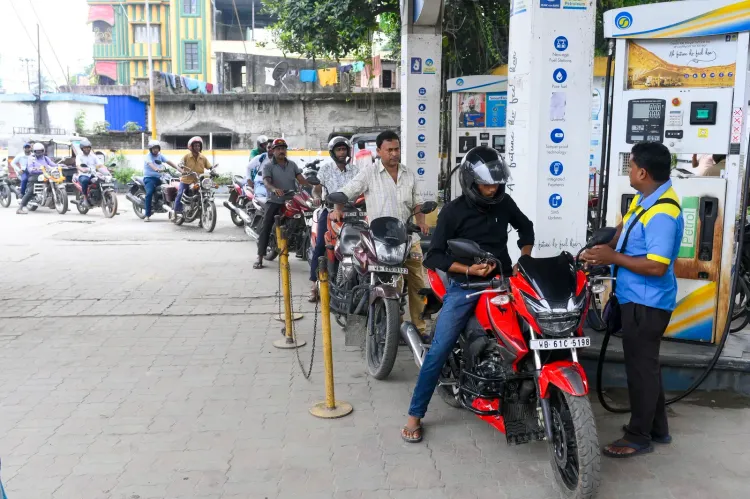
Customer migration from private to public pumps — driven by a ~ ₹20 per litre price gap — and the harvesting season have driven localised demand surges.
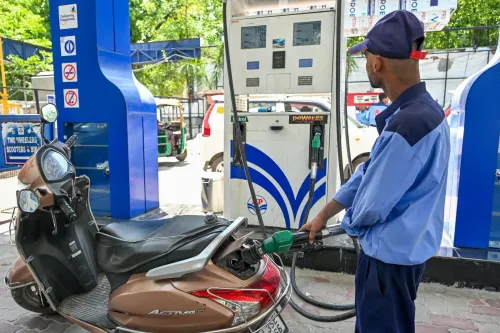
Senior government officials on Thursday, 21 May confirmed there is no shortage of petrol, diesel, or LPG at retail outlets across India, and that petrol pumps found withholding fuel or dispensing reduced quantities are being penalised. The government said it is actively monitoring feedback from pumps nationwide to ensure full supply continuity.
Supply Position and Monitoring
Officials stated that full supply of all fuels is being maintained to every retail outlet across the country. Crucially, there has been no reduction in crude oil imports from Russia, ensuring adequate feedstock for the refineries of public sector oil marketing companies (OMCs). The government is collecting real-time feedback on pump-level compliance and acting against violators.
Why Demand Has Surged at Some Pumps
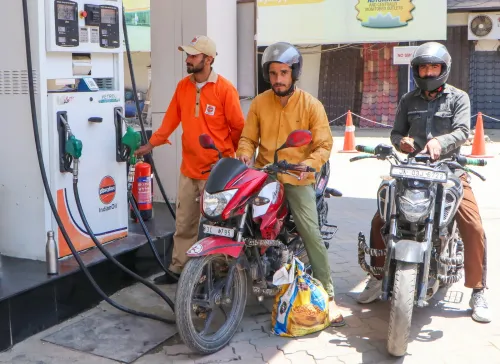
Officials attributed localised congestion at certain outlets to two converging factors. First, the ongoing harvesting season has driven up diesel demand. Second, a notable shift in customers has occurred — buyers are moving from private oil marketing companies, which have started charging higher prices, to public sector filling stations that offer comparatively lower rates. Additionally, institutional and commercial buyers — who were earlier served through separate channels priced approximately ₹20 per litre higher in line with actual international prices — have also migrated to retail pumps, adding to queue pressure.
India's Price Hike Among the Smallest Globally
The ₹3.91 per litre increase in petrol and diesel prices announced this week represents a rise of 4.4 per cent — the smallest hike among major economies outside directly subsidising Gulf producers such as Saudi Arabia, according to figures compiled by GlobalPetrolPrices.com. An IndianOil official noted that this increase only partially recovers the rise in crude costs and came after 76 days of complete cost absorption by public sector OMCs.
How India Compares With the Rest of the World
The global contrast is stark. In liberalised emerging markets directly exposed to West Asian supply disruptions, price pass-throughs have been severe: Pakistan has seen petrol prices rise approximately 55 per cent over three months, Malaysia about 56 per cent, and the UAE around 52 per cent. In advanced economies, the increases are smaller in percentage terms but still substantial — US petrol prices have risen close to 45 per cent and diesel by 48 per cent. In Europe, where high excise duties dampen the swing, the United Kingdom is up roughly 19 per cent on petrol and 34 per cent on diesel; Germany about 14 per cent and 20 per cent respectively; France about 21 per cent and 30 per cent. Japan, South Korea, and Singapore have kept petrol hikes below 20 per cent, though Singapore recorded a 65 per cent jump in diesel prices.
What Happens Next
With crude volatility persisting, officials indicated that supply monitoring will continue on a daily basis. The government's posture — absorbing cost pressure for extended periods before passing on modest increases — is likely to remain under scrutiny as global energy markets stay unsettled.
Point of View
It has concentrated demand at state-run outlets, manufacturing the very queues it is now trying to explain away. The 76-day cost-absorption window, while politically convenient, deferred rather than resolved the price signal — and the ₹3.91 hike still leaves OMC balance sheets under pressure. The global comparison is accurate but selective; India's low pass-through is partly a fiscal choice, not purely a policy virtue, and the subsidy bill will eventually surface somewhere in the budget arithmetic.
NationPress
14 Sept 2026
Frequently Asked Questions
Is there a petrol or diesel shortage in India right now?
No. Senior government officials confirmed on 21 May that there is no shortage of petrol, diesel, or LPG at retail outlets across India. Full supply is being maintained to all filling stations, and pumps found rationing fuel are being penalised.
Why are some petrol pumps running out of fuel or rationing supply?
Officials attribute localised pressure to two factors: a seasonal spike in diesel demand due to the harvesting season, and a mass shift of customers from private oil marketing companies — which have raised prices — to cheaper public sector pumps. Institutional buyers priced out of commercial channels have also moved to retail outlets.
How does India's fuel price hike compare with other countries?
India's ₹3.91 per litre increase works out to 4.4 per cent — the smallest hike among major economies outside Gulf subsidy states, according to GlobalPetrolPrices.com. By contrast, Pakistan is up about 55 per cent, the US up 45 per cent on petrol, and Singapore up 65 per cent on diesel over a comparable period.
Why did India wait 76 days before raising fuel prices?
Public sector oil marketing companies absorbed the full rise in crude costs for 76 consecutive days before the hike was announced. The ₹3.91 increase only partially recovers those costs; the rest remains unrecovered on OMC books.
Has India cut crude oil imports from Russia?
No. Officials stated there has been no reduction in crude imports from Russia, ensuring adequate feedstock for Indian refineries and supporting the government's position that domestic supply is not under threat.