India's 4.4% fuel hike smallest among major economies: GlobalPetrolPrices data
Synopsis
While Pakistan, Malaysia, and the US saw fuel prices jump 45–56% in three months, India held the line for 76 days and then raised prices by just 4.4% — the smallest hike of any major economy. The restraint cost public sector oil firms ₹1,000 crore a day in losses, now partially trimmed to ₹750 crore. The gap between political caution and economic reality is still wide.
Key Takeaways
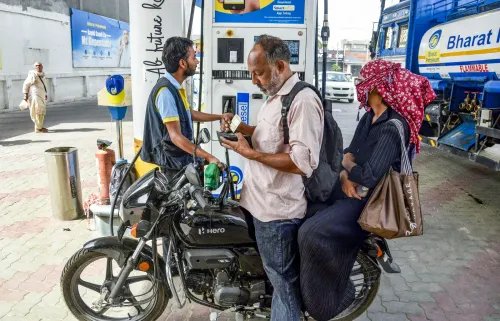
India raised petrol and diesel prices by ₹3.91 per litre (4.4%) on 15 May 2026 — the smallest hike among major economies, per GlobalPetrolPrices.com .
State-owned oil firms absorbed crude cost increases for 76 days before the revision, accumulating losses of around ₹1,000 crore per day .
The hike cuts daily under-recoveries by only 25% , from ₹1,000 crore to ₹750 crore .
Pakistan (+55%), Malaysia (+56%), and the UAE (+52%) saw far steeper petrol price increases over the same period.
US petrol rose nearly 45% ; Singapore diesel surged 65% ; European markets saw hikes of 14–34% depending on excise structures.
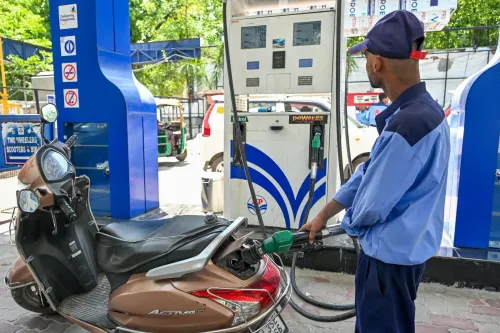
India's ₹3.91 per litre increase in petrol and diesel prices, announced on 15 May 2026, translates to a 4.4% hike — the smallest adjustment by any major economy outside Gulf producers that directly subsidise fuel, according to data compiled by GlobalPetrolPrices.com. The revision came after 76 consecutive days during which state-owned oil marketing companies absorbed rising crude costs without passing them on to consumers.
India's Approach vs the Rest of the World
An Indian Oil official noted that the ₹3.91 increase only partially offsets the surge in imported crude prices. While India held retail prices steady from 23 February 2026 to 15 May 2026, the rest of the world was adjusting fuel prices in real time — with retail hikes ranging from 10% to 90% depending on market structure and government policy.
The official stated: 'India is the visible exception as until 15th May 2026 the public sector oil marketing companies held petrol and diesel prices essentially unchanged from their 23rd February 2026 levels, absorbing the cost of crude at refinery gate and accumulating daily under-recoveries of around ₹1,000 crore.'
How Other Major Economies Compare
Fuel price pass-through has been steepest in liberalised emerging markets directly exposed to West Asian supply disruptions. Pakistan saw petrol prices rise roughly 55% over three months, Malaysia about 56%, and the United Arab Emirates approximately 52%. Diesel rose even more sharply in these markets due to its direct link to global freight costs.
Advanced economies saw smaller percentage swings but still substantial increases. US petrol prices climbed nearly 45% and diesel by 48%, reflecting the country's modest federal and state excise loadings. In Europe, heavier excise duties cushioned the blow — the United Kingdom saw petrol rise about 19% and diesel 34%; Germany recorded roughly 14% on petrol and 20% on diesel; France about 21% and 30% respectively. Japan, South Korea, and Singapore kept petrol hikes below 20%, though Singapore's diesel price surged by 65%.
Impact on Oil Company Losses
The ₹3.91 per litre revision has trimmed the daily losses of government-owned oil marketing companies from approximately ₹1,000 crore to ₹750 crore — a reduction of around 25%, according to the Indian Oil official. That still leaves a substantial daily under-recovery, underscoring that the price correction is partial rather than full cost-reflective.
What This Means Going Forward
With global crude remaining elevated and daily losses still running at ₹750 crore, the sustainability of the current retail price level remains under scrutiny. Industry observers note that further adjustments cannot be ruled out if crude costs do not ease, placing continued fiscal pressure on public sector oil companies and, by extension, the broader government balance sheet.
Point of View
000 crore a day borne by public sector balance sheets, not the exchequer directly, but ultimately the same taxpayer. The 4.4% hike is the minimum viable correction, not a market-clearing price, which means further adjustments are likely unless crude retreats sharply. The comparison with Pakistan and Malaysia is instructive but incomplete: both those countries lack India's scale of state-owned refining capacity to absorb shocks. The real question is whether India's partial pass-through strategy is sustainable policy or a deferral of pain — and at ₹750 crore in daily losses still running, the answer leans toward the latter.
NationPress
20 Sept 2026
Frequently Asked Questions
By how much did India raise petrol and diesel prices in May 2026?
India increased petrol and diesel prices by ₹3.91 per litre on 15 May 2026, equivalent to a 4.4% hike. According to GlobalPetrolPrices.com data, this is the smallest fuel price increase among major economies outside Gulf producers that directly subsidise fuel.
Why did India wait 76 days before raising fuel prices?
State-owned oil marketing companies held retail prices unchanged from 23 February 2026 to 15 May 2026, absorbing rising crude costs rather than passing them on to consumers. During this period, the companies were reportedly accumulating daily under-recoveries of around ₹1,000 crore.
How much are Indian oil companies still losing after the price hike?
Even after the ₹3.91 per litre revision, daily losses for public sector oil marketing companies have only fallen from ₹1,000 crore to ₹750 crore — a reduction of about 25%. The hike restores only part of the rise in crude costs.
How do fuel price hikes in other countries compare to India's?
The contrast is stark. Pakistan saw petrol prices rise about 55% over three months, Malaysia about 56%, and the UAE around 52%. US petrol climbed nearly 45%, while European nations saw hikes of 14–34%. Singapore's diesel price surged 65%. India's 4.4% increase is the lowest among comparable major economies.
Will India raise fuel prices again?
No further hike has been announced, but with daily under-recoveries still running at ₹750 crore, industry observers note that additional adjustments cannot be ruled out if global crude prices remain elevated. The current revision is widely described as a partial correction rather than full cost-reflective pricing.