Petrol, diesel prices hiked third time in 10 days amid global crude pressure
Synopsis
India's state-run oil companies have now raised petrol and diesel prices three times in just 10 days, with the cumulative burden falling hardest on commuters, transport operators, and businesses. The latest ₹0.87–₹0.91 per litre hike — against a backdrop of West Asia tensions and volatile crude — signals that price stability at the pump remains elusive, even as the government insists supplies are secure.
Key Takeaways
Petrol and diesel prices were hiked for the third time in 10 days on 23 May by state-owned oil marketing companies.
Petrol rose by ₹0.87 per litre ; diesel by ₹0.91 per litre in the latest revision.
In New Delhi , petrol now costs ₹99.51 per litre and diesel ₹92.49 per litre .
Mumbai petrol stands at ₹108.49 ; Kolkata petrol at ₹110.64 per litre .
An earlier hike on 16 May had raised rates by around ₹3 per litre in several cities.
The Ministry of Petroleum and Natural Gas has assured adequate fuel supplies and urged against panic buying.
Petrol and diesel prices were raised across India for the third time in 10 days on Saturday, 23 May, as state-owned oil marketing companies continued to pass on the impact of rising global crude oil costs and geopolitical tensions in West Asia. Petrol became costlier by ₹0.87 per litre, while diesel prices climbed by ₹0.91 per litre in the latest revision.
City-Wise Price Impact
In New Delhi, petrol prices moved from ₹98.64 to ₹99.51 per litre, while diesel rose from ₹91.58 to ₹92.49 per litre. The revision was uniform across cities, reflecting a nationwide adjustment rather than a localised correction.
In Mumbai, petrol now stands at ₹108.49 per litre and diesel at ₹95.02 per litre. Kolkata saw petrol reach ₹110.64 per litre and diesel climb to ₹97.02 per litre following the hike.
Pattern of Repeated Hikes
This is the third upward revision in just 10 days. Earlier, on 16 May, petrol and diesel rates had risen by approximately ₹3 per litre in several cities — a sharper single-day adjustment that set the tone for subsequent incremental increases. The cumulative effect on household budgets and logistics costs is growing with each revision.
Government's Position on Supply
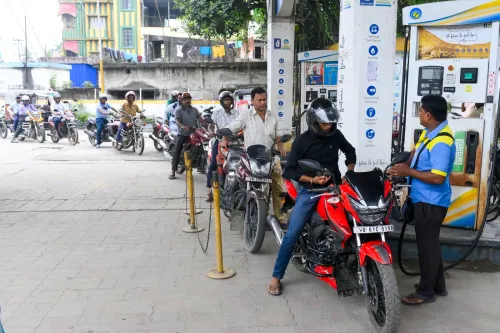
A day before Saturday's hike, the Ministry of Petroleum and Natural Gas issued a public statement asserting that fuel availability across the country remains stable. The ministry urged citizens to avoid panic buying or unnecessary crowding at fuel stations, adding that any localised pressure at select retail outlets is being managed through continuous monitoring and coordinated distribution by oil marketing companies.
The ministry also emphasised that 'responsible consumption and public cooperation are essential' to ensure smooth fuel availability during the ongoing period of high demand and global uncertainty.
Economic Concerns and Broader Impact
Experts have warned that sustained fuel price increases risk a cascading effect on the broader economy. Higher transportation and logistics costs typically feed into prices of essential goods and services, adding to inflationary pressure at a time when operational costs for businesses and transport operators are already elevated.
Government officials, however, maintain that the revisions are necessary to offset rising import costs and sustain fuel supply stability amid volatile global crude oil markets. With geopolitical uncertainty in West Asia showing no clear sign of easing, further price adjustments cannot be ruled out in the weeks ahead.
Point of View
The inflationary arithmetic is straightforward: higher fuel costs feed directly into freight, food, and consumer prices. The ministry's supply assurance, issued the day before a fresh hike, reads as damage control rather than reassurance. If the crude cycle does not turn, the political cost of continued pass-through will mount faster than the fiscal savings from it.
NationPress
9 Oct 2026
Frequently Asked Questions
Why were petrol and diesel prices hiked again on 23 May?
State-owned oil marketing companies raised petrol prices by ₹0.87 per litre and diesel by ₹0.91 per litre on 23 May due to sustained pressure from rising global crude oil prices and ongoing geopolitical tensions in West Asia. This was the third such revision in 10 days.
What are the current petrol and diesel prices in Delhi, Mumbai, and Kolkata?
As of 23 May, petrol in Delhi costs ₹99.51 per litre and diesel ₹92.49 per litre. In Mumbai, petrol is ₹108.49 and diesel ₹95.02 per litre. In Kolkata, petrol stands at ₹110.64 and diesel at ₹97.02 per litre.
How much have fuel prices risen in the past 10 days?
Fuel prices have been revised upward three times since 13 May. The sharpest single revision came on 16 May, when petrol and diesel rose by approximately ₹3 per litre in several cities, followed by two smaller incremental hikes including Saturday's ₹0.87–₹0.91 per litre increase.
Is there a risk of fuel shortage in India?
The Ministry of Petroleum and Natural Gas has stated that fuel availability across India remains stable and urged citizens to avoid panic buying. The ministry said any localised pressure at select outlets is being managed through continuous monitoring and coordinated distribution by oil companies.
What is the economic impact of repeated fuel price hikes?
Experts warn that sustained fuel price increases can have a cascading effect, raising transportation and logistics costs that ultimately push up prices of essential goods and services. This adds to inflationary pressure on consumers and increases operational costs for businesses and transport operators.