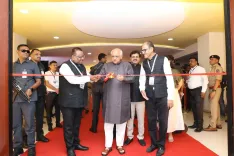
CM Bhupendra Patel: Sabarmati Station Revamp, India's First LNG Train Launch

Synopsis
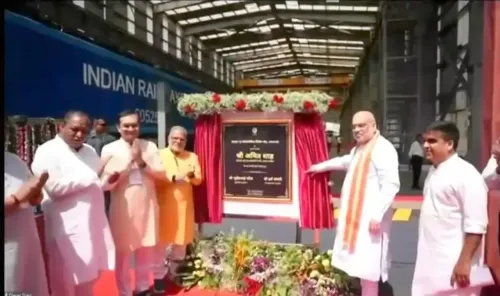
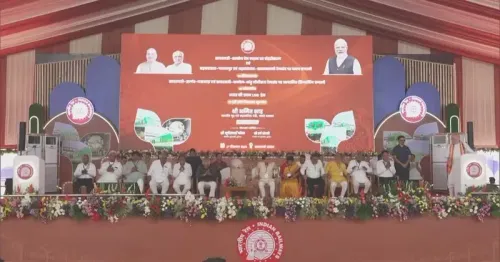
Union Home Minister Amit Shah inaugurated the redeveloped Sabarmati Railway Station in Ahmedabad and flagged off India's first LNG-powered train on September 27, 2026, in a twin ceremony livestreamed by Gujarat CM Bhupendra Patel — marking twin milestones in railway modernisation and cleaner fuel adoption.
Key Takeaways
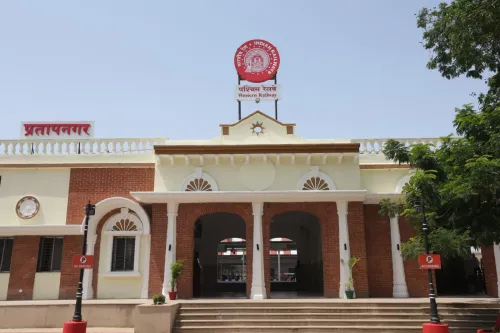
Sabarmati Railway Station in Ahmedabad was formally inaugurated after comprehensive redevelopment on September 27, 2026 .
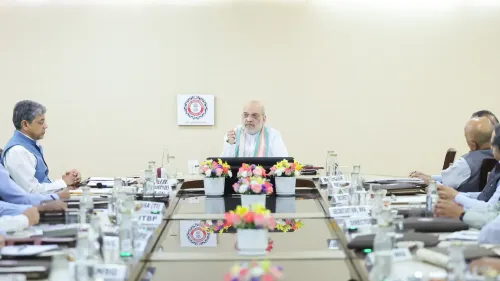
Union Minister Amit Shah presided over both the station inauguration and the LNG train launch ceremony.
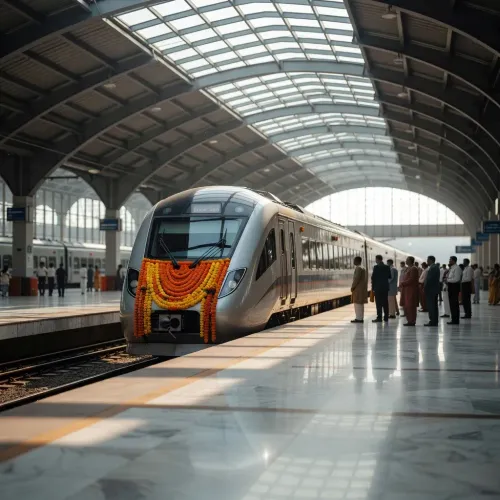
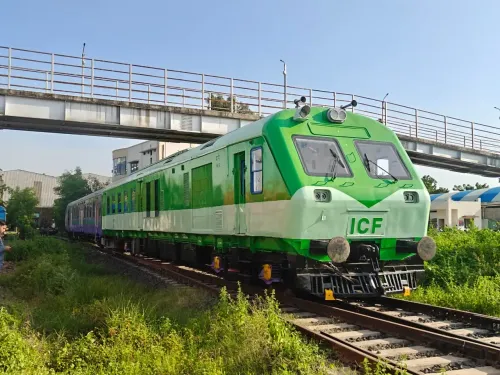
India's first LNG (liquefied natural gas) train was launched at the event, marking a new chapter in alternative-fuel rail operations.
The station redevelopment is part of the Amrit Bharat Stations Scheme , launched in 2023 to upgrade over 1,000 stations across India.
Gujarat CM Bhupendra Patel broadcast the live event on X, highlighting the political and state-level significance of the milestone.
The LNG train launch signals Indian Railways' intent to diversify fuel sources beyond diesel and electrification on non-electrified routes.
Two milestones landed at Sabarmati Railway Station, Ahmedabad on Sunday, September 27, 2026 — the redeveloped station was formally inaugurated and India's first LNG-powered train rolled into history, with Gujarat Chief Minister Bhupendra Patel sharing the live event as Union Home and Cooperation Minister Amit Shah presided over the twin ceremony.
A Station Reborn on the Banks of the Sabarmati
Sabarmati Railway Station is one of Ahmedabad's key rail gateways, and its redevelopment is part of the Amrit Bharat Stations Scheme, launched in 2023 to modernise more than 1,000 stations across India with upgraded passenger amenities, better connectivity, and contemporary infrastructure. Sunday's inauguration marks one of the scheme's visible deliveries in Gujarat — a state that has become a frequent showcase for central infrastructure rollouts.
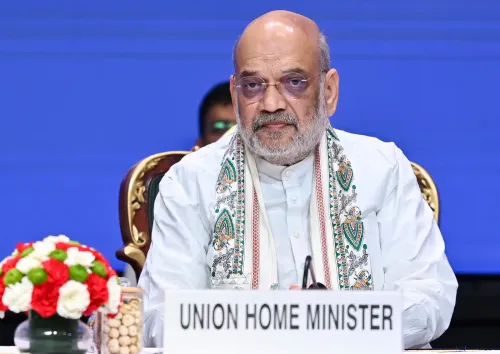
Amit Shah, who holds dual charge of the Home Ministry and the Cooperation Ministry and maintains strong operational ties with Gujarat, formally dedicated the redeveloped station to the public. Chief Minister Patel broadcast the event live from his official X handle, signalling the political weight both the state and central governments attach to the occasion.
India's First LNG Train — What the Launch Signals
The bigger headline may well be the locomotive, not the station. The launch of India's first LNG (liquefied natural gas) train represents a meaningful step in Indian Railways' push to diversify beyond diesel and electrification alone. LNG burns cleaner than conventional diesel, producing lower particulate emissions and reduced carbon output — a material consideration for a railway network that still runs thousands of kilometres of non-electrified track.
The move fits a broader central government pattern: embedding lower-emission fuel alternatives into legacy transport infrastructure rather than waiting for full electrification to reach every corner of the network. Whether LNG trains scale rapidly will depend on fuel availability, cost economics, and rolling-stock procurement — but the Sabarmati launch sets a live precedent for the rest of the network to reference.
Gujarat as the Launchpad
It is no accident that both milestones were unveiled in Ahmedabad. Gujarat has repeatedly served as the first address for flagship central schemes — from bullet-train construction to renewable energy corridors. The presence of Amit Shah, one of the BJP's most senior figures and himself a Gujarat native, underscores the political and symbolic value the ruling dispensation places on delivering visible infrastructure wins in the state. For rail passengers and Gujarat commuters, the immediate promise is a modernised station experience; the longer arc is a railway network experimenting, in real time, with fuels that could reshape its emissions profile over the next decade.
Point of View
With Amit Shah as the face, reinforces the BJP's political stake in being seen as the party that delivers hardware, not just policy. The LNG train is the more consequential signal: if the economics work and fuel supply chains are established, it offers a pragmatic bridge on routes where electrification timelines remain long. How quickly the Railways expands LNG operations beyond this symbolic first run will be the real test of whether Sunday's launch is a trend-setter or a one-off showcase.
NationPress
27 Sept 2026
Frequently Asked Questions
What is India's first LNG train and where was it launched?
India's first LNG (liquefied natural gas) powered train was launched at Sabarmati Railway Station in Ahmedabad on September 27, 2026, by Union Minister Amit Shah.
What is the Amrit Bharat Stations Scheme?
The Amrit Bharat Stations Scheme was launched in 2023 to redevelop more than 1,000 railway stations across India with modern passenger amenities and improved infrastructure. Sabarmati Railway Station is one of its beneficiaries.
Why is an LNG train significant for Indian Railways?
LNG burns cleaner than conventional diesel, producing lower particulate emissions and carbon output. The launch offers a lower-emission alternative for routes that are not yet electrified, potentially reducing the railway network's overall environmental footprint.
Who inaugurated the Sabarmati Railway Station redevelopment?
Union Home and Cooperation Minister Amit Shah inaugurated the redeveloped Sabarmati Railway Station in Ahmedabad, with Gujarat Chief Minister Bhupendra Patel broadcasting the event live.
What will the redeveloped Sabarmati Railway Station offer passengers?
The redevelopment, under the Amrit Bharat Stations Scheme, is designed to provide upgraded passenger amenities, modern facilities, and improved connectivity at one of Ahmedabad's key rail gateways.