Amit Shah Inaugurates Sabarmati Station Redevelopment, India's First LNG Train
Synopsis
Union Minister Amit Shah inaugurated the redeveloped Sabarmati Railway Station in Ahmedabad and launched India's first LNG-powered train on 27 September 2026, marking a dual milestone in railway modernisation and clean fuel adoption under the Amrit Bharat Stations Scheme.
Key Takeaways
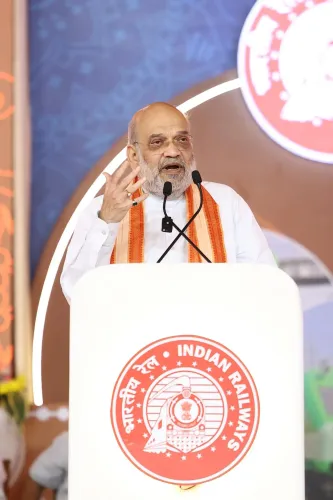
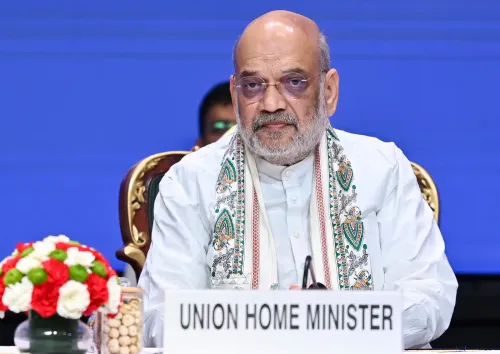
Amit Shah , Union Minister of Home Affairs and Cooperation, presided over the twin event at Sabarmati Railway Station, Ahmedabad on 27 September 2026 .
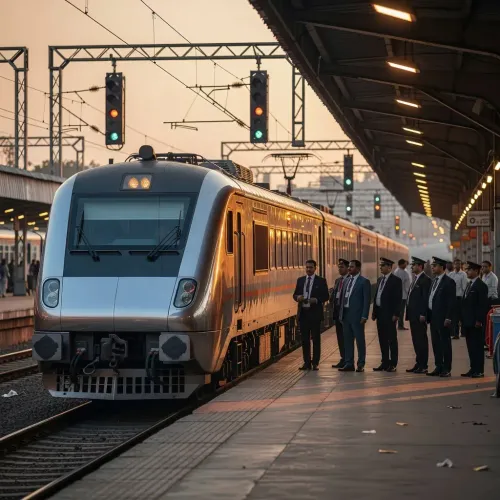
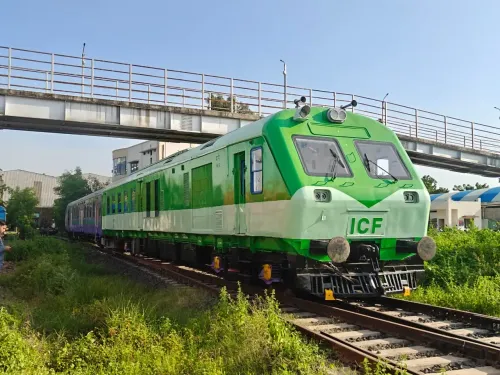
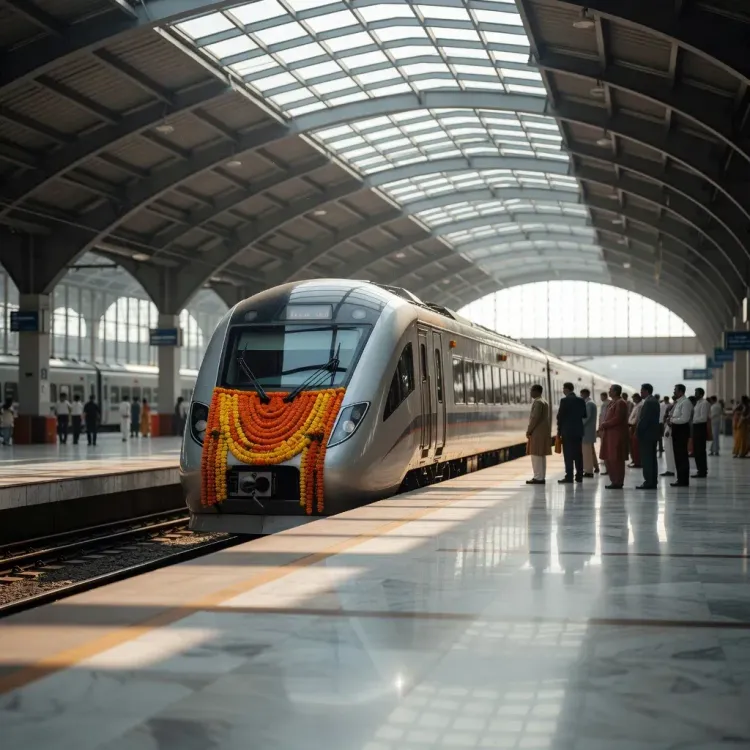
India's first LNG (Liquefied Natural Gas)-powered train was officially flagged off, marking a milestone in Indian Railways' alternative-fuel programme.
The station redevelopment is part of the Amrit Bharat Stations Scheme (2023) , which targets upgrades at over 1,000 stations nationwide.
LNG burns cleaner than diesel, offering lower carbon and particulate emissions — a key consideration for non-electrified rail routes.
The event reflects ongoing Union-Gujarat government coordination on major transport infrastructure projects.
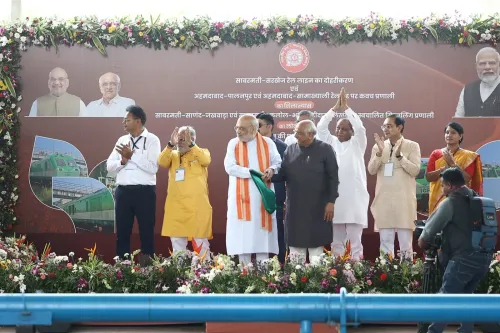
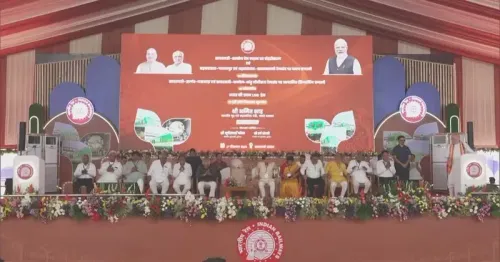
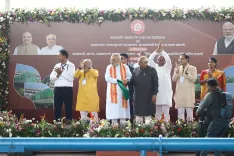
A new chapter in Indian Railways history opened at Sabarmati Railway Station, Ahmedabad on Sunday, 27 September 2026, as Union Home and Cooperation Minister Amit Shah flagged off the country's first Liquefied Natural Gas (LNG)-powered train and formally inaugurated the redeveloped station — marking twin milestones for Gujarat and for India's push toward cleaner, modernised rail infrastructure.
The Chief Minister's Office of Gujarat announced the event live, describing it as the lоkаrpаn (public dedication) of Sabarmati Station's redevelopment works and the shubhаrаmbh (auspicious launch) of the nation's first LNG train — both ceremonies conducted by Shah at the Ahmedabad station.
What makes India's first LNG train a landmark
Conventional diesel locomotives have long been the backbone of non-electrified Indian rail routes, but LNG as a locomotive fuel burns significantly cleaner — producing lower carbon dioxide, near-zero particulate matter, and sharply reduced nitrogen oxide emissions compared to diesel. India's first LNG train positions Indian Railways at the frontier of alternative-fuel adoption in South Asian rail networks. The launch signals intent: if trials and operations prove viable, the model could be replicated across hundreds of routes where full electrification remains years away.
Sabarmati Station's transformation under Amrit Bharat
The station redevelopment is part of the Amrit Bharat Stations Scheme, announced in 2023, which targets the upgrade of more than 1,000 railway stations across India. Sabarmati, a busy node in Ahmedabad's rail network, was among the stations earmarked for a comprehensive facelift — covering passenger amenities, platforms, facades, and connectivity infrastructure. Its inauguration today is among the scheme's visible deliverables as India's railway modernisation drive accelerates.
Shah's Gujarat return and Union-state coordination
Amit Shah, himself a former Chief Minister of Gujarat, brings particular political and administrative weight to infrastructure events in the state. His presence at Sabarmati underscores the close coordination between the Government of Gujarat and the Union government on transport projects — a pattern repeated across major rail and road launches in the state. For Ahmedabad's daily commuters and long-distance passengers, the redeveloped station promises a meaningfully improved transit experience.
The dual launch — cleaner fuel technology meeting upgraded physical infrastructure — is a rare convergence of decarbonisation ambition and brick-and-mortar delivery. Whether India's railway network can now scale the LNG model fast enough to matter will be the real test of today's milestone.
Point of View
In particular, is a calculated signal — an attempt to leapfrog the diesel era without waiting for full network electrification, borrowing a playbook seen in parts of Europe and China. Amit Shah's personal presence amplifies the political stakes; Gujarat has consistently served as a laboratory for national flagship schemes, and a successful LNG rollout here builds the case for rapid replication. The real metric to watch is whether the LNG experiment moves beyond a single train into a fleet-level programme within the next budget cycle.
NationPress
27 Sept 2026
Frequently Asked Questions
What is India's first LNG train and where was it launched?
India's first Liquefied Natural Gas (LNG)-powered train was launched at Sabarmati Railway Station in Ahmedabad, Gujarat, on 27 September 2026, by Union Minister Amit Shah.
What is the Amrit Bharat Stations Scheme?
The Amrit Bharat Stations Scheme was announced in 2023 to redevelop more than 1,000 railway stations across India, improving passenger amenities, platforms, and overall infrastructure. Sabarmati Station is one of the stations covered under this scheme.
Why is LNG being used in trains instead of diesel?
LNG burns significantly cleaner than diesel, producing lower carbon dioxide emissions, near-zero particulate matter, and reduced nitrogen oxides. It is being explored as a cleaner bridging fuel for routes where full rail electrification is not yet complete.
What was Amit Shah's role at the Sabarmati event?
Amit Shah, Union Minister of Home Affairs and Cooperation, formally inaugurated the redevelopment of Sabarmati Railway Station and flagged off India's first LNG-powered train at the event on 27 September 2026.
What comes next after India's first LNG train launch?
The key development to watch is whether Indian Railways scales the LNG model to additional routes and locomotives, and how quickly other stations under the Amrit Bharat Stations Scheme complete their redevelopment and open to the public.