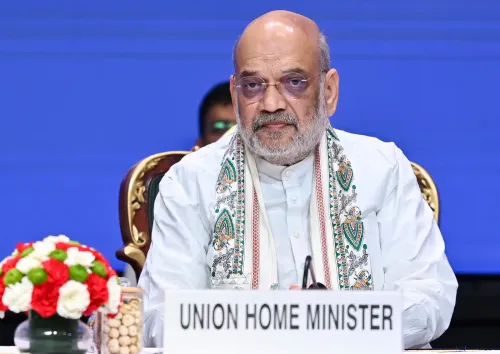
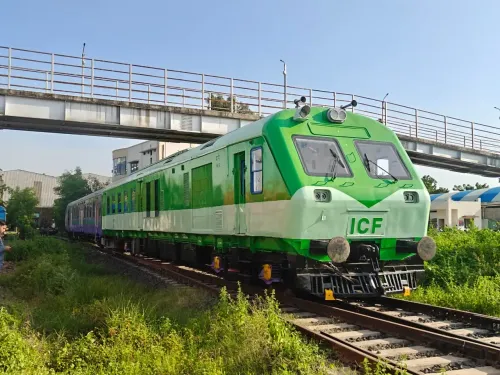
Amit Shah flags off India's first LNG train from Ahmedabad
Synopsis
Union Home Minister Amit Shah flagged off India's first LNG-powered train from Ahmedabad on 27 September 2026, joined by Gujarat CM Bhupendra Patel. The event also inaugurated the Sabarmati station redevelopment and railway projects worth over ₹1,542 crore, marking a significant leap in Indian Railways' clean-traction and infrastructure modernisation drive.
Key Takeaways
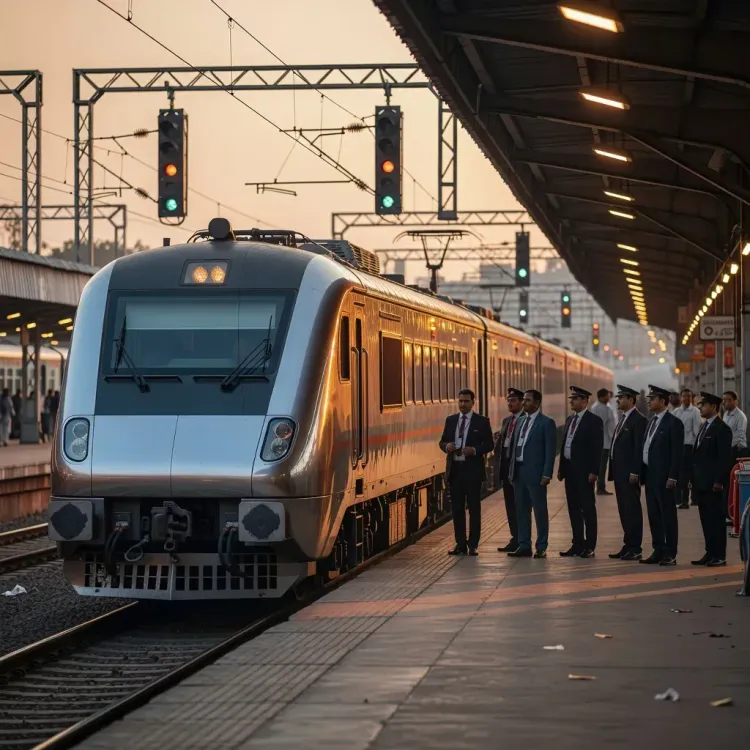
India's first LNG-powered train was flagged off from Ahmedabad on 27 September 2026 by Union Minister Amit Shah .
Railway projects worth more than ₹1,542 crore were inaugurated, foundation-laid, or flag-off at a single event in Ahmedabad.
The redevelopment of Sabarmati Railway Station was formally launched under the Amrit Bharat Station Scheme (2023).
LNG traction is designed to reduce diesel dependence and cut emissions; Indian Railways identified it as an alternative fuel in 2022-23 budget documents .
Gujarat Chief Minister Bhupendra Patel and other dignitaries attended the event alongside Union Minister Shah.
Gujarat's existing LNG import infrastructure along its coastline makes it a strategic base for rolling out LNG locomotives nationally.
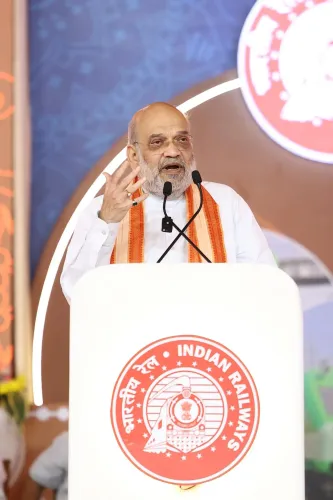
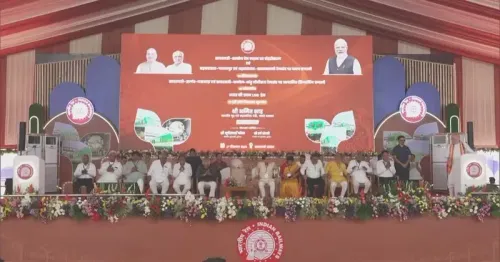
India's railways crossed a historic threshold on Sunday, 27 September 2026, when Union Home and Cooperation Minister Amit Shah flagged off the country's first Liquefied Natural Gas (LNG)-powered train from Ahmedabad — a moment that marks the arrival of cleaner traction technology on the Indian rail network. Gujarat Chief Minister Bhupendra Patel and other dignitaries were present as the event also saw the inauguration and foundation-laying of railway projects worth more than ₹1,542 crore, including the redevelopment of the iconic Sabarmati Railway Station.
India's first LNG locomotive takes the tracks
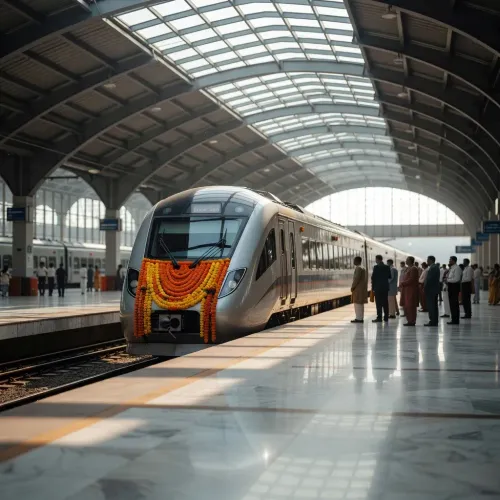
The departure of the LNG train is the most attention-grabbing milestone of the day. Indian Railways began exploring Liquefied Natural Gas as an alternative to diesel traction in its 2022-23 budget documents, positioning LNG as a bridging fuel that can slash particulate emissions and reduce dependence on imported diesel. A single LNG-powered locomotive can meaningfully cut carbon output per kilometre — and today's flag-off turns that blueprint into motion.
The broader significance: India operates one of the world's largest diesel locomotive fleets, and even a partial transition to LNG would register on national emission tallies. Gujarat, with its established LNG import and regasification infrastructure along the coast, is a logical launchpad for this experiment.
Sabarmati Station's transformation begins
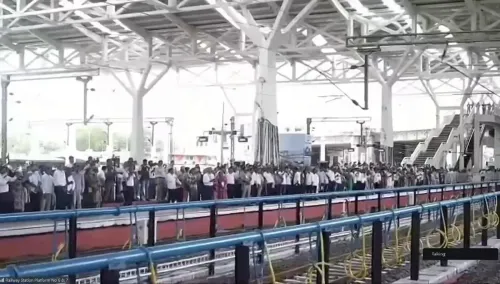
The redevelopment of Sabarmati Railway Station in Ahmedabad received its formal launch at the same event. Sabarmati is among more than 1,300 stations earmarked under the Amrit Bharat Station Scheme, which the central government launched in 2023 to modernise station infrastructure — improved concourses, better passenger amenities, and integrated urban connectivity. Sabarmati, situated close to the city's rapidly expanding metro network, carries particular strategic value as a multimodal interchange node.
The station's redevelopment is not merely cosmetic. It signals the government's intent to remake secondary and suburban stations — not just marquee terminals — into 21st-century transit hubs.
₹1,542 crore portfolio: safety, efficiency, and new lines
Beyond the LNG first and Sabarmati's facelift, the ₹1,542-crore-plus package covers a portfolio of safety upgrades, efficiency improvements, and new infrastructure across the Gujarat rail network. The Chief Minister's Office of Gujarat described these as projects spanning 'suraksha, karyakshamata ane adhunik infrastructure' — safety, efficiency, and modern infrastructure. Taken together, they reinforce Ahmedabad's role as a command node for western India's rail connectivity.
Gujarat commuters and freight operators stand to benefit most immediately, but the state's dense rail corridor also serves national freight movement between the ports of the western coast and the hinterland.
What the Ahmedabad event signals for western India's rail future
Hosting a single event that combines a technology first, a major station redevelopment, and a multi-project infrastructure rollout is deliberate political and administrative choreography. It plants Gujarat firmly at the centre of Indian Railways' modernisation narrative — and with Amit Shah lending the occasion his ministerial weight, the signal to investors, contractors, and commuters is unambiguous.
The next test will be whether the LNG locomotive proves reliable enough in revenue service to justify a wider fleet rollout — and whether Sabarmati's redevelopment stays on schedule. India's first LNG train has left the platform. The clock is now running.
Point of View
A marquee station redevelopment, and a ₹1,542-crore project package from Gujarat is a carefully assembled political statement: it ties the BJP's home state to the railways' headline modernisation moments. The LNG flag-off is the real technological pivot — it tests whether Indian Railways can credibly diversify its traction mix beyond diesel and electrification, a question the network has debated for years. Sabarmati's redevelopment under the Amrit Bharat Scheme also signals that the government intends to convert suburban and secondary stations, not merely high-profile terminals, into bankable infrastructure assets. If the LNG trial succeeds in revenue service, it could reshape procurement decisions for hundreds of diesel locomotives and position Gujarat's coastal regasification capacity as a strategic national rail input.
NationPress
27 Sept 2026
Frequently Asked Questions
What is India's first LNG train and where was it flagged off?
India's first Liquefied Natural Gas-powered train was flagged off from Ahmedabad on 27 September 2026 by Union Home Minister Amit Shah, marking a milestone in Indian Railways' push to diversify from diesel traction.
What is the Amrit Bharat Station Scheme and is Sabarmati part of it?
The Amrit Bharat Station Scheme, launched in 2023, covers the modernisation of over 1,300 railway stations across India. Sabarmati Railway Station in Ahmedabad is among the stations selected for redevelopment under this programme.
How much money was announced for railway projects in Gujarat on 27 September 2026?
Railway projects worth more than ₹1,542 crore were inaugurated, foundation-laid, or flagged off at the Ahmedabad event, covering safety upgrades, efficiency improvements, and new infrastructure across the Gujarat rail network.
Why is LNG being used in Indian Railways trains?
Indian Railways began exploring Liquefied Natural Gas as an alternative to diesel in its 2022-23 budget documents. LNG is expected to reduce particulate emissions, cut dependence on imported diesel, and lower the carbon footprint of freight and passenger services.
Who attended the Ahmedabad railway inauguration event on 27 September 2026?
Union Home and Cooperation Minister Amit Shah presided over the event. Gujarat Chief Minister Bhupendra Patel and other dignitaries were also present at the ceremony in Ahmedabad.