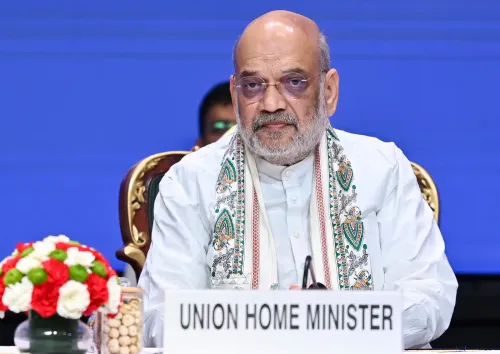
Amit Shah launches India's first LNG train at Sabarmati
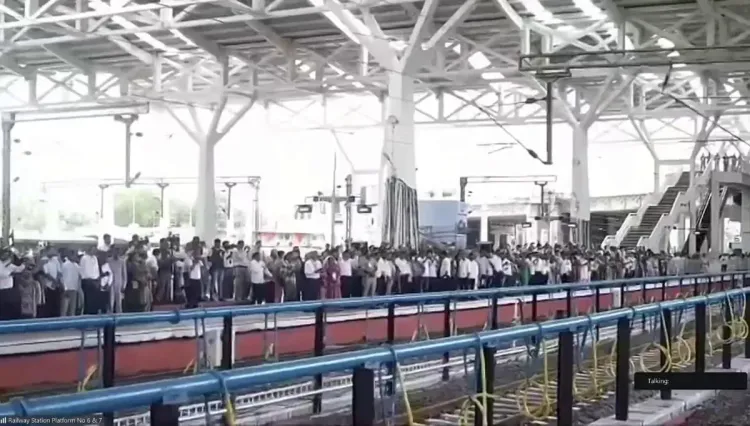
Synopsis
Union Minister Amit Shah inaugurated India's first LNG-powered train at Sabarmati Station, Ahmedabad, on September 27, 2026. BJP MP Anurag Thakur hailed the launch as a proud step in India's green energy revolution, aligning with Indian Railways' net-zero emissions target by 2030.
Key Takeaways
India's first LNG-powered train was inaugurated at Sabarmati Station, Ahmedabad on September 27, 2026 .
Union Minister Amit Shah performed the formal flag-off ceremony.
BJP MP Anurag Thakur described the launch as 'a moment of pride for all of India' on X.
Indian Railways has a stated target of achieving net-zero carbon emissions by 2030 .
LNG burns cleaner than diesel — lower particulate matter and sulphur oxides — making it a viable bridge fuel for non-electrified corridors.
Future Railway Budget allocations are expected to determine the pace of LNG or dual-fuel locomotive rollout on other routes.
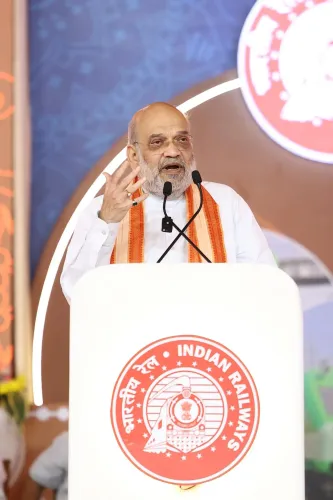
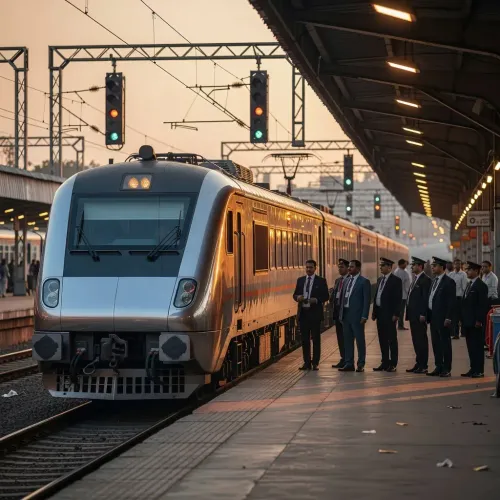
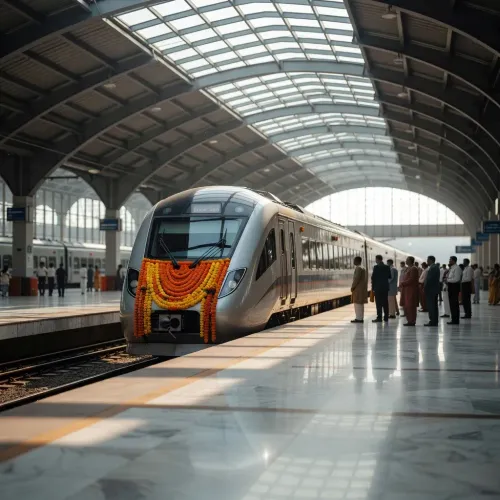
A new chapter in India's green mobility story opened on Sunday, September 27, 2026, as the country's first LNG-powered train was flagged off at Sabarmati Station in Ahmedabad, Gujarat — a milestone that BJP MP Anurag Thakur called 'a moment of pride for all of India.'
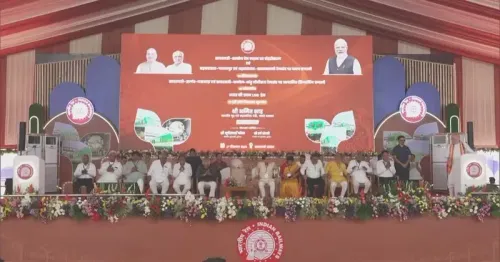
Union Home and Cooperation Minister Amit Shah performed the inauguration at Sabarmati Station, setting in motion a locomotive that runs on Liquefied Natural Gas (LNG) rather than conventional diesel. Thakur, sharing the moment on X, wrote: 'Sampurna Bharat ke liye gaurav ka kshan!' — 'A moment of pride for the whole of India!' — and framed the launch as a forward stride in India's green energy revolution.
Why LNG, and why now?
Indian Railways operates one of the world's largest rail networks and has committed to achieving net-zero carbon emissions by 2030. Diesel traction remains the dominant mode on non-electrified corridors, making alternative fuels a critical piece of that decarbonisation puzzle. LNG burns significantly cleaner than diesel — lower particulate matter, lower sulphur oxides — and offers a practical bridge fuel while full electrification of the network continues.
India's broader energy transition has already seen LNG adopted in heavy trucking and select port operations. Bringing it to the railway sector extends the momentum and signals that Indian Railways is serious about testing a full spectrum of lower-emission propulsion technologies.
Sabarmati as the launchpad
Sabarmati Station, a major hub on the Western Railway zone in Ahmedabad, was a fitting venue. The city sits at the heart of Gujarat's industrial corridor and has historically been a testbed for infrastructure firsts in India. Flagging off the country's debut LNG train from here ties the launch to a region that has championed energy and logistics innovation.
What the rollout could look like
The immediate focus will be on performance data — fuel efficiency, emissions reduction per kilometre, and maintenance costs compared with diesel traction. If the pilot validates LNG's economics on Indian rail, subsequent Railway Budget allocations could earmark funds for additional LNG or dual-fuel locomotives, particularly on freight corridors where electrification timelines remain long. The rail sector's decarbonisation clock is ticking — and today's launch puts a first number on that clock.
Point of View
A state that has anchored several energy-transition pilots, reinforces the political optics of a 'double engine' government delivering on green infrastructure. For the BJP, tying the Home Minister's presence to a clean-energy milestone broadens Amit Shah's public-facing portfolio beyond security, an increasingly deliberate strategy ahead of state election cycles. The real test will come in the next Railway Budget, where funding for scale-up — or its absence — will reveal whether this LNG pilot is a serious policy shift or a well-timed headline.
NationPress
27 Sept 2026
Frequently Asked Questions
What is India's first LNG train?
India's first LNG (Liquefied Natural Gas) train is a locomotive powered by LNG instead of conventional diesel, inaugurated at Sabarmati Station in Ahmedabad on September 27, 2026. It is part of Indian Railways' effort to adopt cleaner alternative fuels.
Who launched India's first LNG train?
Union Minister of Home Affairs and Cooperation Amit Shah inaugurated India's first LNG train at Sabarmati Station, Ahmedabad.
Where was India's first LNG train flagged off?
The inaugural run was flagged off from Sabarmati Station in Ahmedabad, Gujarat, a key hub on the Western Railway zone.
Why is Indian Railways adopting LNG as fuel?
Indian Railways has set a net-zero carbon emissions target by 2030. LNG burns cleaner than diesel — with lower particulate matter and sulphur oxide emissions — making it a practical bridge fuel for non-electrified corridors while full electrification continues.
What does the LNG train launch mean for Indian Railways' green goals?
The launch marks a concrete step towards Indian Railways' 2030 net-zero target, demonstrating that alternative-fuel propulsion technologies are being actively tested and deployed beyond electrification alone. Future Railway Budget allocations will determine how quickly the technology is scaled across the network.