Amit Shah to inaugurate ₹1,542 crore rail projects in Gujarat on Sep 27
Synopsis
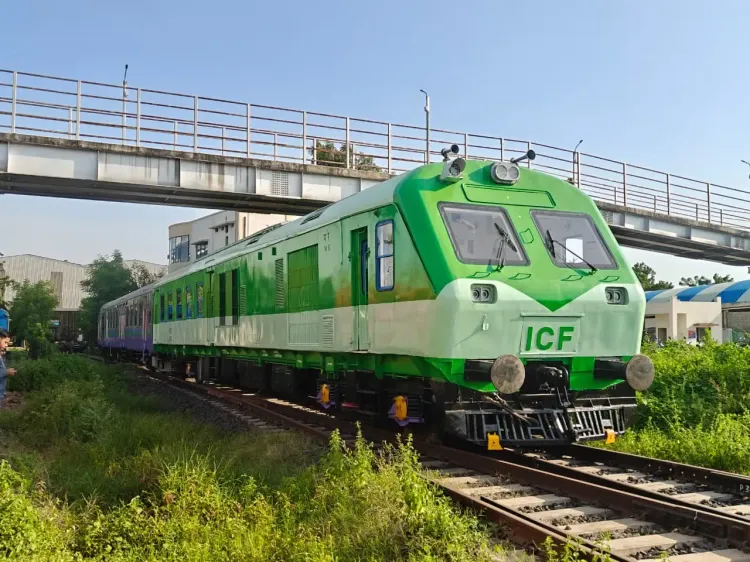
India's first LNG-powered train is set to roll out from Sabarmati on 27 September as Amit Shah inaugurates over ₹1,542 crore worth of railway projects in Gujarat — combining a clean-fuel first, a 404-km Kavach safety rollout, and a ₹700-crore heavy-freight locomotive shed in a single event that signals an unusually broad infrastructure push for one division.
Key Takeaways
Amit Shah will inaugurate railway projects worth more than ₹1,542 crore at Sabarmati, Ahmedabad on 27 September 2026 .
India's first LNG-powered train uses a diesel-plus-LNG dual-fuel system, with LNG replacing up to 40% of diesel; each DPC could save up to ₹25 lakh annually according to trial data.
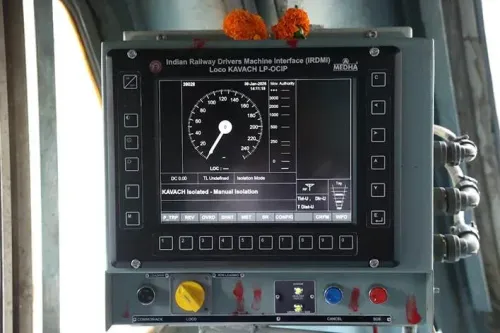
Kavach automatic train protection is being deployed over 404 km (Ahmedabad-Palanpur and Ahmedabad-Samakhiyali sections) at an estimated cost of ₹411 crore .
The ₹700-crore WAG-12 Sabarmati Locomotive Shed will home 300 high-horsepower freight locomotives ; 154 have already been allocated.
Automatic Block Signalling covers 122.57 km at a cost of ₹118.83 crore to increase line capacity and punctuality.
The 21-km Sabarmati-Sarkhej doubling project, costing around ₹313.27 crore , targets completion by March 2028 .
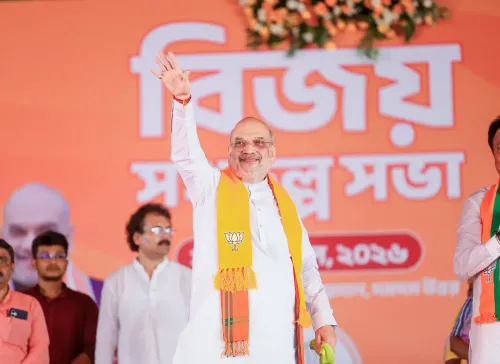
Union Home and Cooperation Minister Amit Shah will on 27 September 2026 inaugurate, lay foundation stones for, and flag off a series of railway projects worth more than ₹1,542 crore at Sabarmati in Ahmedabad. The portfolio includes the country's first LNG-powered train, the Kavach automatic train protection system covering 404 km, and a ₹700-crore WAG-12 locomotive maintenance shed — a rare single-day cluster of safety, capacity, and clean-fuel milestones for the Western Railway.
Key Projects Being Launched
Gujarat Chief Minister Bhupendra Patel, Deputy Chief Minister Harsh Sanghavi, Minister of State Darshana Vaghela, MPs Hasmukh Patel and Dinesh Makwana, and Ahmedabad Mayor Hitesh Barot are among those scheduled to attend. The programme covers five broad railway domains: safety, signalling, freight capacity, alternative fuel adoption, and line capacity expansion.
The event includes the inauguration of the WAG-12 Sabarmati Locomotive Maintenance Shed, the commissioning of Automatic Block Signalling (ABS) on key Ahmedabad Division sections, the laying of the foundation stone for Kavach on the Ahmedabad-Palanpur and Ahmedabad-Samakhiyali sections, and the doubling of the 21-km Sabarmati-Sarkhej railway line.
India's First LNG-Powered Train: How It Works
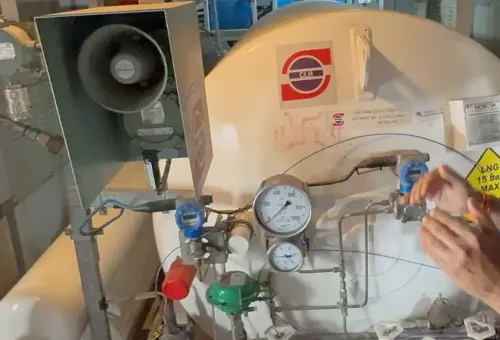
The LNG initiative centres on two 1,400 HP Driving Power Cars (DPCs) at the Sabarmati Integrated Coaching Depot, which have been retrofitted with a diesel-plus-LNG dual-fuel system. Both DPCs have completed more than 2,000 km of field trials. Each unit carries an LNG tank of approximately 2,200 litres, capable of holding roughly 850–900 kg of usable LNG, sufficient for around 1,600 km of operation on a full fill.
According to trial data from the Railways, LNG can substitute up to around 40% of diesel consumption. The system is designed to let the engine switch between the two fuels based on availability. One DPC could save around ₹11.9 lakh annually, while an eight-coach rake could save around ₹23.9 lakh per year, according to one set of trial figures. A separate Railways release estimates annual savings of around ₹25 lakh per DPC. Beyond cost savings, the system is expected to reduce emissions of carbon dioxide, nitrogen oxides, and particulate matter.
Kavach and Automatic Block Signalling
The Kavach automatic train protection system is being deployed over 404 km of the Ahmedabad Division at an estimated cost of around ₹411 crore. This spans 157 km of the Ahmedabad-Palanpur section and 247 km of the Ahmedabad-Samakhiyali section. Kavach is engineered to reduce the risk of head-on and rear-end collisions and to prevent trains from exceeding prescribed speed limits. Its commissioning on the Ahmedabad-Samakhiyali main line has already extended automatic train protection to the block sections covered under the project.
Complementing Kavach, Automatic Block Signalling has been installed across 122.57 km on the Sabarmati-Kalol-Bhandu Motidau and Sabarmati-Sanand-Jakhwada sections at a cost of around ₹118.83 crore. ABS is designed to maintain safe headways between trains and increase the number of services that can run on the same route, improving punctuality and operational efficiency.
WAG-12 Locomotive Shed and Sabarmati-Sarkhej Doubling
The Sabarmati Locomotive Maintenance Shed, built at an estimated cost of around ₹700 crore, is designed to home and maintain 300 WAG-12 HHP electric locomotives, each rated at around 12,000 HP and intended for heavy and long-haul freight operations. A Maintenance Service Agreement has been signed between Madhepura Electric Locomotive Private Limited and the Sabarmati Locomotive Shed. As of now, 154 WAG-12 locomotives have been allocated to the shed; the remaining units are planned to arrive by 2027–28.
The 21-km Sabarmati-Sarkhej doubling project, estimated at around ₹313.27 crore, is targeted for completion by March 2028. It covers Sabarmati, Gandhigram, Vastrapur, and Sarkhej stations and involves work on 16 minor bridges, 13 road underbridges, one major bridge, and six level crossings. The project is also expected to strengthen connectivity toward the Sarkhej-Dholera industrial corridor.
What Comes Next
With the remaining 146 WAG-12 locomotives due by 2027–28 and the Sabarmati-Sarkhej doubling targeting completion by March 2028, Saturday's inauguration marks the start rather than the end of a multi-year infrastructure build-out for the Ahmedabad Division. How quickly Kavach is operationalised across all 404 km — and whether the LNG dual-fuel model is scaled beyond the initial two DPCs — will determine whether this cluster of projects delivers its projected safety and efficiency gains.
Point of View
Capacity, and clean-fuel agendas in a single political set-piece — a format the Centre has refined into a reliable policy communication tool. The LNG dual-fuel retrofit is genuinely significant: if the ₹25-lakh-per-DPC savings figure holds at scale, it makes a credible case for wider rollout, though the divergence between the two savings estimates cited in official releases (₹11.9 lakh vs ₹25 lakh per DPC) deserves scrutiny before the model is treated as proven. On Kavach, the 404-km Ahmedabad Division deployment is a positive step, but the national rollout remains years behind its original timeline; inaugurating foundation stones for new sections while older committed sections are incomplete is a pattern that warrants tracking. The WAG-12 shed, with 154 of 300 locomotives already homed, is perhaps the most operationally ready component of the package.
NationPress
26 Sept 2026
Frequently Asked Questions
What railway projects is Amit Shah inaugurating in Gujarat on 27 September?
Amit Shah will inaugurate, flag off, or lay foundation stones for a cluster of projects worth more than ₹1,542 crore at Sabarmati, Ahmedabad, on 27 September 2026. The key components are India's first LNG-powered train, the Kavach automatic train protection system over 404 km, the ₹700-crore WAG-12 Sabarmati Locomotive Maintenance Shed, Automatic Block Signalling over 122.57 km, and the 21-km Sabarmati-Sarkhej line-doubling project.
How does India's first LNG-powered train work?
Two 1,400 HP Driving Power Cars at the Sabarmati Integrated Coaching Depot have been retrofitted with a diesel-plus-LNG dual-fuel system. The engine can switch between diesel and LNG depending on fuel availability, with LNG capable of replacing up to around 40% of diesel consumption. Each DPC carries an LNG tank of approximately 2,200 litres, providing a range of around 1,600 km on a full fill.
What is the Kavach system and where is it being deployed in Gujarat?
Kavach is an automatic train protection system designed to reduce the risk of head-on and rear-end collisions and prevent speed-limit violations. In the Ahmedabad Division, it is being deployed over 404 km — covering the 157-km Ahmedabad-Palanpur section and the 247-km Ahmedabad-Samakhiyali section — at an estimated cost of around ₹411 crore.
What is the WAG-12 Sabarmati Locomotive Shed?
The Sabarmati Locomotive Maintenance Shed is a ₹700-crore facility designed to home and maintain 300 WAG-12 HHP electric locomotives, each rated at around 12,000 HP for heavy freight haulage. Of the 300 planned locomotives, 154 have already been allocated; the remainder are expected by 2027–28 under a Maintenance Service Agreement with Madhepura Electric Locomotive Private Limited.
When will the Sabarmati-Sarkhej railway doubling be completed?
The 21-km Sabarmati-Sarkhej doubling project, estimated at around ₹313.27 crore, is targeted for completion by March 2028. It covers four stations — Sabarmati, Gandhigram, Vastrapur, and Sarkhej — and includes work on 16 minor bridges, 13 road underbridges, one major bridge, and six level crossings, with the aim of increasing line capacity and supporting the Sarkhej-Dholera industrial corridor.