Amit Shah inaugurates WAG-12 loco shed, signals Kavach push in Gujarat
Synopsis
Union Home Minister Amit Shah inaugurated a WAG-12 locomotive maintenance shed and automatic signalling on Sabarmati–Kalol and Sabarmati–Sanand sections at Ahmedabad on 27 September 2026, and broke ground on three Kavach and track-doubling projects in Gujarat.
Key Takeaways
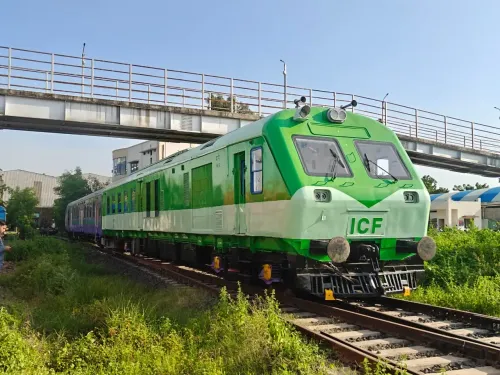
WAG-12 locomotive maintenance shed inaugurated at Sabarmati railway station to support high-horsepower freight operations in Gujarat.
Automatic signalling launched on Sabarmati–Kalol and Sabarmati–Sanand rail sections, enabling higher train frequency and operational efficiency.
Foundation laid for three projects combining track doubling and Kavach anti-collision system deployment in Gujarat.
Kavach is an indigenously developed automatic train protection system that applies emergency brakes to prevent collisions.
Projects are expected to improve freight movement, enhance rail safety, and generate local employment in Gujarat.
Upgrades align with the broader Atmanirbhar Bharat initiative promoting self-reliance in railway equipment and services.
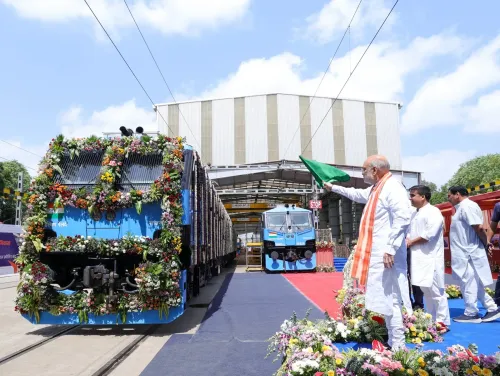
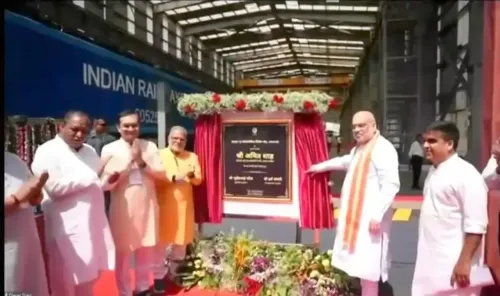
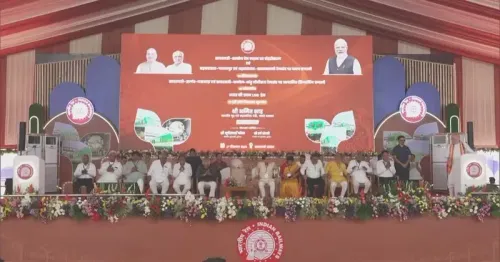
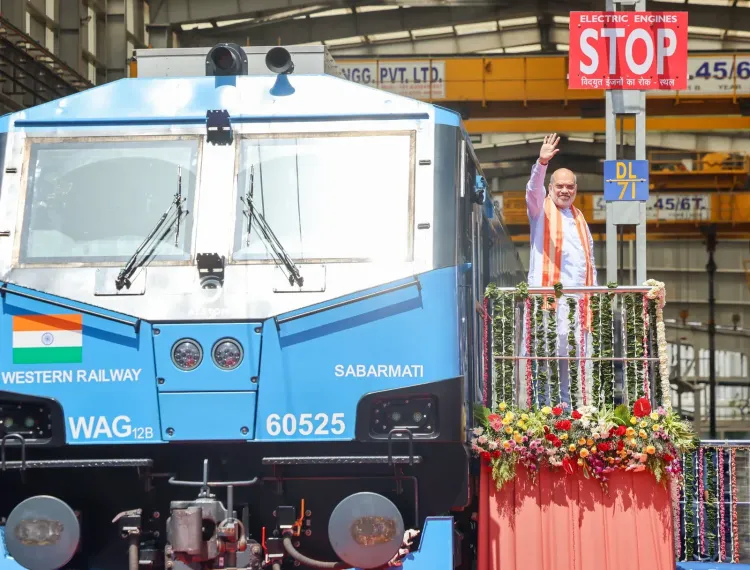
Safety upgrades, indigenous technology, and freight muscle arrived at Sabarmati railway station in Ahmedabad, Gujarat, on Sunday, 27 September 2026, as Union Home Minister Amit Shah inaugurated a WAG-12 locomotive maintenance shed, launched automatic signalling on two key rail corridors, and laid the foundation for three new rail projects tied to track doubling and the Kavach anti-collision system.
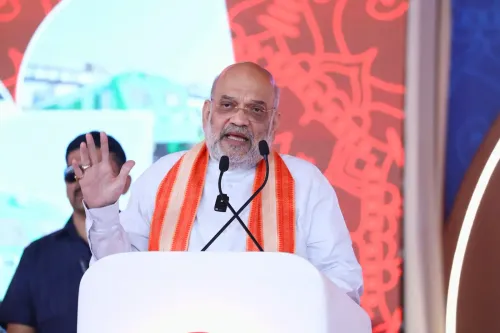
Posting in Gujarati, Shah said: 'Under the Modi government, the expansion and modernisation of the rail network is continuing apace, and Indian Railways is also rapidly advancing towards self-reliance (atmanirbharata). Today at Sabarmati railway station, I inaugurated the WAG-12 locomotive maintenance shed, launched automatic signalling on the Sabarmati–Kalol and Sabarmati–Sanand rail sections, and broke ground on three projects related to track doubling and the Kavach system. These projects will make rail operations safer and more efficient, ease freight movement, and create new employment opportunities.'WAG-12 shed: high-horsepower freight capacity at Sabarmati
The WAG-12 is among the most powerful electric freight locomotives in Indian Railways' fleet, designed to haul heavier loads at higher speeds — a direct answer to the network's chronic freight bottleneck. A dedicated maintenance shed at Sabarmati means these locomotives operating in and around Gujarat no longer need to travel long distances for upkeep, cutting turnaround time and boosting availability on high-demand corridors. The move also aligns with the Atmanirbhar Bharat push: localising not just manufacturing but servicing infrastructure deepens India's self-sufficiency in the rail sector.
Sabarmati–Kalol and Sabarmati–Sanand: automatic signalling goes live
The launch of automatic signalling on the Sabarmati–Kalol and Sabarmati–Sanand rail sections is the kind of unglamorous upgrade that transforms operational reality. Automatic block signalling allows trains to run at closer headways — more trains on the same track, higher throughput, fewer delays. For a region that feeds both commuter and freight traffic between Ahmedabad, its satellite towns, and major industrial zones like Sanand — home to significant automotive and manufacturing clusters — that throughput gain is commercially meaningful. Freight operators and daily commuters both stand to benefit.
Kavach groundbreaking: Gujarat's rail safety arc
Kavach, the indigenously developed automatic train protection system, applies brakes automatically when a collision risk is detected — a critical safeguard on busy corridors. The three foundation-laying projects announced on Sunday include Kavach deployment alongside track doubling, combining physical capacity expansion with electronic safety in a single package. Indian Railways has been rolling out Kavach across multiple zones following years of development and trials; bringing it to Gujarat corridors extends that safety net to one of the country's most industrially active states. Completion timelines for these three projects have not been officially stated.
Taken together, Sunday's events at Sabarmati represent a convergence of three distinct but reinforcing priorities: more capacity (track doubling and the WAG-12 shed), smarter operations (automatic signalling), and safer movement (Kavach). For Gujarat's freight operators, employers and rail users, the question now is how quickly the groundwork laid today translates into trains running faster, fuller, and without incident on these corridors.
Point of View
Not just a slogan. Bringing Kavach groundbreakings and automatic signalling to Gujarat in the same ceremony underlines the electoral and industrial salience of the state to the BJP's core narrative. The WAG-12 shed, in particular, localises a critical servicing function in a state that is central to freight-driven economic growth. The real test will be whether Kavach deployment and track-doubling timelines are met — previous rollouts have faced slippage, and Gujarat's industrial corridors will be watching.
NationPress
28 Sept 2026
Frequently Asked Questions
What is the WAG-12 locomotive and why is a shed at Sabarmati significant?
The WAG-12 is one of Indian Railways' most powerful electric freight locomotives. A dedicated maintenance shed at Sabarmati, Ahmedabad, means these locomotives serving Gujarat corridors can be serviced locally, cutting downtime and boosting freight capacity without long positioning runs to distant depots.
What is the Kavach system in Indian Railways?
Kavach is an indigenously developed automatic train protection system that detects collision risks and applies brakes automatically. It is a key part of Indian Railways' safety modernisation programme and is being progressively deployed across the national network.
Which rail corridors received automatic signalling at this event?
Automatic signalling was launched on the Sabarmati–Kalol and Sabarmati–Sanand rail sections in Gujarat, allowing trains to run at closer intervals and improving both freight and passenger throughput.
What are the three projects for which foundation stones were laid at Sabarmati on 27 September 2026?
Union Home Minister Amit Shah broke ground on three projects linked to track doubling and Kavach system deployment in Gujarat. Specific project names and completion timelines have not been officially disclosed.
How does this event relate to the Atmanirbhar Bharat initiative?
The Atmanirbhar Bharat initiative, launched in 2020, promotes domestic manufacturing and self-reliance. The WAG-12 shed localises locomotive servicing, while Kavach is an indigenously developed system — both directly embody the self-reliance goal within the railways sector.