CM Bhupendra Patel Highlights Nal Se Jal's Impact on Gujarat Women

Synopsis
Gujarat Chief Minister Bhupendra Patel highlighted beneficiary Deepikaben's story to illustrate how the Nal Se Jal scheme — PM Modi's Jal Jeevan Mission — has ended the daily water-fetching burden for lakhs of rural women, saving time and improving health outcomes across Gujarat.
Key Takeaways
Gujarat CM Bhupendra Patel posted on 27 September 2026 highlighting the real-life impact of the Jal Jeevan Mission through beneficiary Deepikaben's experience.
The Nal Se Jal (Jal Jeevan Mission) scheme was launched by PM Narendra Modi in August 2019 to provide tap water connections to every rural household in India.
CM Patel cited three specific gains for women: end of long-distance water fetching, time savings, and improved health outcomes from clean piped water.
The post was tagged under #SevaSankapAbhiyan and #SevaKiKahani , BJP organisational campaigns linking scheme delivery to grassroots outreach.
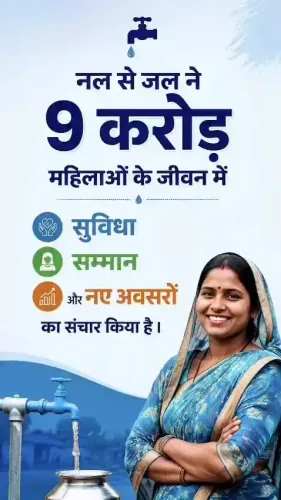
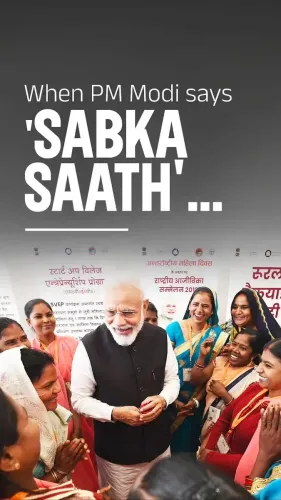
The post frames the scheme's benefit in explicitly gendered terms, crediting crores of rural women as the primary beneficiaries of piped water access.
A woman named Deepikaben no longer walks kilometres with a water vessel balanced on her head. That single, concrete change — multiplied across millions of households — is the story Gujarat Chief Minister Bhupendra Patel told on Sunday, 27 September 2026, sharing a video tribute to the Jal Jeevan Mission and the women it has transformed.
Deepikaben's story — and what it stands for
In his post, CM Patel wrote in Gujarati: 'Nal Se Jal yojana Deepikaben jevi lakhon mataon-bahenon mate khushhalina neer laine aavi chhe' — 'The Nal Se Jal scheme has brought waters of happiness for lakhs of mothers and sisters like Deepikaben.' He pointed to three tangible gains the scheme has delivered: an end to the daily ordeal of fetching water from distant sources, time saved that women can now redirect elsewhere, and improved health outcomes from access to clean, piped supply.
The post was tagged under #SevaSankapAbhiyan and #SevaKiKahani — BJP organisational campaigns designed to document and amplify citizen testimonials about central government scheme delivery. By anchoring the post in one beneficiary's lived experience rather than a percentage figure, CM Patel opted for the personal over the statistical.
The scheme behind the story: Jal Jeevan Mission
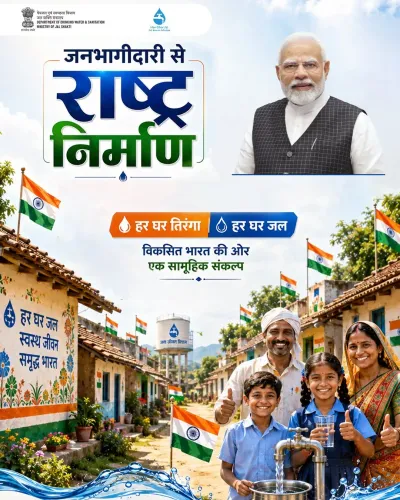
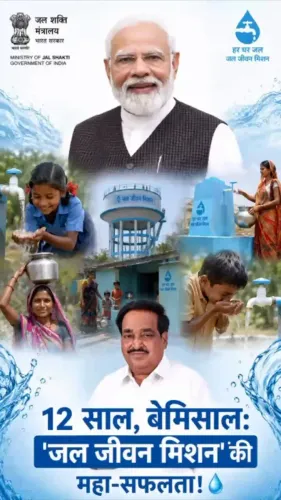
The Jal Jeevan Mission — officially launched by Prime Minister Narendra Modi in August 2019 — set out to deliver functional household tap connections to every rural home in India, under its popular name Har Ghar Jal. The programme marked a deliberate shift from community water points to in-home piped supply, directly targeting the burden that had historically fallen on women and girls.
For rural Gujarat, where water scarcity in arid and semi-arid zones has historically forced long daily commutes to wells or tankers, an in-home tap connection is not a small convenience — it is a structural change in how a household's hours are spent. CM Patel framed that structural change in explicitly gendered terms, saluting what he called 'deshni koti koti narishakti' — 'the crores of women of the country' — who, like Deepikaben, are expressing gratitude for the scheme.
BJP's welfare communication strategy
State leaders across BJP-governed states have regularly amplified the Jal Jeevan Mission through individual beneficiary stories, and Sunday's post by CM Patel fits that established pattern. The #SevaKiKahani format — 'Story of Service' — converts programme data into human narratives, building a grassroots-level connection between scheme delivery and political credit. Whether the vehicle is a video testimonial or a tweet, the message is consistent: central infrastructure investment translates to daily relief for ordinary women.
The kicker is simple and hard to argue with: when a woman does not have to fetch water, she has time. What she does with that time is the real dividend the scheme is betting on.
Point of View
Deepikaben, to make the policy feel personal rather than statistical. The use of the #SevaKiKahani hashtag signals this is part of a coordinated organisational campaign, not an isolated post, suggesting the party is actively building a pre-election or mid-term welfare narrative around the Jal Jeevan Mission. Centering women's time and health — rather than pipes-laid or connections-made — reflects a studied shift in how the BJP frames infrastructure spend: not as engineering, but as women's empowerment. The broader pattern suggests state leaders are being mobilised to generate ground-level social proof for a flagship central scheme whose final-mile coverage numbers continue to be politically significant.
NationPress
27 Sept 2026
Frequently Asked Questions
What is the Nal Se Jal scheme in Gujarat?
Nal Se Jal is the popular name for the Jal Jeevan Mission , launched by PM Narendra Modi in August 2019 to provide functional piped tap water connections to every rural household in India, including those in Gujarat.
Who is Deepikaben mentioned in CM Patel's post?
Deepikaben is a beneficiary woman cited by Gujarat CM Bhupendra Patel to illustrate how the Nal Se Jal scheme has ended the burden of fetching water from distant sources for rural women.
What is Seva Sankalp Abhiyan?
Seva Sankalp Abhiyan is a BJP organisational campaign that documents citizen experiences with government schemes, using formats like #SevaKiKahani ('Story of Service') to share beneficiary testimonials on social media.
How does the Jal Jeevan Mission benefit women specifically?
By providing in-home tap connections, the Jal Jeevan Mission eliminates the need for women to walk long distances to fetch water — saving time, reducing physical strain, and improving health outcomes through access to clean, piped supply.
What did Gujarat CM Bhupendra Patel post about water schemes?
On 27 September 2026 , CM Bhupendra Patel shared a video post highlighting how the Nal Se Jal scheme has transformed life for women like Deepikaben in Gujarat, ending their daily water-fetching burden and improving health.