Jal Shakti Minister Paatil shares glimpse of Narmada Project consensus meet
Synopsis
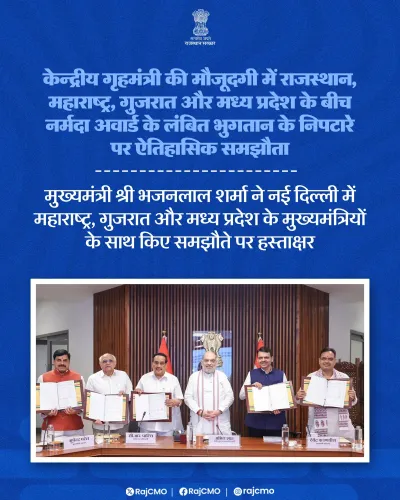
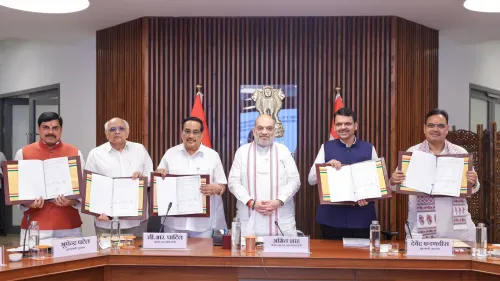
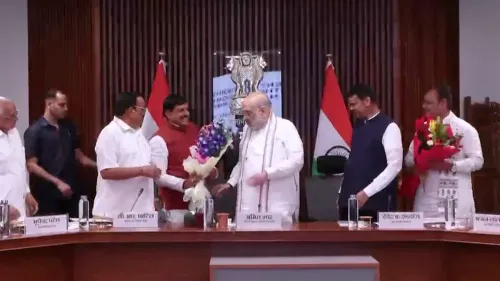
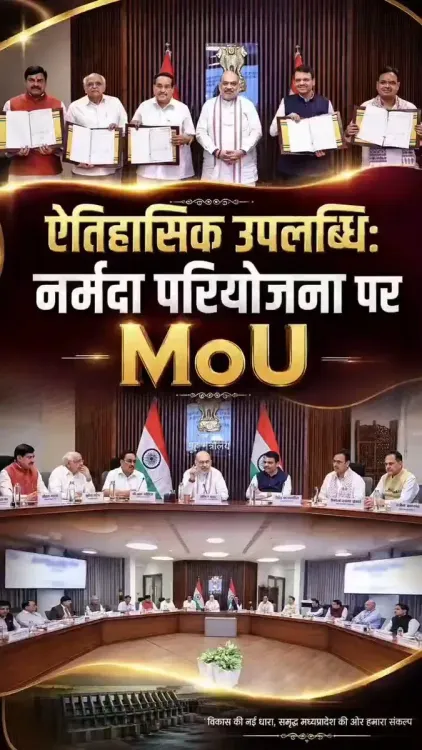
Union Jal Shakti Minister C. R. Paatil shared a video glimpse from a New Delhi meeting chaired by Home Minister Amit Shah where significant consensus was reached on long-pending Narmada Project issues, under PM Modi's guidance.
Key Takeaways
Union Jal Shakti Minister C.
Paatil shared a video on 8 July 2026 from a high-level New Delhi meeting on the Narmada Project .
The meeting was chaired by Union Home Minister Amit Shah and described as guided by PM Narendra Modi 's vision. 'Important consensus' was reached on issues described as 'long-pending' related to the Narmada Project.
The Narmada Project involves four states — Gujarat, Madhya Pradesh, Maharashtra , and Rajasthan — with water shares governed by the 1979 Narmada Water Disputes Tribunal award.
The Narmada Control Authority (NCA) and riparian state governments are expected to formalise the agreed points in follow-up actions.
Key stakeholders include Gujarat farmers dependent on canal irrigation and Madhya Pradesh communities awaiting rehabilitation packages.
Union Jal Shakti Minister C. R. Paatil on Wednesday, 8 July 2026 shared a video glimpse from a high-level meeting held in New Delhi at which significant consensus was reached on long-pending issues related to the Narmada Project, under the chairmanship of Union Home Minister Amit Shah and guided by Prime Minister Narendra Modi's vision.
Posting on X, Paatil wrote in Hindi: 'nai dilli mein narmada pariyojana se jude lambe samay se lambhit vishyon par mahatvapurna sahemati bani' — ('Important consensus was reached in New Delhi on long-pending issues related to the Narmada Project'). The post described the clip as a glimpse from that occasion, convened under the visionary leadership of Prime Minister Narendra Modi and chaired by Home Minister Amit Shah.
Context
The Narmada Project is one of India's most complex inter-state river-valley undertakings, involving Gujarat, Madhya Pradesh, Maharashtra, and Rajasthan. Water allocation among these states was settled by the Narmada Water Disputes Tribunal in its 1979 final award, which created the legal and administrative framework still governing the project today. Despite that framework, several implementation-level questions — spanning rehabilitation of displaced communities, environmental clearances, and canal network completion — have remained unresolved across successive governments.
The Narmada Control Authority (NCA), the apex statutory body overseeing the project, is mandated to clear such pending matters. High-level central intervention has periodically been required when state-level negotiations stall, making meetings chaired by senior Union ministers significant milestones in the project's history.
Policy Backdrop
Between 2014 and 2017, the central government facilitated the raising of the Sardar Sarovar Dam to its full height of 138.68 metres, a decades-long objective that had been held up by rehabilitation and environmental objections. That decision required coordinated action across the NCA, state governments, and the Supreme Court. The current consensus-building exercise appears to follow a similar pattern of using senior ministerial authority to break inter-state deadlocks.
As Jal Shakti Minister, C. R. Paatil holds administrative oversight of the NCA and the broader national water resources portfolio. His presence at a meeting chaired by Home Minister Amit Shah signals that the pending issues involved inter-state dimensions sensitive enough to require the Home Ministry's coordinating role alongside the technical mandate of Jal Shakti.
Stakeholders and Impact
Farmers in Gujarat's Saurashtra and Kutch regions depend on the Narmada canal network for irrigation water, and any resolution of pending project issues could accelerate the completion of distribution infrastructure that has lagged behind the dam's construction. In Madhya Pradesh, communities displaced by the reservoir — many still awaiting full rehabilitation packages — represent a long-standing human dimension of the project that any consensus must address.
Maharashtra and Rajasthan, as downstream and downstream-allocation states respectively, also have a stake in how water release schedules and storage protocols are finalised. The involvement of the Home Ministry suggests that at least some of the pending issues carry inter-state political sensitivities beyond purely technical water management.
What's Next
The immediate follow-up will lie with the Narmada Control Authority and the four riparian state governments, who will be expected to translate the ministerial consensus into formal decisions — potentially including revised rehabilitation packages, revised timelines for canal completion, or fresh central fund allocations. Observers will watch whether the NCA convenes an expedited meeting to formalise the agreed points and whether state governments issue corresponding notifications. The pace of implementation will determine whether this high-level meeting produces lasting administrative momentum or remains a political signal ahead of forthcoming state electoral cycles.
Point of View
Canal extensions, fund releases — will be the real test of this political momentum.
NationPress
8 Jul 2026
Frequently Asked Questions
What is the Narmada Project and why are there long-pending issues?
The Narmada Project is a large inter-state river-valley development scheme centred on the Sardar Sarovar Dam, with water allocated among Gujarat, Madhya Pradesh, Maharashtra, and Rajasthan by a 1979 tribunal award. Long-pending issues include incomplete rehabilitation of displaced communities, unfinished canal networks, and unresolved inter-state coordination matters that have persisted across decades.
Why was Home Minister Amit Shah chairing a Narmada Project meeting?
Union Home Minister Amit Shah chaired the meeting because several pending Narmada Project issues carry inter-state political dimensions that require the Home Ministry's coordinating authority alongside the technical oversight of the Jal Shakti Ministry.
What is the Narmada Control Authority?
The Narmada Control Authority (NCA) is the apex statutory body responsible for overseeing implementation of the Narmada Water Disputes Tribunal award, including water releases, rehabilitation, and environmental compliance across the four riparian states.
How does this meeting affect Gujarat farmers?
Farmers in Gujarat's Saurashtra and Kutch regions depend on the Narmada canal network for irrigation. Any resolution of pending project issues could accelerate completion of distribution canals, potentially expanding the irrigated area in water-scarce parts of the state.
What happens after the consensus reached at this New Delhi meeting?
The Narmada Control Authority and the four state governments are expected to formalise the agreed points through official decisions, which may include revised rehabilitation packages, updated canal completion timelines, or fresh central fund allocations.