Jal Shakti Minister Paatil highlights Ken-Betwa, Narmada projects
Synopsis
Union Jal Shakti Minister C. R. Paatil on 7 June 2026 highlighted the Ken-Betwa River Linking Project and Narmada canal extensions to Kutch as landmark steps under PM Modi toward water security, farmer welfare, and building a Viksit Bharat for future generations.
Key Takeaways
Union Jal Shakti Minister C.
Paatil posted on 7 June 2026 praising water infrastructure initiatives under PM Narendra Modi .
The Ken-Betwa River Linking Project — India's first approved inter-basin transfer under the National Perspective Plan — targets drought-prone Bundelkhand in Madhya Pradesh and Uttar Pradesh .
Narmada canal extensions have been carrying water to Kutch and remote Gujarat districts since the Sardar Sarovar Dam reached full height in 2017 .
Paatil framed these projects as serving not only current needs but also 'laying the foundation for coming generations.' The initiatives link river interlinking, dam construction, and watershed conservation to improved irrigation, drinking water access, and farmer prosperity.
Remaining clearances for other National River Linking Project links and Narmada canal progress in interior Kutch remain key milestones to watch.
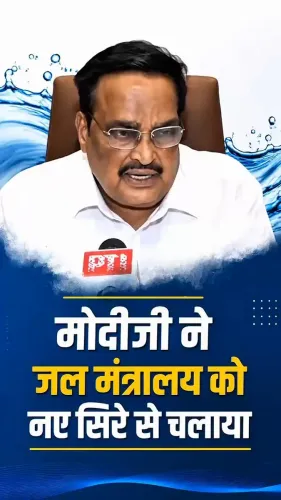
Union Jal Shakti Minister C. R. Paatil on Sunday, 7 June 2026, highlighted the government's water security initiatives, citing the Ken-Betwa River Linking Project and efforts to extend Narmada waters to remote areas of Gujarat including Kutch as evidence of what he called unprecedented progress under Prime Minister Narendra Modi.
Context
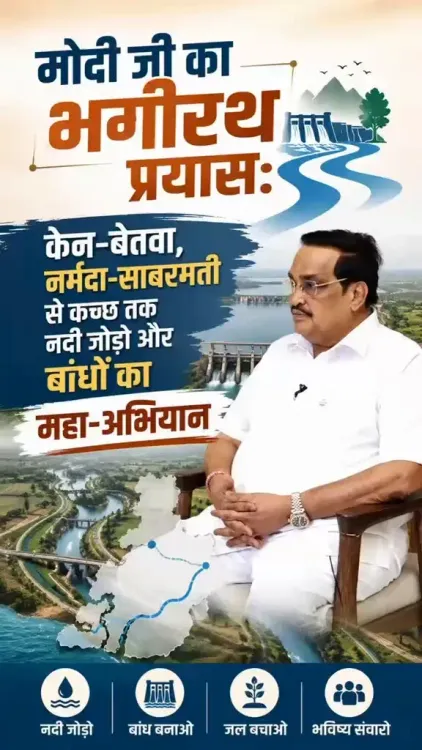
Posting in Hindi on X, Paatil wrote: 'माननीय प्रधानमंत्री श्री नरेंद्र मोदी सर के नेतृत्व में देश में जल सुरक्षा और जल संसाधनों के समग्र विकास की दिशा में अभूतपूर्व कार्य हो रहे हैं' ['Under the leadership of honourable Prime Minister Shri Narendra Modi, unprecedented work is being done in the country towards water security and comprehensive development of water resources']. The minister specifically named the Ken-Betwa River Linking Project and Narmada canal extensions to Kutch as flagship examples of what he described as a 'visionary approach to water management'.
Paatil argued these efforts are not limited to meeting current needs but are 'laying a strong foundation for the safe and prosperous future of coming generations.' He framed the initiatives as central to the broader goal of building a Viksit Bharat [Developed India].
Policy Backdrop
The Ken-Betwa River Linking Project is the first project approved under India's National Perspective Plan for river interlinking, a framework originally formulated in 1980 and revived when the Union Cabinet granted approval in 2021. The project transfers surplus water from the Ken basin to the Betwa basin, targeting drought-prone Bundelkhand across Madhya Pradesh and Uttar Pradesh.
On the western front, the Sardar Sarovar Dam on the Narmada reached its full height in 2017, enabling expanded delivery of water through canals into Gujarat's arid districts. Kutch, a semi-arid district historically afflicted by chronic water scarcity, has been a primary beneficiary of these canal extensions for both drinking water and irrigation.
Successive governments have treated inter-basin water transfers as a strategic response to regional imbalances in monsoon rainfall and declining groundwater levels. The current policy emphasis integrates river linking with dam construction and watershed conservation programmes.
Stakeholders and Impact
The communities most directly affected by these projects are Bundelkhand farmers — long dependent on erratic rainfall and shallow wells — and the approximately 2 million residents of Kutch who rely on Narmada canal water for daily needs. Paatil's post specifically linked river interlinking and dam construction to improvements in irrigation, drinking water availability, environmental balance, and farmer prosperity.
The minister's remarks also underscore the political significance of water infrastructure for the Bharatiya Janata Party in states like Gujarat, where Narmada water delivery has long been a flagship governance narrative, and in Uttar Pradesh and Madhya Pradesh, where Bundelkhand's agrarian distress has historically been an electoral pressure point.
What's Next
Parliamentary watchers will track progress on remaining environmental and inter-state clearances for other links proposed under the National River Linking Project, several of which involve complex negotiations between riparian states. Physical progress on Narmada canal extensions into interior Kutch and construction timelines for Ken-Betwa infrastructure will be key indicators of whether the policy ambition translates into on-ground delivery.
As India faces increasing climate variability and groundwater stress, the government's water infrastructure programme is likely to remain a central plank of its development narrative heading into the next budget and legislative cycle.
Point of View
Arriving at a moment when the Ken-Betwa project is navigating implementation after years of policy groundwork. By invoking both Bundelkhand and Kutch in a single message, the minister signals that water security is being presented as a pan-India, cross-regional achievement rather than a state-specific benefit. The framing around 'coming generations' and Viksit Bharat ties routine infrastructure messaging to the BJP's larger 2047 development narrative. Politically, this also reinforces the party's record in Gujarat — where Narmada water delivery has been a defining governance claim for over two decades.
NationPress
19 Sept 2026
Frequently Asked Questions
What is the Ken-Betwa River Linking Project?
The Ken-Betwa River Linking Project is India's first approved inter-basin water transfer under the National Perspective Plan, designed to channel surplus water from the Ken river to the Betwa river to irrigate drought-prone Bundelkhand across Madhya Pradesh and Uttar Pradesh. The Union Cabinet approved it in 2021.
How does Narmada water reach Kutch in Gujarat?
Water from the Narmada river is stored at the Sardar Sarovar Dam, which reached its full height in 2017, and is then distributed through an extensive canal network into Gujarat's arid districts including Kutch, providing drinking water and supporting irrigation in a historically water-scarce region.
What did Jal Shakti Minister C. R. Paatil say about water projects?
Minister C. R. Paatil said that unprecedented work is being done under PM Modi towards water security, citing the Ken-Betwa River Linking Project and Narmada canal extensions to Kutch as examples of visionary water management that will benefit both the current population and future generations.
What is India's National River Linking Project?
India's National River Linking Project is a large-scale plan to connect major rivers through canals and reservoirs to transfer water from surplus basins to deficit ones, addressing regional imbalances in rainfall and groundwater. The plan was originally formulated in 1980 and the Ken-Betwa link is its first approved component.
Who are the main beneficiaries of India's river interlinking projects?
The primary beneficiaries include farmers in Bundelkhand — covering parts of Madhya Pradesh and Uttar Pradesh — who face chronic drought, and residents of Kutch and other arid districts of Gujarat who depend on Narmada canal water for drinking water and agriculture.