Jal Shakti Minister Paatil lauds PM Modi's long-term vision
Synopsis
Union Jal Shakti Minister C. R. Paatil hailed PM Modi as a 'farsighted leader' on 12 June 2026, praising his decades-long planning horizon in a Hindi video tribute on X — a message that echoes the ministry's multi-decadal water security agenda under Jal Jeevan Mission and Namami Gange.
Key Takeaways
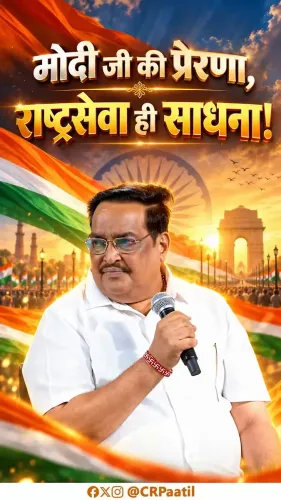
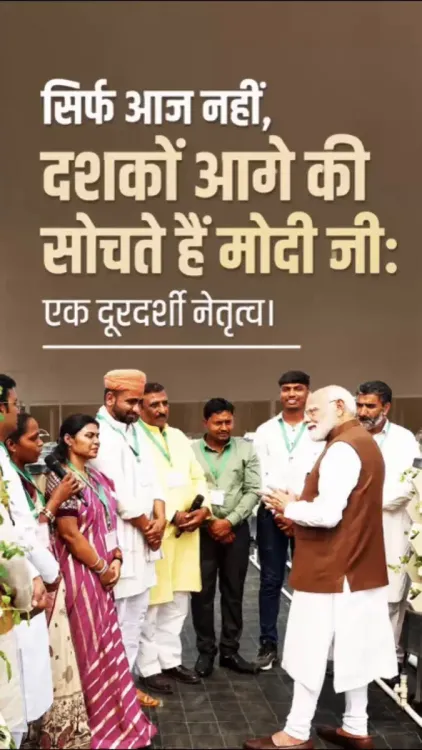
Paatil , Union Jal Shakti Minister and senior BJP leader, posted a tribute to PM Modi on 12 June 2026 calling him a 'farsighted leader' who plans 'decades ahead.' The post was in Hindi and accompanied by a video shared on X.
The tribute aligns with the Jal Jeevan Mission (launched 2019 ), which targets universal rural tap water access with a timeline extending into the 2030s .
The Namami Gange programme (initiated 2014 ) and the National Perspective Plan for river interlinking are key long-horizon water initiatives under the current government.
Both schemes are tied to the government's Viksit Bharat 2047 framework, framing water security as a generational national goal.
Parliamentary updates on Jal Jeevan Mission coverage and river-interlinking sanctions are expected in the upcoming monsoon session .
Union Jal Shakti Minister C. R. Paatil on Friday, 12 June 2026 praised Prime Minister Narendra Modi as a 'farsighted leader' who plans 'not just for today but decades ahead,' sharing a video tribute on X that underscored the ruling party's framing of Modi-era governance as generational in scope.
Context
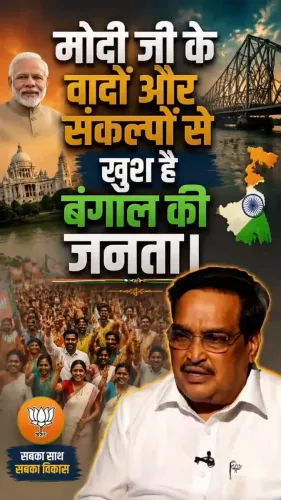
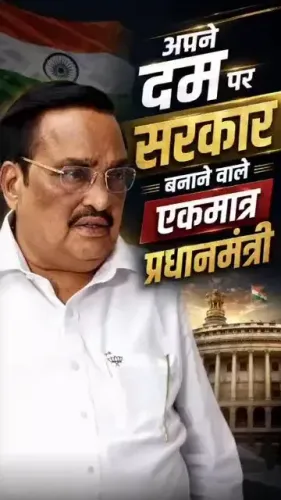
Paatil's post, written in Hindi, reads: 'एक दूरदर्शी नेतृत्व। सिर्फ आज नहीं, दशकों आगे की सोचते हैं मोदी जी' — 'A farsighted leadership. Modi thinks not just of today but decades ahead.' The post was accompanied by a video, the specific contents of which could not be independently verified at the time of publication.
The tribute comes from one of the government's senior water-sector voices. As Union Minister of Jal Shakti and a former Gujarat BJP state president, Paatil has been a consistent advocate for the administration's long-horizon water security agenda.
Policy backdrop
The 'decades ahead' framing aligns directly with the Jal Shakti Ministry's flagship programmes, each designed around multi-year or multi-decade delivery timelines. The Jal Jeevan Mission, launched in 2019, targets universal functional household tap connections in rural India, with implementation extending well into the 2030s.
The Namami Gange programme, initiated in 2014, is a multi-decadal river rejuvenation effort covering pollution abatement, biodiversity, and riverfront development along the Ganga basin. Separately, the National Perspective Plan for river interlinking — under discussion since the early 2000s — has seen renewed momentum since 2014, promising to reshape water availability across rain-shadow and drought-prone regions.
These schemes are increasingly linked by the government to the Viksit Bharat 2047 development framework, which sets national targets timed to the centenary of Indian independence.
Stakeholders and impact
Rural households remain the primary beneficiaries of the ministry's long-term water agenda. The Jal Jeevan Mission alone targets hundreds of millions of citizens who previously relied on unpiped or unsafe water sources. The agricultural sector, which accounts for the bulk of India's freshwater consumption, stands to gain from any progress on river interlinking and groundwater management frameworks.
For the BJP, such tributes serve a dual purpose: reinforcing Modi's image as a transformational leader while positioning water security as a signature governance achievement ahead of electoral cycles.
What's next
Attention now turns to the upcoming monsoon session of Parliament, where updated coverage figures for the Jal Jeevan Mission and potential sanctions for new river-interlinking projects are expected to be tabled. Any fresh budgetary allocation or scheme milestone announced in that session will test the 'decades ahead' narrative that ministers like Paatil are actively building.
The broader Viksit Bharat 2047 roadmap means water policy will remain a high-visibility political and administrative priority, with the ministry under pressure to demonstrate measurable, long-term progress on both quantity and quality of water access across India.
Point of View
' the minister implicitly benchmarks rivals against a long-horizon standard they are unlikely to match in public perception. The post also serves a ministry-level purpose — anchoring the Jal Shakti agenda, from Jal Jeevan Mission to river interlinking, within a larger, emotionally resonant vision of national transformation. As the Viksit Bharat 2047 framework matures, expect such tributes from cabinet ministers to become more frequent and more specifically tied to scheme milestones.
NationPress
26 Oct 2026
Frequently Asked Questions
Who is C. R. Paatil and what is his role in the government?
C. R. Paatil is the Union Minister of Jal Shakti, responsible for India's water resources, river development, and drinking water supply programmes. He is also a senior BJP leader and former Gujarat BJP state president.
What did C. R. Paatil say about PM Modi on 12 June 2026?
Paatil called Modi a 'farsighted leader' who thinks 'not just of today but decades ahead,' posting a Hindi tribute with a video on X on 12 June 2026.
What is the Jal Jeevan Mission and how does it reflect long-term planning?
The Jal Jeevan Mission, launched in 2019, aims to provide functional household tap water connections to every rural home in India, with implementation extending into the 2030s — making it one of the government's most prominent multi-decade water security programmes.
What is the Viksit Bharat 2047 framework?
Viksit Bharat 2047 is the central government's long-term development vision targeting a fully developed India by 2047, the centenary of independence. Water security programmes under the Jal Shakti Ministry are increasingly linked to this framework.
What water policy developments should Indians watch next?
The upcoming monsoon session of Parliament is expected to bring updates on Jal Jeevan Mission rural coverage figures and potential new sanctions for river-interlinking projects under the National Perspective Plan.