Jal Shakti Minister Paatil marks 12 years of Modi govt, hails JJM

Synopsis
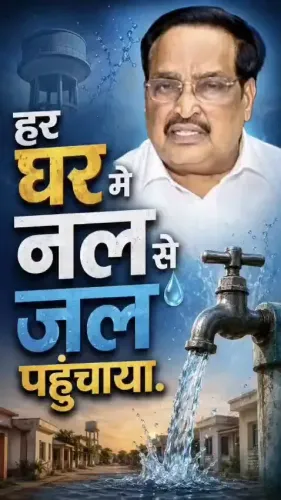
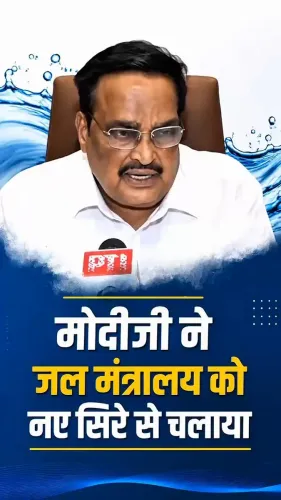
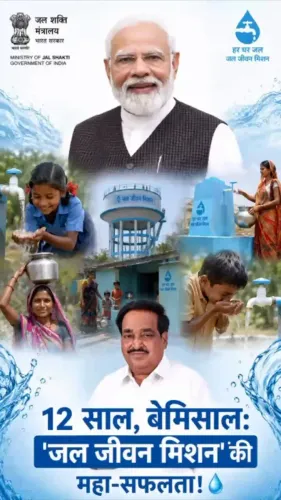
Union Jal Shakti Minister C. R. Paatil marked 12 years of the Modi government with a post on X spotlighting the Jal Jeevan Mission. He framed the rural tap-water scheme as proof of the Centre's 'jan-bhagidari' approach, crediting it for saving women's time and improving children's health in villages.
Key Takeaways
Union Jal Shakti Minister C.
Paatil marked 12 years of the Modi government on 3 June 2026 via a post on X.
He positioned the Jal Jeevan Mission as the symbol of the government's rural delivery record.
The mission was announced in the Union Budget 2019 to provide tap water to all rural homes.
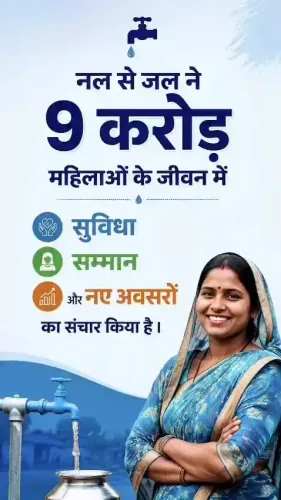
Paatil credited the scheme with saving women's time and improving rural children's health.
The post used the hashtags #HarGharJal , #12YearsOfSeva and #BadaltaBharat .
Union Jal Shakti Minister C. R. Paatil on Wednesday, 3 June 2026, marked 12 years of the Narendra Modi-led central government with a post on X spotlighting the Jal Jeevan Mission as a flagship example of rural infrastructure delivery. In a message blending Hindi and English, the minister framed the scheme as a symbol of the government's 'jan-bhagidari' (people's participation) approach to development.
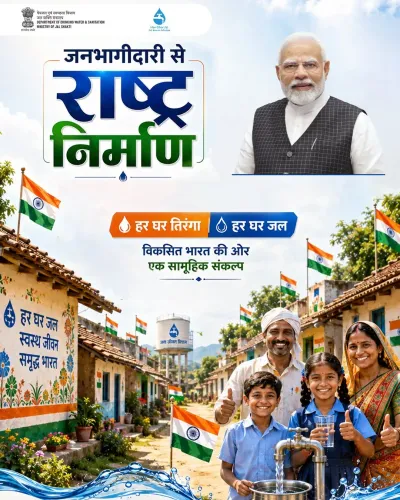
'12 years, one resolve: tap water to every home, transformation in every life,' Paatil wrote, crediting Prime Minister Narendra Modi's vision for placing community participation at the centre of governance. He described #JalJeevanMission as a programme that has 'delivered clean tap water to crores of rural families, saved women's time, improved children's health and set in motion a new stream of dignity in every home'. He signed off with the line 'every drop holds development, every tap holds trust', alongside the hashtags #HarGharJal, #12YearsOfSeva and #BadaltaBharat.
Context
The post coincides with the 12-year mark of the Modi government, which first took office in May 2014. Paatil, a senior BJP leader and former Gujarat BJP state president, has held the Jal Shakti portfolio at the Centre and has been a vocal champion of the ministry's rural water agenda.
By anchoring the anniversary message in the Jal Jeevan Mission rather than a broader list of achievements, the minister has placed rural drinking water at the heart of the government's self-assessment of its second-decade record.
Policy backdrop
The Jal Jeevan Mission was announced in the Union Budget 2019 with a stated goal of providing a functional household tap connection to every rural home by 2024. It subsumed the earlier National Rural Drinking Water Programme, which had operated since 2009, and is implemented by the Ministry of Jal Shakti in partnership with states.
The mission fits a broader policy template adopted since 2014, in which large rural programmes combine physical asset creation with measurable service-delivery outcomes. It sits alongside the Swachh Bharat Mission on sanitation and the Pradhan Mantri Awas Yojana on housing, all framed around universal access to basic services.
Stakeholders and impact
Rural households remain the primary intended beneficiaries, with the scheme's design giving particular weight to outcomes for women, who traditionally bear the burden of fetching water, and rural children, whose health is sensitive to water quality. Village-level water and sanitation committees have been built into the mission's delivery architecture, reflecting the 'jan-bhagidari' phrasing the minister used.
State governments carry significant implementation responsibility, since drinking water supply is a state subject and tap-connection rollout depends on local source sustainability, distribution networks and tariff frameworks. The pace of progress has varied across states, making the mission a recurring point of political and administrative discussion.
What's next
Attention will turn to the next official progress dashboard for the mission, which is expected to show updated tap-water coverage percentages across states, and to any revised completion targets or budgetary allocations announced in the forthcoming Union Budget cycle.
For Paatil, the post signals that the Jal Shakti ministry intends to keep the Har Ghar Jal message at the centre of the government's communication as it moves deeper into its third consecutive term, positioning rural water delivery as a yardstick by which voters are being invited to judge a dozen years of governance.
Point of View
Household-level delivery, much as Swachh Bharat was in the previous decade. The framing also reinforces a consistent pattern since 2014 of pitching universal basic services as the government's core electoral and governance argument. Expect rural water coverage numbers to feature prominently in the Centre's political messaging through the upcoming budget cycle.
NationPress
25 Sept 2026
Frequently Asked Questions
What did C. R. Paatil say about 12 years of the Modi government?
Union Jal Shakti Minister C. R. Paatil marked 12 years of the Modi government with an X post highlighting the Jal Jeevan Mission as proof of the Centre's 'jan-bhagidari' model. He said the scheme had delivered tap water to crores of rural families, saved women's time and improved children's health.
When was the Jal Jeevan Mission launched?
The Jal Jeevan Mission was announced in the Union Budget 2019 by the central government. It aims to provide functional household tap connections to every rural home and is implemented by the Ministry of Jal Shakti in partnership with states.
Who is C. R. Paatil?
C. R. Paatil is the Union Minister of Jal Shakti and a senior BJP leader. He previously served as the president of the BJP's Gujarat state unit.
What is the Har Ghar Jal programme?
Har Ghar Jal is the operational name of the Jal Jeevan Mission's goal of providing a tap water connection to every rural household in India. It is run by the Ministry of Jal Shakti and depends on state governments for last-mile implementation.
Which earlier scheme did the Jal Jeevan Mission replace?
The Jal Jeevan Mission subsumed the National Rural Drinking Water Programme, which had operated since 2009. The new mission shifted the focus from village-level water sources to functional tap connections at each household.