Jal Shakti Minister Paatil hails JJM's rural water impact
Synopsis
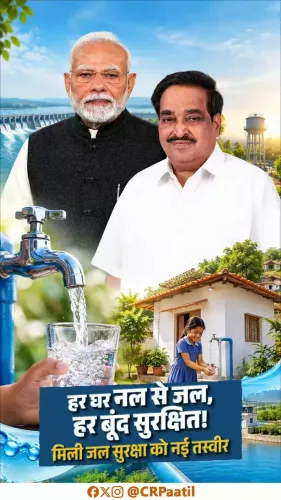
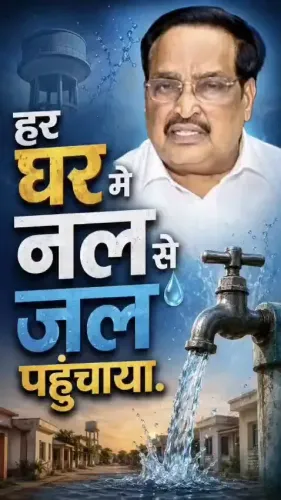
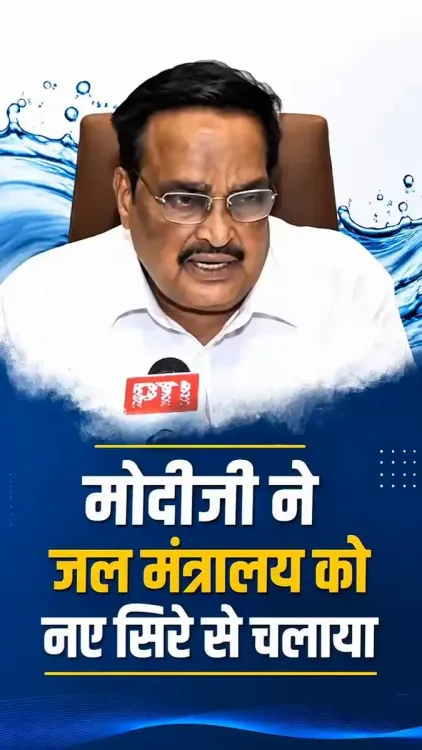
Union Jal Shakti Minister C. R. Paatil on 11 June 2026 lauded PM Modi's leadership for giving the water sector new direction, citing Jal Jeevan Mission as a historic initiative that has delivered clean drinking water to crores of rural Indian families under the Har Ghar Jal goal.
Key Takeaways
Union Jal Shakti Minister C.
Paatil posted on 11 June 2026 crediting PM Modi's leadership for transforming India's water sector.
The Jal Jeevan Mission was launched on 15 August 2019 with the goal of providing functional household tap connections to every rural household — Har Ghar Jal .
The mission was announced in the July 2019 Union Budget and is administered by the Ministry of Jal Shakti .
Paatil's post frames JJM as part of the Viksit Bharat agenda aimed at making India a developed nation by 2047 .
Key stakeholders include rural households and village panchayats , who bear responsibility for last-mile water infrastructure maintenance.
Next quarterly JJM coverage reports and the 2026-27 Union Budget allocations will be the clearest indicators of the mission's forward trajectory.
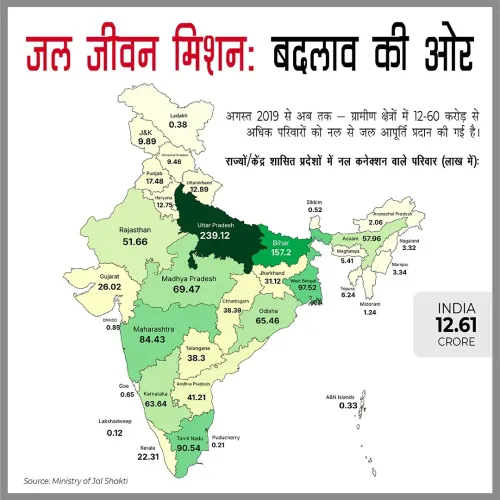
Union Jal Shakti Minister C. R. Paatil on Thursday, 11 June 2026 credited Prime Minister Narendra Modi's leadership with giving the water sector 'a new direction, new momentum, and new priority,' pointing to the Jal Jeevan Mission as a historic effort that has brought clean drinking water to crores of rural families.
Context
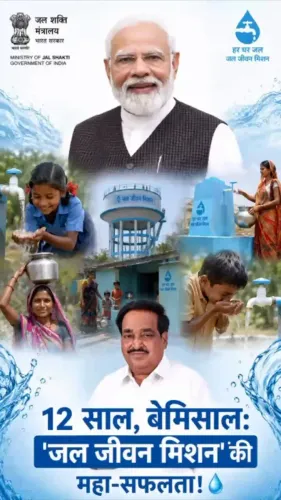
Posting in Hindi on X, Minister Paatil wrote: 'जल जीवन मिशन जैसे ऐतिहासिक प्रयासों ने करोड़ों परिवारों तक स्वच्छ पेयजल पहुँचाकर ग्रामीण भारत के जीवन में सकारात्मक परिवर्तन लाया है' — 'Historic efforts like the Jal Jeevan Mission have brought about positive change in the lives of rural India by delivering clean drinking water to crores of families.' The post was accompanied by a video and tagged with the hashtags #JalJeevanMission, #HarGharJal, and #ViksitBharat, situating the message within the government's broader 2047 development narrative.
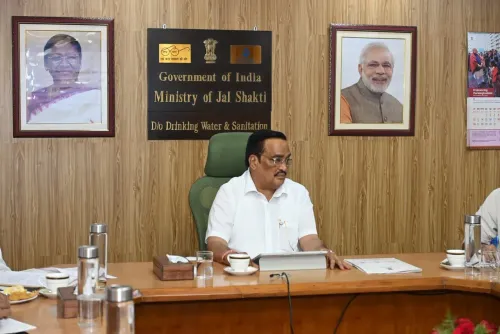
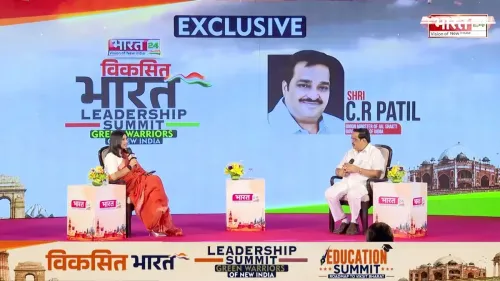
Paatil, a senior BJP leader and former Gujarat state party president, heads the Ministry of Jal Shakti, which oversees both drinking water supply and water resources policy across India.
Policy Backdrop
The Jal Jeevan Mission (JJM) was announced in the July 2019 Union Budget and formally launched by Prime Minister Modi on 15 August 2019 with the stated goal of providing a functional household tap connection — Har Ghar Jal — to every rural household in India. The mission represented a significant shift from earlier decentralised water supply schemes by centralising funding, monitoring, and accountability under a single national framework.
JJM sits alongside other flagship programmes such as the Swachh Bharat Mission and Namami Gange as part of the central government's integrated approach to rural infrastructure and public health. The government has consistently framed water access as a means of reducing waterborne disease and the daily drudgery — disproportionately borne by women and girls — of fetching water from distant sources.
Stakeholders and Impact
The primary beneficiaries of JJM are rural households and the village panchayats responsible for maintaining local water infrastructure. For millions of families in water-stressed states, a piped tap connection represents the first reliable in-home water supply, with downstream benefits for health, school attendance, and women's economic participation.
The Viksit Bharat framing in Paatil's post signals that the ministry views rural water coverage not merely as a welfare measure but as a structural pillar of India's aspiration to become a developed nation by 2047. Quarterly coverage reports from the Ministry of Jal Shakti and funding decisions in successive Union Budgets remain the key indicators of how swiftly those ambitions translate into connections on the ground.
What's Next
Attention will now turn to the ministry's next quarterly JJM progress report and any revised targets or enhanced allocations that may emerge from the 2026-27 Union Budget cycle. Sustained political messaging at the ministerial level suggests the government intends to keep rural water access prominent in its public communication ahead of state and national electoral cycles. Whether on-ground coverage figures match the momentum of the rhetoric will be the measure by which both policymakers and village communities judge the mission's final stretch.
Point of View
The ministry is explicitly linking rural infrastructure delivery to the 2047 national development horizon — a framing that serves both policy continuity and electoral messaging. The emphasis on crores of beneficiaries, without citing specific figures, is a deliberate rhetorical choice that preserves flexibility while sustaining momentum. Sustained ministerial communication of this kind typically precedes either a fresh target announcement or a budget push, suggesting the ministry may be laying groundwork for a significant JJM update.
NationPress
26 Oct 2026
Frequently Asked Questions
What is Jal Jeevan Mission and when was it launched?
Jal Jeevan Mission is a central government flagship scheme launched by PM Narendra Modi on 15 August 2019 to provide functional household tap connections with clean drinking water to every rural household in India under the 'Har Ghar Jal' goal. It was announced in the July 2019 Union Budget.
Who is C. R. Paatil and what ministry does he head?
C. R. Paatil is a senior BJP leader, former Gujarat BJP state president, and the Union Minister of Jal Shakti, the ministry responsible for drinking water supply and water resources policy in India.
What does 'Har Ghar Jal' mean?
'Har Ghar Jal' is Hindi for 'water in every home' and is the stated target of the Jal Jeevan Mission — ensuring that every rural household in India has a functional piped tap connection providing clean drinking water.
How does Jal Jeevan Mission connect to Viksit Bharat?
The government frames Jal Jeevan Mission as a structural pillar of Viksit Bharat, India's aspiration to become a fully developed nation by 2047, treating rural water access as both a public-health intervention and a foundational infrastructure goal.
What will indicate the future progress of Jal Jeevan Mission?
The Ministry of Jal Shakti's quarterly JJM coverage reports and any revised targets or funding allocations in the 2026-27 Union Budget will be the clearest indicators of the mission's pace and remaining coverage gaps.