CM Uttarakhand: NABARD-backed RAS trout farming model rises in Nainital
Synopsis
The Uttarakhand Chief Minister's Office announced on 8 July 2026 that a NABARD-supported Recirculating Aquaculture System for trout farming in Nainital has emerged as a new self-reliance model, aligning with national schemes like PMMSY to boost hill-district rural incomes through water-efficient, technology-driven aquaculture.
Key Takeaways
The Uttarakhand CMO on 8 July 2026 flagged a NABARD -backed RAS-based trout farming unit in Nainital as a new self-reliance model for hill fisheries.
Recirculating Aquaculture Systems filter and reuse water, making them ideal for ecologically sensitive Himalayan districts with limited flat land.
The initiative is backed by the Pradhan Mantri Matsya Sampada Yojana (PMMSY) , launched in 2020 , and the Fisheries and Aquaculture Infrastructure Development Fund (FIDF) , created in 2018 .
NABARD , established in 1982 , is the apex rural development finance institution and a key refinancing agency for fisheries infrastructure.
Primary beneficiaries include hill farmers, rural entrepreneurs, and fisheries cooperatives in Uttarakhand's Kumaon region.
The CMO's framing suggests the government plans to replicate the Nainital model in other hill districts under future PMMSY phases.
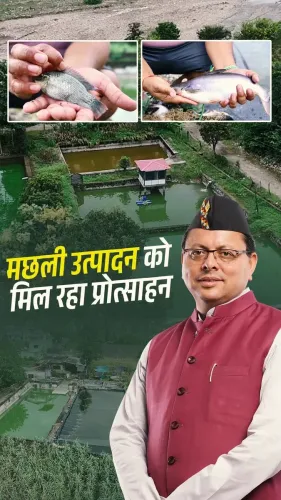
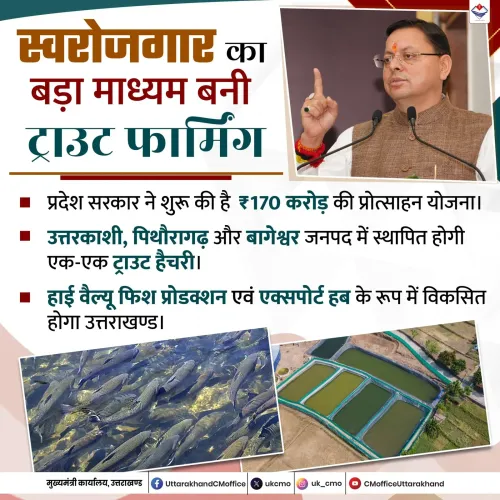
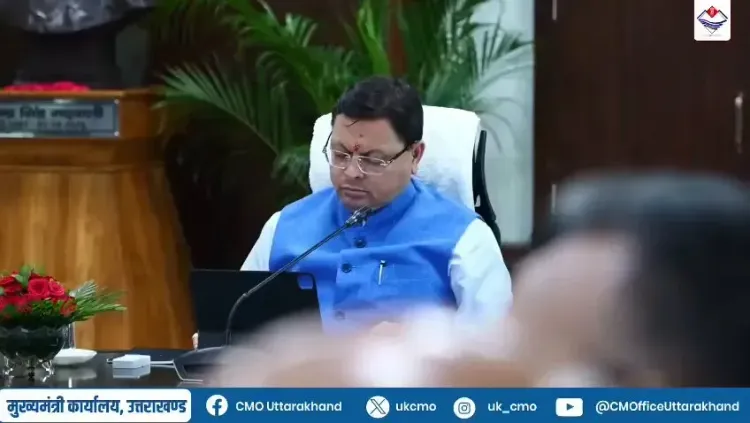
The Chief Minister's Office of Uttarakhand on Wednesday, 8 July 2026 highlighted a new self-reliance model in fisheries, announcing that a modern Recirculating Aquaculture System (RAS)-based trout farming unit in Nainital, developed with support from NABARD, has emerged as a replicable blueprint for rural economic empowerment in the hills.
The post, shared by the official CMO account, stated: 'NABARD ke sahyog se Nainital mein aadhunik RAS aadharit trout matsya palan atmanirbharta ka naya model bankar ubhra hai' — ('With NABARD's support, modern RAS-based trout farming in Nainital has emerged as a new model of self-reliance.')
Context
Recirculating Aquaculture Systems are closed-loop, water-efficient fish farming setups that filter and reuse water, making them particularly suited to ecologically sensitive Himalayan terrain where riverine resources are limited and temperatures naturally favour cold-water species like trout. Nainital district, situated in the Kumaon region of Uttarakhand, has long been identified as a viable zone for trout cultivation owing to its cold-water lakes and streams. The CMO's post signals that at least one such RAS unit has now reached a stage where it can be presented as a working model for other hill districts.Policy Backdrop
NABARD, India's apex rural development finance institution established in 1982, has been a central financing agency under the Fisheries and Aquaculture Infrastructure Development Fund (FIDF) created in 2018 to modernise fish farming infrastructure across the country. The broader policy push accelerated with the launch of the Pradhan Mantri Matsya Sampada Yojana (PMMSY) in 2020, which specifically promotes technology-driven aquaculture including RAS units to boost domestic fish production and reduce dependence on open-water capture fisheries. The Nainital initiative sits squarely within this national framework and the wider Atmanirbhar Bharat agenda of building self-sufficient rural enterprise clusters.Stakeholders and Impact
The primary beneficiaries of RAS-based trout farming in Uttarakhand are hill farmers, rural entrepreneurs, and fisheries cooperatives who have historically had limited livelihood options in fragile mountain ecosystems. Unlike conventional pond aquaculture, RAS units require significantly less water and land, making them accessible to smallholders in terrain where flat arable land is scarce. Trout commands a premium price in domestic and export markets, giving producers a high-value crop that can meaningfully raise household incomes. The model also reduces pressure on wild fish stocks in Himalayan rivers, aligning economic and ecological goals.What's Next
The CMO's framing of the Nainital unit as a 'new model of self-reliance' suggests the Uttarakhand government intends to use it as a template for replication across other hill districts. Observers will watch for state budget allocations targeting the scaling of RAS infrastructure under the next phase of PMMSY, and for NABARD refinancing announcements that could bring more rural entrepreneurs into the programme. The success of this model in Nainital could also inform similar cold-water aquaculture pushes in neighbouring Himalayan states.Point of View
Not merely a pilot. By anchoring the announcement to NABARD, the government is aligning itself visibly with central-scheme financing, reinforcing cooperative federalism in action. The choice of trout — a high-value, export-capable species — suggests an ambition beyond subsistence farming toward market integration for hill communities. This fits a broader post-2020 pattern of Himalayan states leveraging PMMSY and Atmanirbhar Bharat branding to attract institutional capital into sectors previously seen as too niche or fragile for mainstream investment.
NationPress
7 Oct 2026
Frequently Asked Questions
What is RAS-based trout farming in Uttarakhand?
RAS stands for Recirculating Aquaculture System, a closed-loop fish farming method that filters and reuses water. In Uttarakhand's Nainital district, NABARD has supported an RAS unit for growing trout, a cold-water species well-suited to the Himalayan climate.
What is NABARD's role in fisheries in India?
NABARD, established in 1982, is India's apex rural development finance institution. It acts as a key refinancing agency under the Fisheries and Aquaculture Infrastructure Development Fund (FIDF) created in 2018, channelling credit to modernise fish farming infrastructure across states.
What is the Pradhan Mantri Matsya Sampada Yojana?
Pradhan Mantri Matsya Sampada Yojana (PMMSY) was launched in 2020 to boost India's fish production through technology adoption, including RAS units, and to promote self-reliance in the fisheries sector.
Why is Nainital suitable for trout farming?
Nainital is part of Uttarakhand's Kumaon region and has cold-water lakes and streams that naturally support trout cultivation. Its hill ecology makes water-efficient RAS systems particularly practical where flat arable land is scarce.
Who benefits from the Nainital RAS trout farming model?
The primary beneficiaries are hill farmers, rural entrepreneurs, and fisheries cooperatives in Uttarakhand who gain a high-value, water-efficient livelihood option that also reduces pressure on wild fish stocks in Himalayan rivers.