CM Dhami Highlights Trout Farming Boom Empowering Uttarakhand Farmers
Synopsis
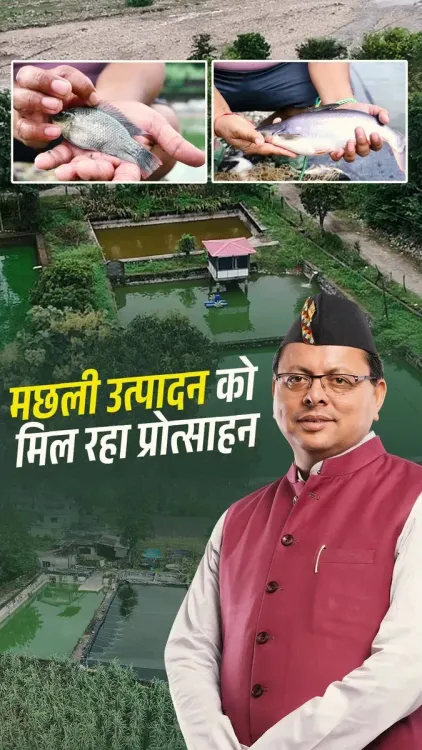
Uttarakhand CM Pushkar Singh Dhami highlighted on 11 June 2026 that expanding trout farming across the state is continuously raising local farmers' incomes, fuelling self-employment and rural development — and credited the progress to national fisheries policy under PM Modi's government.
Key Takeaways
CM Pushkar Singh Dhami on 11 June 2026 credited trout farming expansion with raising incomes of local cultivators in Uttarakhand .
The post was addressed to PM Narendra Modi , Amit Shah , and BJP national leadership, framing the achievement within the Centre's rural economy agenda.
Uttarakhand's cold-water Himalayan rivers make it naturally suited for trout aquaculture, a low-land-footprint livelihood option for hill farmers.
The Pradhan Mantri Matsya Sampada Yojana (PMMSY) , launched in 2020 , provides the central policy and funding framework supporting such state-level initiatives.
Trout farming generates multiplier effects in feed supply, logistics, and hospitality sectors, benefiting broader rural communities beyond direct farmers.
Further integration with central fisheries schemes and state budget allocations will determine the sector's scale in the near term.
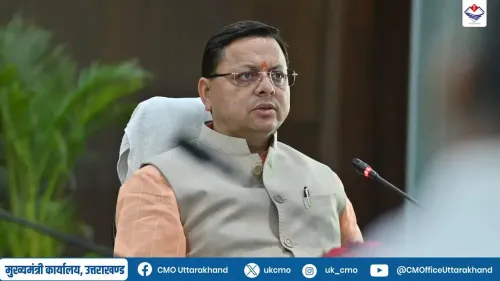
Uttarakhand Chief Minister Pushkar Singh Dhami on Thursday, 11 June 2026, highlighted the expanding role of trout farming in boosting the incomes of local farmers across the state, crediting the initiative with driving self-employment and rural development in the Himalayan region.
Context
In his post on X, CM Dhami stated that the expansion of trout farming in the state — ट्राउट फार्मिंग के विस्तार (the spread of trout farming) — has led to a continuous rise in the income of local cultivators, economically empowering them and giving fresh momentum to self-employment and rural development. The post was addressed directly to Prime Minister Narendra Modi, Union Home Minister Amit Shah, and the BJP national leadership, signalling that the state government views this as a deliverable aligned with the Centre's broader rural economy agenda.
Uttarakhand's cold-water rivers and streams make it one of India's most naturally suited states for trout aquaculture. The fish, which thrives in clean, fast-flowing Himalayan water, has increasingly become a source of livelihood for mountain communities that have limited agricultural land and face seasonal employment constraints.
Policy Backdrop
The push for trout farming in Uttarakhand sits within a larger national policy framework. The Pradhan Mantri Matsya Sampada Yojana (PMMSY), launched in 2020, is the Centre's flagship scheme to modernise fisheries infrastructure, expand inland aquaculture, and support rural entrepreneurship in the sector. Cold-water fisheries, including trout, are an explicit component of this scheme's outreach to Himalayan states.
Before PMMSY, the Blue Revolution initiative — launched in 2015-16 — had already sought to increase fish production through modern techniques and better infrastructure. Together, these programmes have created a policy pipeline through which states like Uttarakhand can channel central funds into localised projects such as private hatcheries, cooperative fish farms, and processing units.
BJP-led state governments in Himalayan regions have increasingly positioned cold-water fisheries as a tool for agricultural diversification, recognising that traditional crop farming alone cannot sustain mountain livelihoods given the terrain and climate.
Stakeholders and Impact
The primary beneficiaries of trout farming expansion are local farmers and rural entrepreneurs in Uttarakhand's hill districts, many of whom have limited access to irrigated farmland. Trout farming offers a relatively low-land-footprint livelihood option, with raceways and tanks operable on small plots near streams.
Beyond direct income, the sector generates downstream activity in feed supply, cold-chain logistics, and hospitality — particularly in tourist areas where fresh trout is a sought-after menu item. The state's rural communities stand to benefit from this multiplier effect as the sector scales.
Self-employment generation in geographically challenging areas has been a recurring theme of CM Dhami's governance messaging, and this post reinforces the administration's framing of natural-resource-based enterprise as a vehicle for economic inclusion in the hills.
What's Next
The state government's emphasis on trout farming is expected to reflect in upcoming state budget allocations and potential expansions of hatchery infrastructure under central schemes. Integration of Uttarakhand's trout sector with PMMSY funding cycles in the coming financial year will be a key indicator of how far the state can scale the initiative. Observers will also watch whether the Centre responds to CM Dhami's outreach with targeted support for cold-water fisheries in the next round of scheme disbursements.
Point of View
Framing a state-level livelihood win within the national narrative of rural economic empowerment under PM Modi. By tagging the Prime Minister and Home Minister, the Uttarakhand government is positioning trout farming not merely as a local success but as evidence that central schemes like PMMSY are delivering on the ground in difficult terrain. This fits a broader pattern among BJP-governed Himalayan states of leveraging natural-resource-based enterprise to counter out-migration and agrarian distress. The political subtext is clear: ahead of any electoral cycle, visible rural income gains in hill districts are valuable currency.
NationPress
13 Sept 2026
Frequently Asked Questions
What is trout farming and why is it important for Uttarakhand?
Trout farming is the cultivation of trout fish in controlled cold-water environments such as raceways and tanks. It is important for Uttarakhand because the state's Himalayan rivers provide naturally cold, clean water ideal for the fish, offering hill farmers a viable livelihood option on small land holdings.
What did CM Dhami say about trout farming on 11 June 2026?
CM Pushkar Singh Dhami stated on 11 June 2026 that the expansion of trout farming in Uttarakhand has continuously raised the incomes of local cultivators, economically empowering them and giving new momentum to self-employment and rural development in the state.
Which central government scheme supports trout farming in Uttarakhand?
The Pradhan Mantri Matsya Sampada Yojana (PMMSY) , launched in 2020 , is the primary central scheme supporting fisheries including cold-water trout farming. The earlier Blue Revolution initiative from 2015-16 also laid the groundwork for modernising aquaculture in states like Uttarakhand .
How does trout farming help rural communities in Uttarakhand?
Beyond direct farmer income, trout farming stimulates activity in feed supply, cold-chain logistics, and the hospitality sector — especially in tourist areas where fresh trout is popular. This multiplier effect benefits a wider circle of rural entrepreneurs and workers in hill districts.
What is the Pradhan Mantri Matsya Sampada Yojana?
The Pradhan Mantri Matsya Sampada Yojana (PMMSY) is a central government scheme launched in 2020 to modernise India's fisheries infrastructure, boost fish production, and support rural entrepreneurship in aquaculture, including cold-water fisheries in Himalayan states.