CM Dhami Backs Amjhar Watershed Project for Rural Uttarakhand
Synopsis
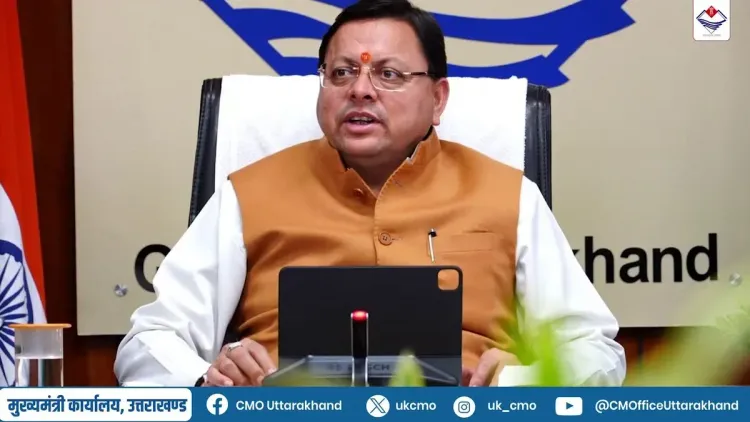
The Chief Minister's Office of Uttarakhand has highlighted the Amjhar watershed project in Nainital as a model of sustainable development under CM Pushkar Singh Dhami, linking natural resource conservation directly to rural livelihood generation in the Himalayan state.
Key Takeaways
The Chief Minister's Office of Uttarakhand announced on 14 June 2026 that the Amjhar watershed project in Nainital is being developed as a sustainable development model.
Chief Minister Pushkar Singh Dhami is credited with driving the initiative, which links natural resource conservation to rural livelihood improvement.
The project targets hill farmers and rural communities in Nainital district, a Himalayan zone prone to water stress and land degradation.
The initiative aligns with India's Integrated Watershed Management Programme (IWMP) launched in 2009 , which connects conservation with rural income generation.
The state government has framed the Amjhar project as a replicable model, signalling intent to scale similar interventions across Uttarakhand .
Key indicators to watch include implementation timelines, coverage area, and livelihood outcomes from formal progress assessments.
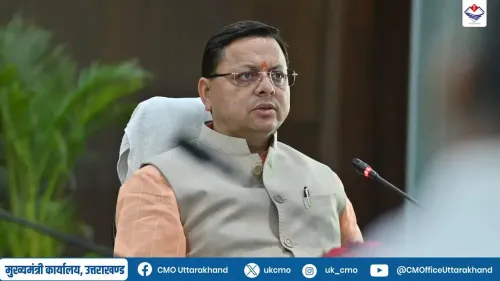
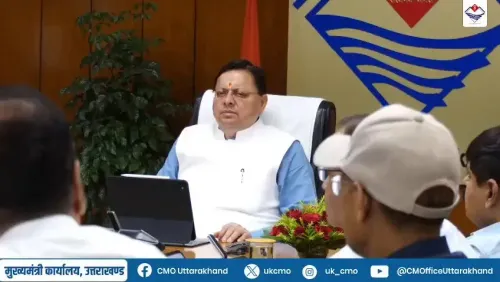
The Chief Minister's Office of Uttarakhand announced on Sunday, 14 June 2026 that the Amjhar watershed project in Nainital district is being developed as a model of sustainable development, with the initiative aimed at conserving natural resources while generating rural livelihoods under the leadership of Chief Minister Pushkar Singh Dhami.
The official post stated that under CM Dhami's leadership, 'praakritik sansaadhanon ke sanrakshan aur graameen aajeevika ko mil rahi hai nayi raftaar' — meaning 'conservation of natural resources and rural livelihoods are gaining new momentum' — and that the Amjhar watershed project is set to become an 'ideal model of sustainable development.'
Context
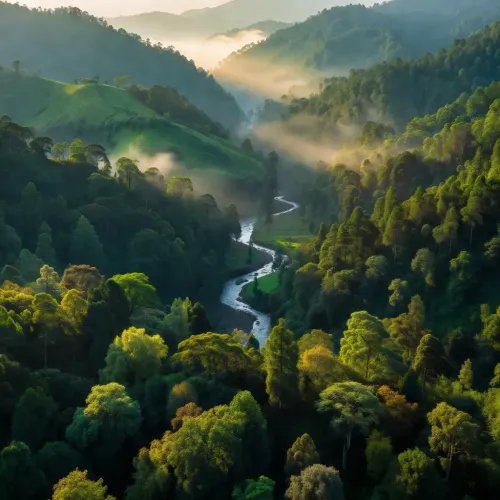
The Amjhar watershed project is located in Nainital, a Himalayan district in Uttarakhand characterised by lakes, forests, and hilly terrain where water availability and soil conservation are longstanding concerns. The district's topography makes it both ecologically sensitive and vulnerable to water stress, particularly for communities dependent on rain-fed agriculture and forest resources.
Watershed management in hill districts typically involves soil bunding, check dams, reforestation, and water harvesting structures that collectively slow runoff and recharge groundwater — directly benefiting hill farmers and rural communities who depend on seasonal water sources.
Policy Backdrop
India's Integrated Watershed Management Programme (IWMP), launched in 2009, established the national framework for conservation-linked rural development and has been implemented across ecologically fragile states including Uttarakhand. The programme ties watershed restoration to income generation, enabling rural households to benefit from improved agricultural productivity and allied activities such as horticulture and animal husbandry.
Uttarakhand governments have consistently promoted watershed initiatives to address water scarcity in mountain districts, aligning state priorities with national sustainable development goals for the Himalayas. The Amjhar project, as described by the Chief Minister's Office, appears to follow this established policy lineage, positioning itself as a replicable model for other ecologically fragile zones.
Stakeholders and Impact
Rural communities and hill farmers in and around Nainital stand as the primary beneficiaries of the initiative. Watershed projects of this nature typically improve water availability for irrigation, reduce land degradation, and open pathways to supplementary livelihoods through improved land productivity.
The framing of the Amjhar project as an 'ideal model' suggests the state government intends it to serve as a template for scaling similar interventions across Uttarakhand's other mountain districts, potentially influencing how future budgetary allocations and technical resources are directed toward conservation-linked development.
What's Next
Attention will now turn to formal progress reports on the Amjhar watershed project's implementation, including timelines, coverage area, and measurable livelihood outcomes for participating communities. State budget allocations in forthcoming cycles and any independent impact assessments will be key indicators of how seriously the government pursues the 'model' designation it has publicly assigned to this initiative.
If the Amjhar project delivers verifiable outcomes, it could influence watershed policy design across other Himalayan states grappling with similar challenges of ecological fragility and rural economic stress.
Point of View
While also positioning CM Dhami as a conservation-forward leader ahead of any electoral cycle. Watershed projects have historically been low-profile administrative exercises; elevating one to 'model' status suggests a strategic intent to make rural ecological governance a visible plank of the Dhami administration. If outcomes are independently verified, the approach could genuinely influence Himalayan state policy; if not, the gap between rhetoric and delivery will attract scrutiny. The broader pattern here reflects a national trend of state governments seeking to align local schemes with sustainable development branding to attract central funds and international attention.
NationPress
13 Sept 2026
Frequently Asked Questions
What is the Amjhar watershed project in Uttarakhand?
The Amjhar watershed project is a natural resource conservation initiative in Nainital district , Uttarakhand, aimed at water conservation and generating rural livelihoods. The Chief Minister's Office has described it as a model of sustainable development under CM Pushkar Singh Dhami .
How does the Amjhar project help rural communities in Nainital?
Watershed projects like the Amjhar initiative typically improve water availability for irrigation, reduce soil erosion, and support supplementary livelihoods for hill farmers and rural households through improved land and water productivity.
What is India's Integrated Watershed Management Programme?
India's Integrated Watershed Management Programme (IWMP) was launched in 2009 to support conservation-linked rural development across states. It provides a national framework that ties ecological restoration to income generation for rural communities, including in Himalayan states like Uttarakhand.
What is CM Pushkar Singh Dhami's role in Uttarakhand's environment policy?
Pushkar Singh Dhami has served as Chief Minister of Uttarakhand since 2021 , with a stated emphasis on state development and natural resource management. His office has positioned watershed conservation as a key pillar of rural development policy.
Why is Nainital important for water conservation in Uttarakhand?
Nainital is a Himalayan district with lakes, forests, and hilly terrain that is both ecologically sensitive and prone to water stress. Conservation efforts here are critical for sustaining groundwater recharge and supporting communities dependent on seasonal water sources and rain-fed agriculture.