White House Welcomes Artemis III Crew to the Oval Office

Synopsis
The White House formally welcomed the Artemis III crew to the Oval Office on October 28, 2026, spotlighting NASA's mission to land astronauts on the Moon's south pole — the first crewed lunar landing since Apollo — amid intensifying international competition in lunar exploration.
Key Takeaways
The White House hosted the Artemis III crew at the Oval Office on October 28, 2026 .
Artemis III is NASA's planned first crewed lunar landing mission, targeting the Moon's south pole region .
The Artemis program was established in 2017 as the successor to the Apollo missions; Artemis I completed an uncrewed test in November 2022 .
International partners including ESA , JAXA , and CSA are part of the Artemis coalition alongside commercial landers.
China is pursuing a parallel crewed lunar programme, adding geopolitical weight to the Artemis mission's timeline.
Future milestones to watch include Artemis IV planning and congressional funding for lunar surface infrastructure .
History walked into the Oval Office on Wednesday, October 28, 2026, when The White House welcomed the crew of Artemis III — the astronauts assigned to humanity's first crewed lunar landing since the Apollo era — for a formal presidential reception. The moment, marked by the American flag and the rocket emoji the White House posted alongside the announcement, signals that the mission is no longer a blueprint but a reality close enough to celebrate.
Why the Artemis III crew visiting the White House matters
An Oval Office visit for a spaceflight crew is one of Washington's most time-honoured traditions — a symbolic handshake between the nation's commander-in-chief and the people it is trusting with its most ambitious scientific endeavour. For NASA's Artemis III, the stakes are as high as any mission in a generation: a crewed landing on the Moon's south pole region, a zone of permanent shadow that scientists believe harbours water ice — a resource critical to any long-term human presence on the lunar surface.
From Apollo's shadow to Artemis III's south pole target
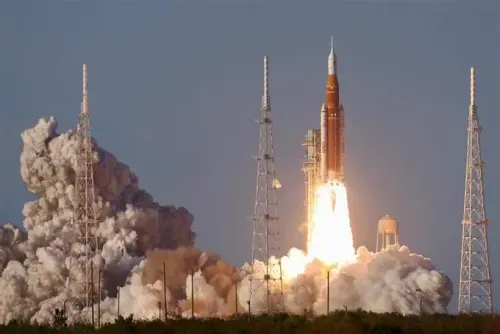
The Artemis program was formally established in 2017 as the direct successor to the Apollo lunar missions, with a deliberate ambition to go further and stay longer. Artemis I, an uncrewed test flight completed in November 2022, proved the Space Launch System and Orion capsule could survive the journey to lunar orbit and back. The program has since incorporated commercial lunar landers and a coalition of international partners — including ESA, JAXA, and CSA — making Artemis III a multinational undertaking, not merely an American one.
A race the United States is watching closely
The Oval Office welcome arrives as China pursues its own parallel lunar programme with stated crewed landing ambitions, adding a geopolitical urgency that echoes, faintly but unmistakably, the original Space Race of the 1960s. Private-sector lunar activity — from commercial landers to prospecting missions — has also accelerated, crowding a frontier once exclusive to superpowers. Against that backdrop, an Artemis III crew receiving a White House reception is a clear signal: the United States intends to plant boots on the Moon first, and it wants the world to notice.
The next markers to watch are Artemis IV planning timelines and congressional decisions on funding for lunar surface infrastructure — the scaffolding that will determine whether the south pole landing is a one-off achievement or the foundation of a permanent outpost.
Point of View
The White House has every incentive to frame Artemis not as a science project but as a national-security imperative. For international partners and the global aerospace community, the image of an American crew in the Oval Office reinforces Washington's intent to lead — and fund — the next chapter of human space exploration. Whether Congress sustains that ambition through Artemis IV and beyond is the question that will define the programme's legacy.
NationPress
29 Oct 2026
Frequently Asked Questions
What is the Artemis III mission?
Artemis III is NASA's planned first crewed lunar landing mission under the Artemis program, targeting the Moon's south pole region, which is believed to contain water ice deposits critical for long-term lunar exploration.
Who are the Artemis III crew members?
The exact crew composition for Artemis III has not been independently verified from available public information at the time of this report; NASA selects crew from its astronaut corps in coordination with international partners.
When did the White House welcome the Artemis III crew?
The White House welcomed the Artemis III crew to the Oval Office on October 28, 2026, as announced via the official White House account on X.
What happened in Artemis I?
Artemis I was an uncrewed test flight completed in November 2022 that successfully sent NASA's Space Launch System rocket and Orion capsule on a journey to lunar orbit and back, validating the hardware for future crewed missions.
Why is the Moon's south pole important for NASA?
The lunar south pole region is permanently shadowed in craters where water ice is thought to exist, making it scientifically valuable and strategically important as a potential resource for fuel and life support on future long-duration Moon missions.