Artemis II Launch: A New Chapter in US Lunar Exploration
Synopsis
The US has initiated its first crewed lunar mission in over 50 years with Artemis II, a pivotal milestone in global space exploration. President Trump and lawmakers celebrate this historic event, emphasizing its significance in the renewed space race.
Key Takeaways
Artemis II is the first crewed lunar mission by the US in over 50 years.
It serves as a test flight to evaluate life-support systems.
The mission aims to establish a sustained human presence on the Moon.
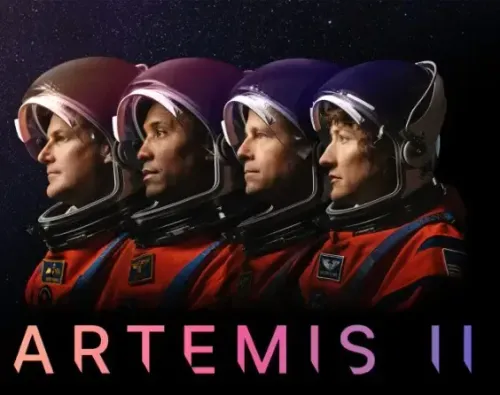
Key astronauts include Reid Wiseman and Victor Glover .
The launch underscores US leadership in global space exploration.
Washington, April 2 (NationPress) The United States has embarked on its first crewed lunar mission in over half a century, with President Donald Trump and prominent lawmakers celebrating Artemis II as a significant achievement in a revitalized global space race.
“I want to start by extending my congratulations to the NASA team and our courageous astronauts for the successful launch of Artemis II; it was truly remarkable,” Trump stated during his address to the nation regarding Iran on Wednesday evening (local time), calling the mission “extraordinary” and referring to the crew as “four incredible astronauts.”
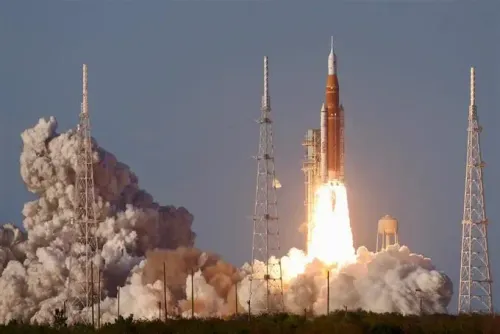
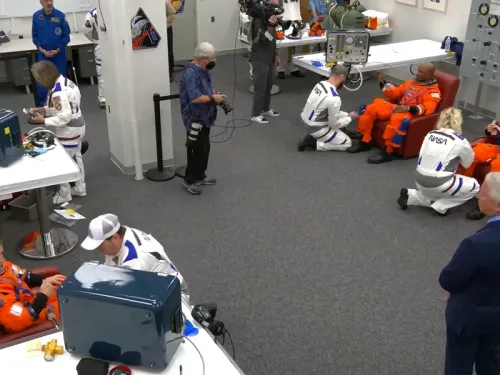
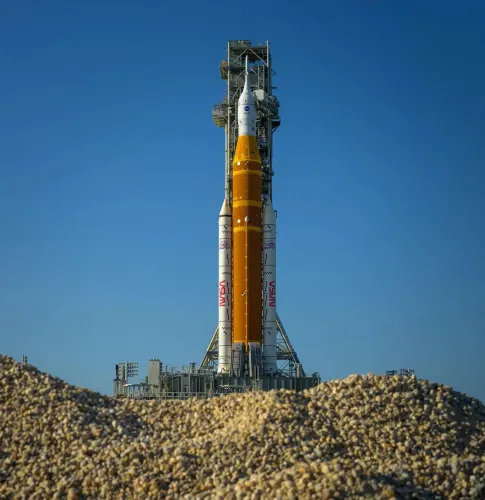
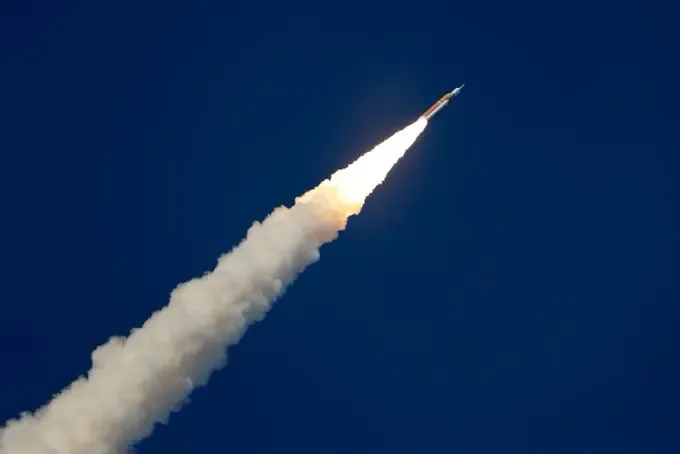
The Space Launch System rocket took off from the Kennedy Space Center at 6:35 p.m. (Eastern Time), carrying astronauts Reid Wiseman, Victor Glover, Christina Koch, and Canadian astronaut Jeremy Hansen aboard the Orion spacecraft for a 10-day journey around the Moon and back.
NASA Administrator Jared Isaacman characterized the launch as a pivotal moment. “Today’s launch signifies a crucial juncture for our country and for everyone who believes in exploration,” he stated. “Artemis II is the beginning of something greater than any single mission.”
This mission serves as a test flight intended to evaluate life-support systems and spacecraft functionality with a crew onboard for the first time in the Artemis program. It will also set the stage for future missions aimed at establishing a lasting human presence on the Moon.
Shortly after launch, Orion deployed its solar arrays and transitioned to flight operations. Engineers began monitoring essential systems as the spacecraft entered an elliptical orbit around Earth.
NASA reported that the spacecraft successfully completed both perigee and apogee burns to refine its orbit. A brief communication disruption occurred following one burn but was swiftly rectified. The crew confirmed they could still receive ground signals.
During a routine system check, astronauts noted a blinking fault light. Ground teams are currently investigating this issue.
The crew is getting ready for a proximity operations test where astronauts will manually maneuver Orion near the rocket’s upper stage. This test aims to validate navigation and control systems for future lunar missions.
Senate Commerce Committee Chairman Ted Cruz framed the mission in strategic terms. “Artemis II is more than just a mission; it’s a message to the world that the United States will spearhead this new era of space exploration,” he asserted.
He also cautioned about increasing competition. “We are not the only nation with aspirations for the Moon, as China is advancing its own space goals… we cannot afford to be second best,” Cruz emphasized, highlighting the necessity of maintaining “the high ground in space.”
Ranking Member Zoe Lofgren echoed the significance of this launch. “Congratulations to NASA and its collaborators on this remarkable achievement,” she remarked, adding that the mission would “inspire individuals of all ages worldwide.”
NASA Associate Administrator Amit Kshatriya emphasized the experimental nature of the mission. “Artemis II is a test flight, and the evaluation has just commenced,” he noted, mentioning that astronauts will “put Orion through its paces to ensure that future crews can confidently land on the Moon.”
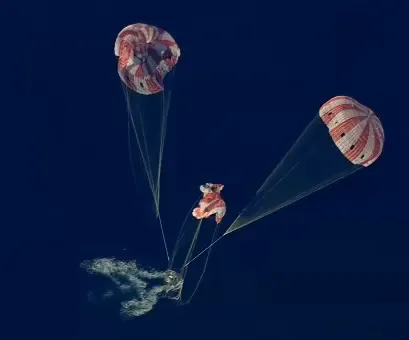
If all systems perform as anticipated, Orion will conduct a translunar injection burn to propel the crew toward the Moon, utilizing lunar gravity to return to Earth. The mission includes a planned flyby of the Moon’s far side before splashdown in the Pacific Ocean.
Point of View
The launch of Artemis II represents a strategic leap for the United States in the realm of space exploration. This mission not only showcases technological advancements but also reinforces America's commitment to leading in an increasingly competitive global landscape.
NationPress
10 Oct 2026
Frequently Asked Questions
Who are the astronauts on Artemis II?
The crew includes astronauts Reid Wiseman, Victor Glover, Christina Koch, and Canadian astronaut Jeremy Hansen.
What is the duration of the Artemis II mission?
The mission is designed to last 10 days, during which the crew will orbit the Moon before returning to Earth.
Why is Artemis II significant?
It marks a significant milestone in the US space program, demonstrating a renewed commitment to lunar exploration and establishing a lasting human presence on the Moon.
How does Artemis II fit into the Artemis program?
Artemis II is a crucial test flight that paves the way for future missions aimed at lunar landings and long-term exploration.