NASA's Artemis II: A Historic Crew Mission to the Moon Begins
Synopsis
NASA is preparing for the Artemis II mission, launching four astronauts on a groundbreaking journey around the moon—marking humanity's first venture beyond low Earth orbit in over half a century. Discover the significance of this mission and its role in establishing a future lunar presence!
Key Takeaways
Historic Mission: Artemis II marks the first human journey beyond low Earth orbit in over 50 years.
Diverse Crew: The mission features the first woman, first African-American astronaut, and first Canadian to travel toward the moon.
Mission Objectives: Focus on testing life-support and navigation systems in deep space.
Future of Lunar Exploration: Part of NASA's broader strategy to establish a permanent lunar base.
Significant Legacy: Builds on the achievements of the Apollo missions from 1968 to 1972.
Washington, April 1 (NationPress) NASA is on the verge of launching four astronauts for a historic mission orbiting the moon on Wednesday evening, marking the first human expedition beyond low Earth orbit in over 50 years.
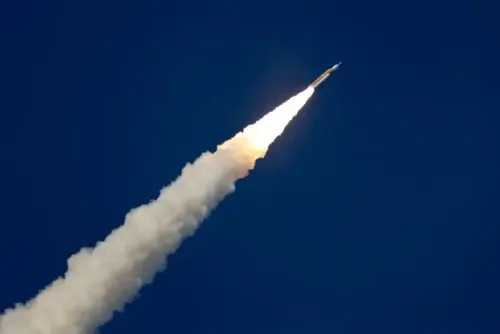
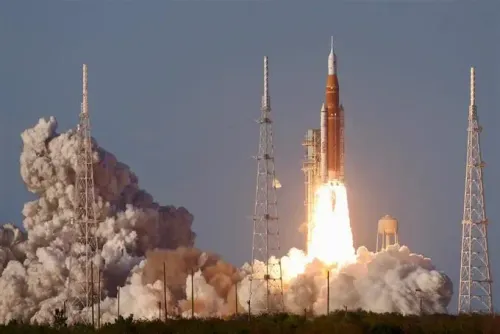
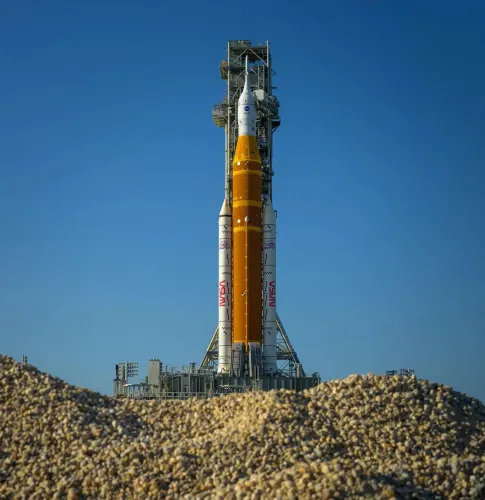
The Artemis II mission is set to kick off with a launch window that opens at 6:24 p.m. ET from the Kennedy Space Center in Florida, sending the crew on an approximately 10-day journey around the moon and back.
This mission is being heralded as one of NASA’s most vital missions in decades and a pivotal step in the quest to return humans to deep space.
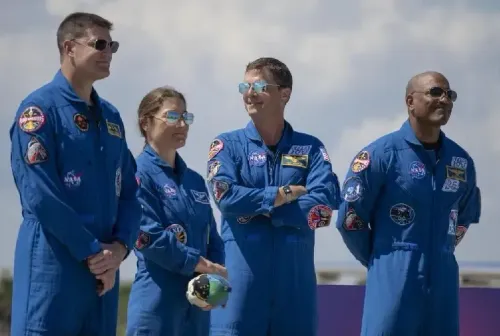
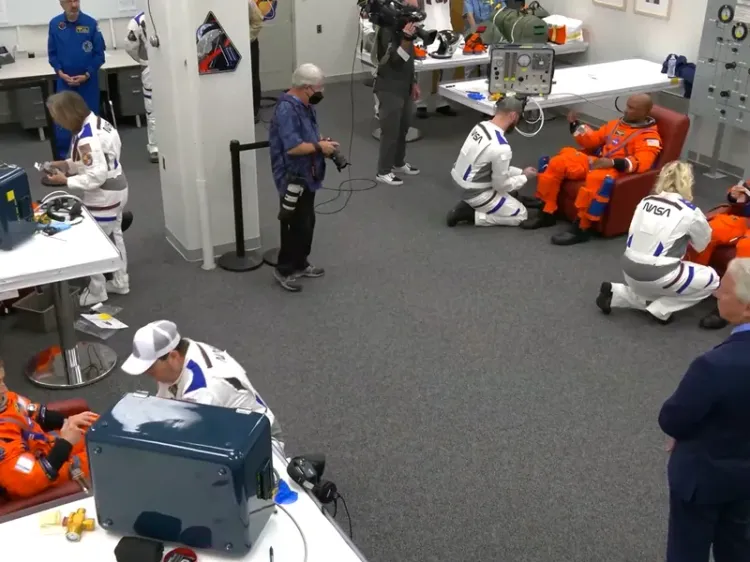
The crew consists of NASA astronauts Reid Wiseman, Victor Glover, and Christina Koch, alongside Jeremy Hansen from the Canadian Space Agency.
Earlier today, fueling operations commenced for the 32-story Space Launch System rocket, requiring over 700,000 gallons of propellant ahead of liftoff.
Preparations encountered tense moments earlier due to hydrogen leaks that delayed testing.
If successful, Artemis II will be the first time astronauts travel toward the moon since the Apollo 17 mission in 1972.
Although the mission will not involve a lunar landing, the Orion spacecraft will carry the crew around the far side of the moon before returning to Earth, testing life-support, navigation, and other systems in deep space.
After launch, Orion will detach from the rocket’s upper stage and perform a “translunar injection” burn, setting it on a trajectory toward the moon. The spacecraft will journey for several days, orbit the lunar far side, and then initiate its return trip.
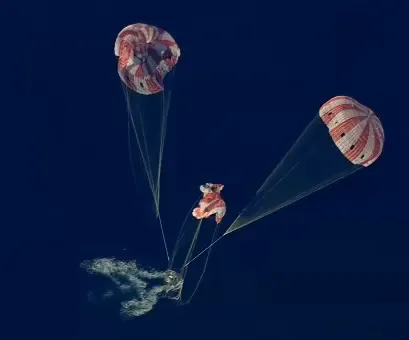
Re-entry is anticipated to be one of the most challenging phases, with Orion expected to enter Earth’s atmosphere at speeds of approximately 25,000 miles per hour, encountering temperatures near 5,000 degrees before splashing down in the Pacific Ocean.
Throughout this mission, astronauts will assess spacecraft performance, rehearse emergency protocols, and capture images of the moon's far side.
This crew also signifies several historic milestones, including the first woman, the first African-American astronaut, and the first Canadian to embark on a journey toward the moon.
Artemis II is being positioned as the inaugural step in NASA’s expansive plan to establish a sustained human presence on the moon and ultimately send astronauts to Mars.
This Artemis program builds upon the Apollo missions, which saw 24 astronauts travel to the moon between 1968 and 1972, with 12 of them walking on its surface.
NASA aims to leverage that legacy by developing a long-term lunar base and executing future missions targeting the moon’s south pole later this decade, before advancing toward Mars.
Point of View
As it seeks to re-establish a human presence beyond Earth. With a diverse crew and ambitious goals, this mission is a pivotal moment in the quest for interplanetary exploration and a sustained presence on the moon.
NationPress
5 Oct 2026
Frequently Asked Questions
What is the Artemis II mission?
The Artemis II mission is NASA's upcoming crewed journey around the moon, marking the first human expedition beyond low Earth orbit in over 50 years.
Who are the astronauts on the Artemis II mission?
The crew includes NASA astronauts Reid Wiseman, Victor Glover, and Christina Koch, as well as Canadian astronaut Jeremy Hansen.
When is the launch of Artemis II?
The launch window for Artemis II opens at 6:24 p.m. ET on Wednesday evening.
Will Artemis II land on the moon?
No, Artemis II will not involve a lunar landing; instead, it will orbit the moon and test various systems in deep space.
What are the future goals of the Artemis program?
NASA aims to establish a sustained human presence on the moon and eventually send astronauts to Mars as part of the Artemis program.