NASA's Artemis II Mission Poised for April 1 Launch After Final Preparations
Synopsis
NASA is set to launch its Artemis II mission on April 1, marking a significant milestone in space exploration. This mission will send four astronauts on a groundbreaking journey around the Moon, testing vital systems for future deep-space missions.
Key Takeaways
Artemis II is NASA's first crewed flight in the Artemis program.
The mission will occur on April 1 from Kennedy Space Center.
Four astronauts will embark on a 10-day journey around the Moon.
The mission tests critical life-support systems in the Orion spacecraft .
It aims to break the record for the farthest distance traveled by humans from Earth.
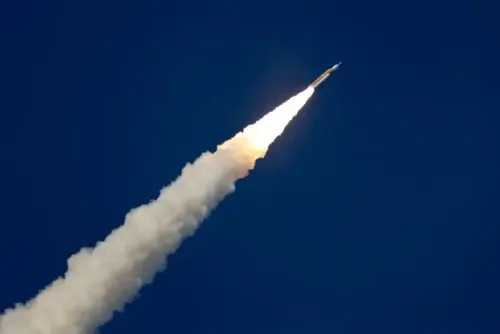
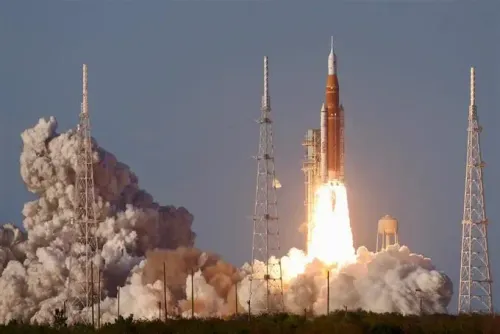
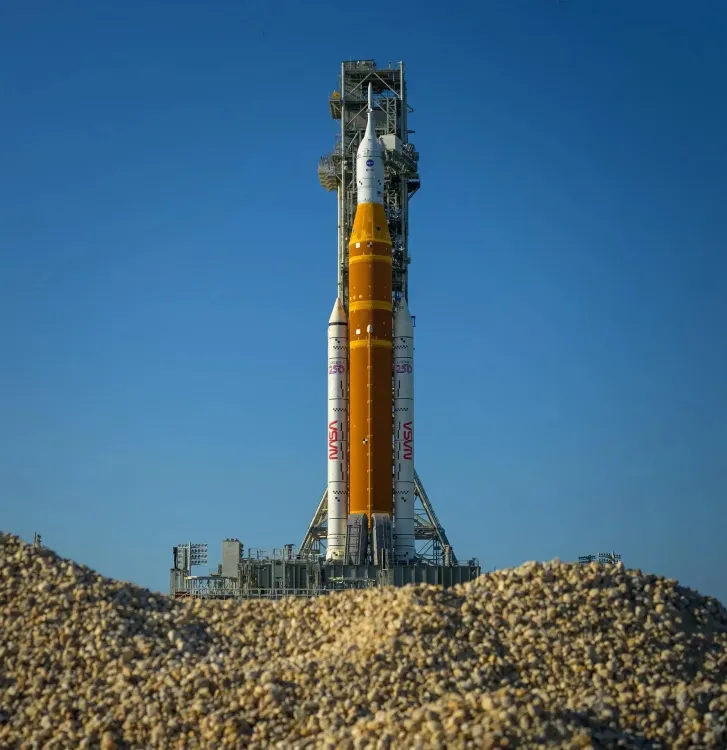
New Delhi, March 30 (NationPress) The United States National Aeronautics and Space Administration (NASA) has finalized its preparations for the launch of its 'Artemis II' mission, which is set to take off as soon as April 1 from the Kennedy Space Center.
This mission represents the first crewed flight of the Artemis program, aiming to send four astronauts on a journey around the Moon lasting approximately 10 days.
Artemis II will be groundbreaking as it allows humans to venture beyond low-Earth orbit for the first time since the Apollo missions.
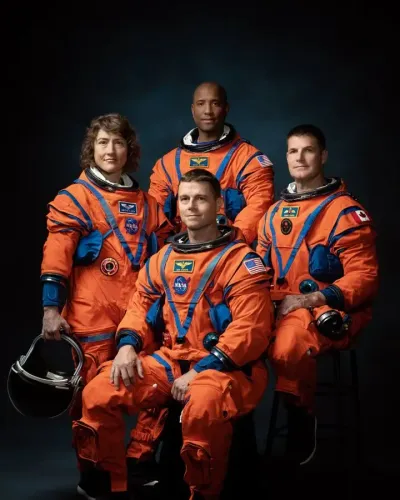
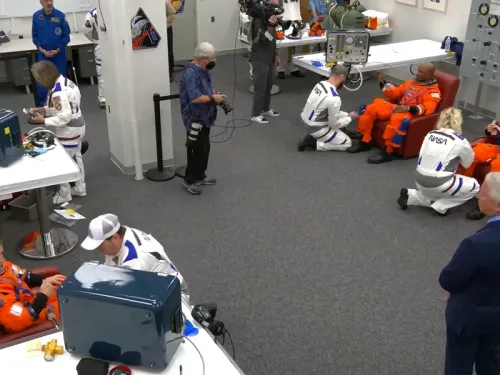
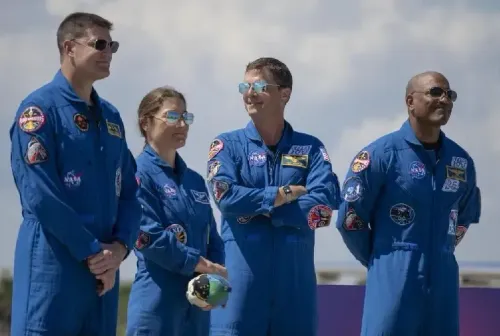
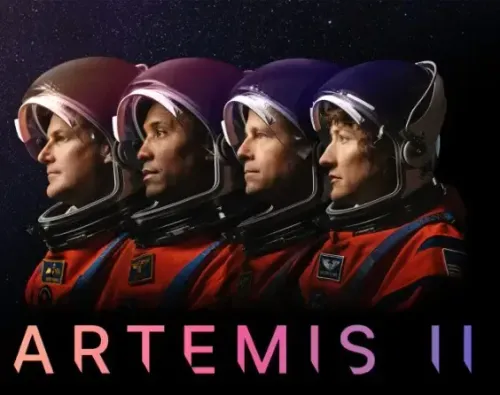
The astronaut crew comprises NASA members Reid Wiseman, Victor Glover, and Christina Koch, alongside Jeremy Hansen, an astronaut from the Canadian Space Agency.
The launch will utilize NASA's Space Launch System rocket and will evaluate the Orion spacecraft’s life-support systems with humans aboard for the inaugural time.
NASA has reported a favorable weather forecast for the launch day, boasting an 80% chance of suitable conditions, although potential challenges from cloud cover and strong winds are possible.
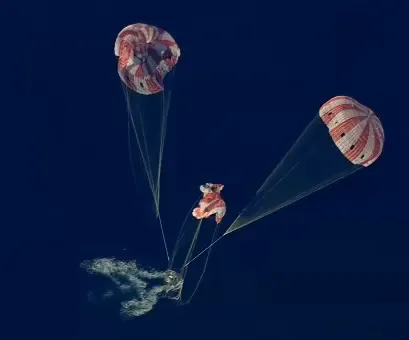
After launch, the spacecraft will ascend to high Earth orbit before proceeding toward the Moon on a 'free-return trajectory', allowing it to circle the far side of the Moon and return to Earth without requiring propulsion.
The crew is anticipated to break the record for the greatest distance traveled by humans from Earth, a record set during the Apollo 13 mission.
This mission will also test vital systems such as emergency protocols, radiation shielding, and advanced communication technologies, including laser-based data transmission.
NASA emphasized that Artemis II is a crucial milestone towards future deep-space exploration endeavors, which include planned crewed missions to the Moon and ultimately Mars.
The space agency will provide ongoing coverage of the launch and mission through its official channels, featuring live streams and regular updates.
The Artemis program is part of NASA’s broader initiative to establish a sustained human presence on the Moon and develop capabilities for future missions to Mars.
Point of View
It's clear that the Artemis II mission represents a pivotal moment in space exploration. With its ambitious goals and groundbreaking technology, this mission aims to push the boundaries of human presence in space, setting the stage for future missions to both the Moon and Mars. The excitement surrounding this launch reflects our ongoing quest to explore the cosmos.
NationPress
5 Oct 2026
Frequently Asked Questions
What is the Artemis II mission?
The Artemis II mission is NASA's first crewed flight under the Artemis program, set to send four astronauts on a journey around the Moon.
When is the launch date for Artemis II?
The Artemis II mission is scheduled to launch as early as April 1 from the Kennedy Space Center.
Who are the astronauts on the Artemis II mission?
The crew includes NASA astronauts Reid Wiseman, Victor Glover, Christina Koch, and Canadian Space Agency astronaut Jeremy Hansen.
What is the significance of this mission?
Artemis II will be the first time humans travel beyond low-Earth orbit since the Apollo era and is a critical step towards future deep-space exploration.
How will the spacecraft return to Earth?
The spacecraft will follow a 'free-return trajectory' that allows it to circle the Moon and return to Earth without needing propulsion.