Puri meets petroleum dealers, credits Modi's energy diplomacy
Synopsis
Union Petroleum Minister Hardeep Singh Puri met representatives of petroleum dealers' associations across India on November 19, 2026, praising the 92,000-strong PSU OMC dealer network and crediting PM Modi's energy diplomacy for uninterrupted fuel supplies during global disruptions.
Key Takeaways
92,000 petroleum dealers of PSU oil marketing companies — IOC, BPCL, and HPCL — were the focus of the meeting hosted by Minister Puri at his residence on November 19, 2026 .
Puri stated that not a single retail fuel outlet in India ran dry or faced supply issues despite severe global energy disruptions from ongoing geopolitical conflicts.
India secured uninterrupted fuel supplies by sourcing crude through alternative routes and ramping up domestic production, credited to PM Modi's energy diplomacy.
The meeting covered innovative ideas to enhance the fuel retail business, signalling a forward-looking push by the Petroleum Ministry.
India's energy resilience strategy traces back to import diversification decisions made in the wake of the Russia-Ukraine conflict of 2022 .
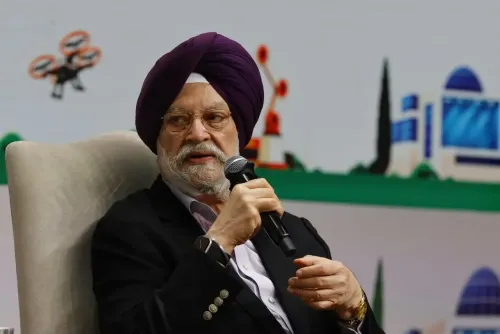
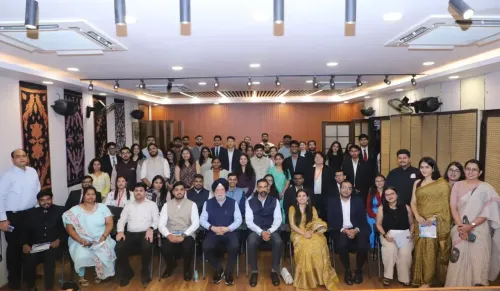
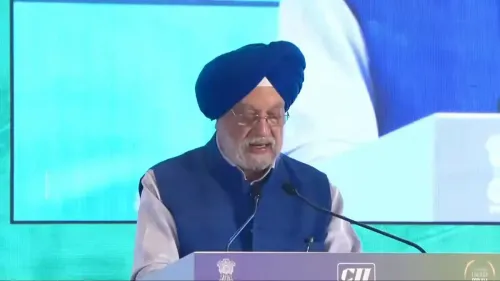
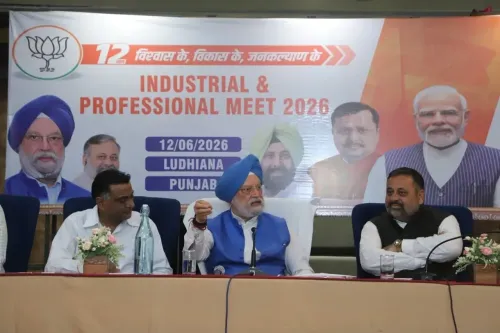
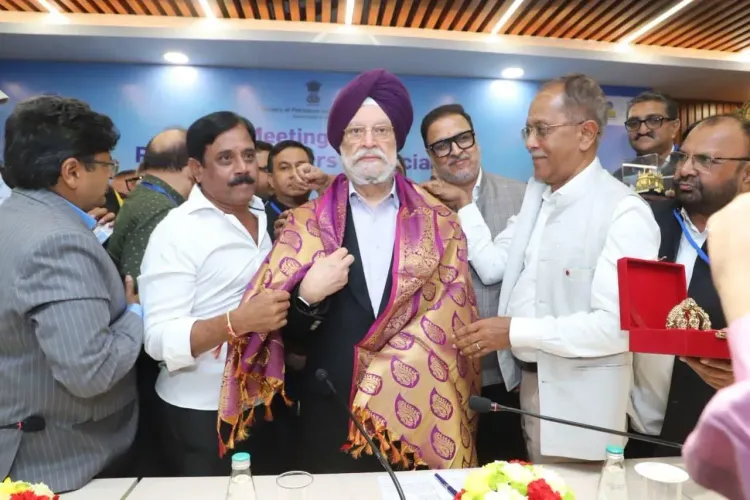
When global fuel supply chains buckled under the weight of geopolitical conflict, Union Petroleum Minister Hardeep Singh Puri says not a single petrol pump in India ran dry — and on Thursday, November 19, 2026, he sat down with the people who made that possible. Representatives of petroleum dealers' associations from across the country gathered at the Minister's residence in New Delhi for a wide-ranging conversation on the future of India's fuel retail ecosystem.
92,000 dealers, one supply chain that did not blink
Puri described the network of 92,000 petroleum dealers of the public-sector oil marketing companies — Indian Oil Corporation (IOC), Bharat Petroleum Corporation (BPCL), and Hindustan Petroleum Corporation (HPCL) — as 'the backbone of the country's energy family.' Their outlets, he said, are 'the public interface which keep the wheels of progress moving on India's roads and highways.' The scale is staggering: nearly a lakh touchpoints, dispersed across the country, that most Indians interact with more regularly than any other government-linked service.
The centrepiece of Thursday's discussions was a fact that Puri presented with evident pride — that even as 'several countries around the world faced severe energy disruptions and emergencies as a result of ongoing geopolitical conflicts,' Indian retail fuel outlets saw zero supply failures. The minister attributed this directly to what he called the 'successful energy diplomacy' of Prime Minister Narendra Modi, under which India secured crude imports through 'alternative routes' while simultaneously ramping up domestic production.
The strategic pivot that kept pumps flowing
That pivot has roots in the turbulence that followed the Russia-Ukraine conflict of 2022, which rewired global energy trade. India moved decisively to diversify its crude import basket, absorbing discounted Russian barrels while maintaining supply lines from West Asia and other producers — a balancing act that drew criticism internationally but delivered energy price stability at home. The dealer network was, in a sense, the last mile of that strategic architecture: the point where diplomatic maneuvering translated into actual fuel dispensed at the pump.
Puri's framing — 'we were prepared for an eventuality like this' — signals that India's current energy security posture is not reactive but planned. The minister stressed that domestic production was ramped up alongside import diversification, suggesting a dual-track approach rather than reliance on any single source.
Innovation on the agenda for India's fuel retail future
Beyond the supply-chain resilience narrative, the meeting had a forward-looking dimension. Puri said he and the dealer representatives 'discussed innovative ideas and suggestions to enhance the fuel retail business even further.' No specific proposals were announced publicly, but the gathering itself — dealers from across all states at the minister's official residence — signals that the Petroleum Ministry is treating the retail tier not as a passive distribution arm but as an active stakeholder in shaping the sector's next phase.
With India's energy transition gathering pace and EV infrastructure beginning to coexist with conventional fuel retail, the 92,000-strong dealer network faces both pressure and opportunity. The conversation at Puri's residence may well be the opening note of a broader policy dialogue on how that network evolves.
India kept the lights on — and the fuel flowing — when the world stumbled. The question now is whether its retail energy backbone is being built for the disruptions of the next decade, not just the last one.
Point of View
The minister is weaving a grassroots-to-geopolitics narrative that strengthens the BJP's governance credentials in a sector that directly touches every Indian motorist. The forward reference to 'innovative ideas' in fuel retail also hints at pre-emptive positioning ahead of the energy transition challenge: a network of 92,000 dealers will need a reinvention roadmap as EVs scale. Watch for formal policy announcements from the Petroleum Ministry in the weeks following this consultative meeting.
NationPress
20 Nov 2026
Frequently Asked Questions
Why did Hardeep Singh Puri meet petroleum dealers on November 19 2026?
Minister Puri hosted representatives of petroleum dealers' associations from across the country at his residence to discuss innovative ideas for enhancing the fuel retail business and to review how India maintained uninterrupted fuel supplies during global energy disruptions.
How many petroleum dealers are there under India's PSU oil companies?
According to Minister Puri's statement, there are 92,000 petroleum dealers operating under the public-sector oil marketing companies — Indian Oil Corporation, Bharat Petroleum, and Hindustan Petroleum.
Did India face any fuel shortage during recent global energy disruptions?
Minister Puri stated that not a single retail outlet in India ran dry or faced supply issues during recent global energy disruptions, attributing this to PM Modi's energy diplomacy and India's strategy of sourcing crude through alternative routes.
How did India maintain fuel supply during geopolitical conflicts affecting global energy?
India continued energy imports through alternative routes and ramped up domestic production, a strategy enabled by diplomatic efforts that diversified the country's crude oil supply basket away from disrupted sources.
What is the role of PSU oil marketing companies in India's fuel retail network?
Indian Oil Corporation, Bharat Petroleum, and Hindustan Petroleum operate the public-sector fuel retail network of 92,000 dealers nationwide, forming the primary distribution and public-facing layer of India's petroleum supply chain.