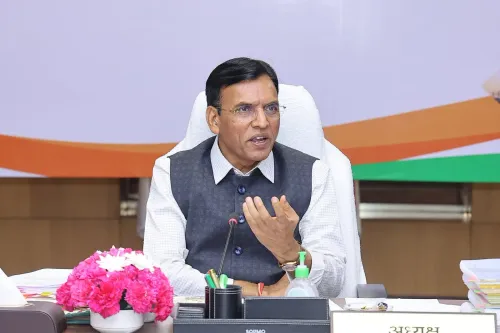
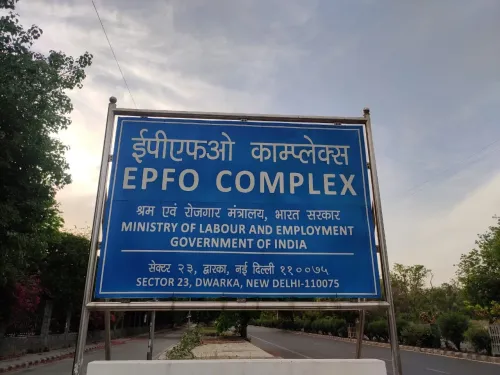
Mandaviya: EPFO approves Systematic Withdrawal Plan for retirees

Synopsis
EPFO has approved a Systematic Withdrawal Plan allowing retirees to draw provident fund savings in periodic instalments while earning returns on the remaining balance, Union Minister Mansukh Mandaviya announced on 19 November 2026, marking a significant shift in India's formal-sector retirement income framework.
Key Takeaways
EPFO approved a Systematic Withdrawal Plan (SWP) for provident fund members, announced by Union Minister Mansukh Mandaviya on 19 November 2026 .
Under SWP, retirees can withdraw PF savings in periodic instalments instead of a single lump sum.
The remaining balance continues to earn returns even as withdrawals are made.
The reform extends EPFO's decade-long digitisation drive that began with the Universal Account Number (UAN) in 2014 .
Detailed EPFO circulars on eligibility, frequency limits, and passbook integration are awaited.
The plan benefits organised-sector workers and retirees who currently lack a structured pension income stream.
Retirement just got a lot more flexible for India's formal-sector workforce. Union Labour and Sports Minister Mansukh Mandaviya announced on Thursday, 19 November 2026 that the Employees' Provident Fund Organisation (EPFO) has approved a Systematic Withdrawal Plan (SWP) — allowing members to draw their provident fund savings in instalments after retirement while continuing to earn returns on the remaining balance.
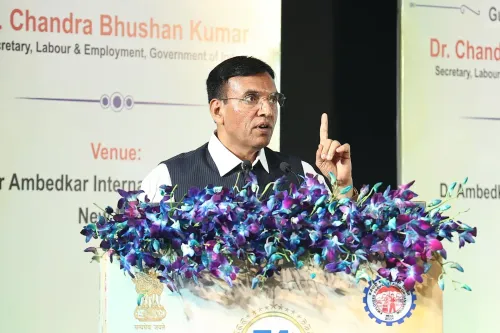
Posting on X in Hindi, Mandaviya called it a 'big step towards a secure future for workers' — 'श्रमिकों के सुरक्षित भविष्य की ओर बड़ा कदम!' — and attributed the move to the leadership of Prime Minister Narendra Modi. 'Now, after retirement, receive your PF savings in instalments at your convenience, and keep earning returns on the remaining amount,' the minister wrote.
What the SWP changes for EPFO members
Until now, EPFO members who retired could either withdraw their entire corpus in a lump sum or leave it in the account. The SWP model — familiar to mutual-fund investors — changes that calculus entirely. A retiree can choose a fixed periodic payout, drawing down only what they need, while the untouched portion continues to accumulate interest at EPFO's declared annual rate. It is a structural shift: from a one-time exit to a managed income stream.
For the tens of millions of organised-sector workers enrolled with EPFO, this addresses a persistent retirement-planning gap — the risk of exhausting a lump-sum too quickly, particularly in the absence of a formal pension for many private-sector employees.
EPFO's decade-long digital reform arc
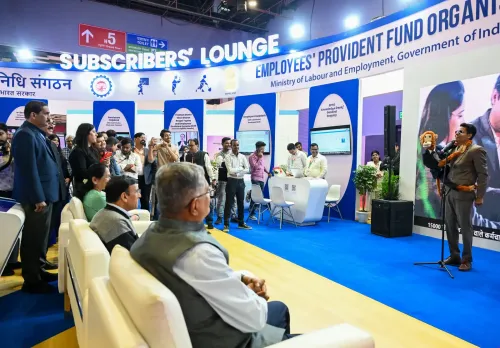
EPFO manages retirement savings for a large share of India's formal workforce and operates under the Ministry of Labour and Employment. The organisation's modernisation push stretches back to 2014, when the Universal Account Number (UAN) was introduced to make provident fund accounts portable across employers and accessible online. Successive years brought online claim settlements, auto-claim triggers, and higher partial-withdrawal limits for medical and housing needs.
The SWP approval fits squarely within that arc — each reform chipping away at the rigidity that once made PF savings hard to access and even harder to manage. The government has increasingly sought to position EPFO not merely as a savings vault but as a retirement-income platform.
Details still to come from EPFO circulars
Key operational specifics — including SWP eligibility criteria, minimum and maximum withdrawal frequencies, minimum corpus thresholds, and integration with existing member passbooks and the UMANG app — are expected in official EPFO circulars. Those details will determine how widely and how quickly the facility can be adopted by the roughly 7-8 crore active EPFO subscribers across India.
The announcement marks the policy direction; the implementation architecture will be watched closely by HR departments, payroll platforms, and retirement-planning advisers alike.
India's retirees have long been told their PF is a safety net — with the SWP, the government is now trying to make it a steady income floor, not just a one-time catch.
Point of View
Given the crore-scale subscriber base. It signals that the government recognises the PF corpus lump-sum model leaves retirees exposed to longevity risk and poor reinvestment choices. The real test will be in implementation: if withdrawal frequencies are restrictive or the interface clunky, uptake will be limited. If seamless, it could meaningfully raise the floor on formal-sector retirement security in a country where most workers lack a defined pension.
NationPress
20 Nov 2026
Frequently Asked Questions
What is the EPFO Systematic Withdrawal Plan (SWP)?
The EPFO Systematic Withdrawal Plan (SWP) is a facility approved by the Employees' Provident Fund Organisation that allows members to withdraw their provident fund savings in periodic instalments after retirement, rather than taking a one-time lump sum, while the remaining balance continues to earn returns.
Who announced the EPFO SWP and when?
Union Minister of Labour and Employment Mansukh Mandaviya announced the EPFO SWP approval on 19 November 2026 , attributing the decision to the leadership of Prime Minister Narendra Modi.
Who is eligible for the EPFO Systematic Withdrawal Plan?
Full eligibility criteria are yet to be detailed in official EPFO circulars. The plan is aimed at EPFO members — primarily organised-sector workers — who have retired and have a provident fund corpus with EPFO.
Will the remaining PF balance earn interest under the SWP?
Yes. Under the SWP, only the amount withdrawn is paid out in instalments; the remaining balance continues to earn returns at EPFO's prevailing interest rate.
How is the EPFO SWP different from a full PF withdrawal?
A full PF withdrawal gives the entire corpus at once, ending the account. The SWP lets retirees draw down in instalments over time, preserving part of the corpus to keep earning returns — functioning more like a structured retirement income stream.