Dr. Jitendra Singh: Six Nehru Decisions Shaped J&K's Burden
Synopsis
Union Minister Dr. Jitendra Singh, addressing the release of 'Jammu-Kashmir: Chunautiya aur Sangh' on November 19 2026, named six Nehruvian decisions — including the 1947 ceasefire, Article 370, and the Indus Waters Treaty — as lasting burdens on the nation, and declared retrieval of PoJK the only outstanding issue with Pakistan.
Key Takeaways
Jitendra Singh addressed the release of 'Jammu-Kashmir: Chunautiya aur Sangh' authored by Sh.
Ramesh Gupta and edited by Sh.
Dhirendra Mishra on November 19, 2026 .
He identified six Nehruvian decisions — the 1947 ceasefire, UN referral, Article 370, the Indus Waters Treaty, China policy, and the Non-Aligned Movement — as shaping J&K's prolonged political challenges.
The RSS had a documented ideological presence in J&K before and after Independence , though many aligned individuals avoided open association due to fear of professional and social consequences.
The RSS's contribution to partition-era refugee relief and rehabilitation in the region was highlighted as a key historical fact.
Singh drew a distinction between declining separatist violence and an ongoing ideological contest , saying nationalist forces must continue their struggle.
He declared that the retrieval of Pakistan-occupied Jammu and Kashmir (PoJK) is the only outstanding issue between India and Pakistan.
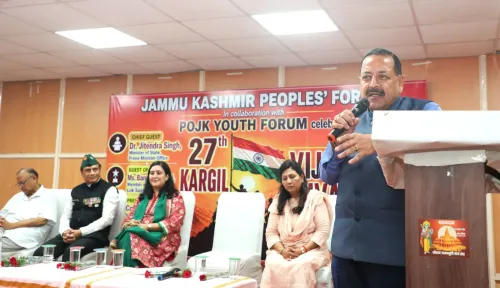
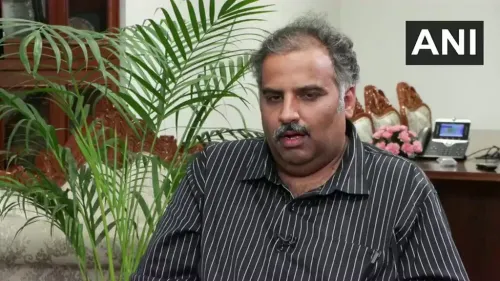
Six decisions by India's first Prime Minister — from a unilateral ceasefire in 1947 to the Non-Aligned Movement — 'shaped J&K's prolonged political challenges and left a lasting burden on the nation,' Union Science and Technology Minister Dr. Jitendra Singh declared on Thursday, November 19, 2026, at the release of a new book on Jammu and Kashmir's political and ideological history.
The book, the argument, and the six flashpoints
The volume at the centre of the evening was 'Jammu-Kashmir: Chunautiya aur Sangh' — 'Jammu-Kashmir: Challenges and the Sangh' — authored by senior journalist Sh. Ramesh Gupta and edited by senior journalist Sh. Dhirendra Mishra. Dr. Singh, who delivered the address, laid out the book's central thesis with striking specificity: six Nehruvian choices bearing direct, traceable consequences for the region.
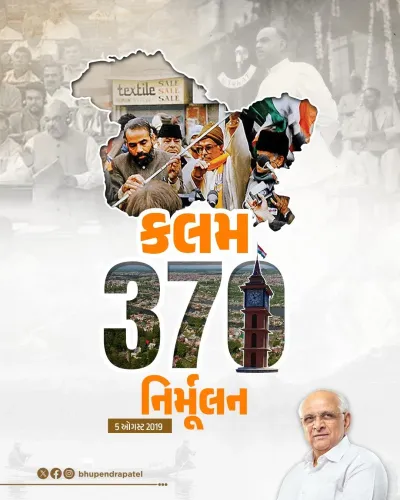
The six decisions named were: 1) the unilateral ceasefire in 1947; 2) taking the dispute to the United Nations; 3) Article 370, the constitutional provision that granted Jammu and Kashmir special status until its abrogation in August 2019; 4) the Indus Waters Treaty of 1960; 5) China policy; and 6) the Non-Aligned Movement. Each, the minister argued, compounded the region's political uncertainty and created burdens that outlasted their immediate context.
RSS in J&K: ideological depth, constrained visibility
A striking strand of the address concerned the Rashtriya Swayamsevak Sangh's early presence in Jammu and Kashmir. Dr. Singh noted that the RSS had 'a strong ideological presence from the early years after Independence and even in the immediate pre-independence era' — yet electoral success remained limited. The reason, he argued, was structural fear: many who were ideologically aligned with the Sangh 'hesitated to openly associate with it due to apprehensions about consequences in employment, business and public life.'
The organisation's real measure, he said, was not in membership numbers but in its capacity to sustain ideological commitment through 'adverse circumstances.' He also credited the RSS with partition-era relief work — refugee rehabilitation and assistance to displaced families — describing it as 'an inseparable part of the region's history.'
Violence down, ideological contest ongoing — and PoJK outstanding
Dr. Singh drew a distinction that carries significant forward weight: 'Separatist violence may have declined, but the ideological battle is far from over.' The implication was clear — reduced militancy is not the finish line. 'Nationalist forces will have to continue their struggle,' he said.
He closed with a territorial assertion that cuts to the heart of India-Pakistan relations: 'The only outstanding issue between India and Pakistan is the retrieval of illegally occupied PoJK' — Pakistan-occupied Jammu and Kashmir, the portion of the former princely state that has been under Pakistani administration since the 1947-48 conflict. No timeline or mechanism was specified, but the framing itself — framing PoJK as the sole remaining issue — signals a hardened official posture.
Point of View
The PoJK assertion signals that territorial consolidation, not normalisation, remains the governing framework.
NationPress
20 Nov 2026
Frequently Asked Questions
What are the six Nehruvian decisions Dr. Jitendra Singh blamed for J&K's problems?
Dr. Singh listed: 1) the unilateral ceasefire in 1947, 2) taking the issue to the United Nations, 3) Article 370, 4) the Indus Waters Treaty, 5) India's China policy, and 6) the Non-Aligned Movement — all attributed to Jawaharlal Nehru's era.
What is 'Jammu-Kashmir: Chunautiya aur Sangh' about?
It is a book authored by senior journalist Sh. Ramesh Gupta and edited by senior journalist Sh. Dhirendra Mishra that documents the RSS's ideological presence and activities in Jammu and Kashmir from the pre-independence era through its prolonged political challenges.
What did Dr. Jitendra Singh say about PoJK?
He stated that the retrieval of Pakistan-occupied Jammu and Kashmir (PoJK) is 'the only outstanding issue between India and Pakistan,' framing territorial recovery as the singular remaining bilateral agenda item.
When was Article 370 abrogated and what was its significance?
Article 370 was abrogated by Parliament in August 2019, ending the special constitutional status of Jammu and Kashmir. Dr. Singh cited it as one of six Nehruvian decisions that burdened the region.
What was the RSS's role in Jammu and Kashmir according to Dr. Jitendra Singh?
Dr. Singh said the RSS maintained a strong ideological presence in J&K from the pre-independence era, contributed to partition-era refugee relief and rehabilitation, and sustained its commitment through adverse circumstances even when open association carried professional and social risks.