Tiger carcass found in Bandhavgarh buffer zone, cause under probe
Synopsis
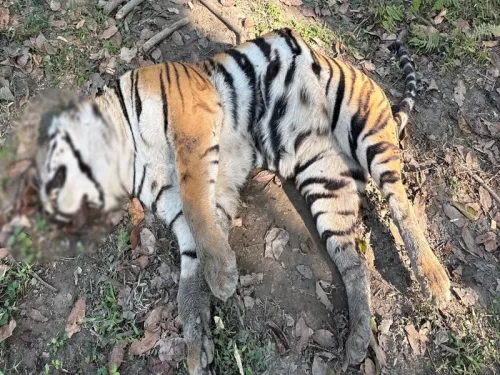
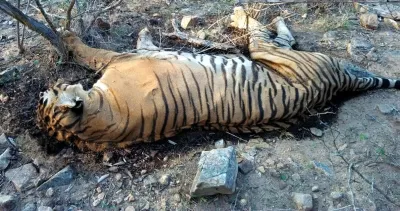
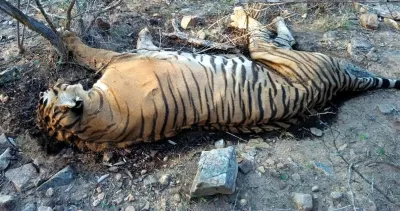
A male tiger, aged 8–10 years, was found dead in Bandhavgarh Tiger Reserve's Manpur buffer zone on 18 November. With all body parts intact and no suspicious objects found, foul play has not been confirmed — but the cause of death remains unknown, awaiting lab results in one of India's most closely watched tiger habitats.
Key Takeaways
A male tiger aged 8–10 years was found dead on 18 November in the Manpur buffer zone of Bandhavgarh Tiger Reserve , Madhya Pradesh.
The carcass was discovered during a routine foot patrol in the Deori-B beat under the Bijauri circle.
A dog squad from Shahdol and metal detectors were deployed; no suspicious objects or evidence of illicit activity were found.
Post-mortem conducted on 19 November by two veterinarians per NTCA standard operating procedures; all body parts including claws and teeth were intact.
Biological samples sent for laboratory analysis ; the exact cause of death will be confirmed only after results are received.
Intensive patrolling and surveillance have been stepped up across the reserve and surrounding forests.
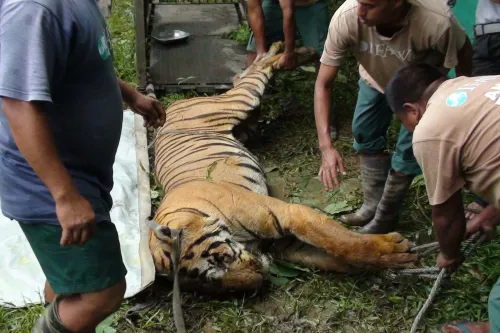
The carcass of a male tiger, estimated to be between eight and ten years old, was discovered in the Manpur buffer zone of Bandhavgarh Tiger Reserve in Madhya Pradesh on 18 November 2026, triggering an immediate investigation by forest officials. The exact cause of death remains unknown pending laboratory analysis of biological samples collected during a post-mortem examination conducted the following day.
How the Carcass Was Discovered
The tiger's body was spotted during a routine foot patrol in the Deori-B beat under the Bijauri circle of the Manpur buffer zone on the afternoon of 18 November. The beat official and a forest protection worker first noticed the carcass and promptly alerted senior officers. Forest officials of the Manpur buffer zone and the forest range officer reached the site swiftly, secured the perimeter, and initiated prescribed protocols.
Search Operation and Findings
Given the possibility of foul play or other suspicious circumstances, forest authorities launched an intensive search of the surrounding area. A dog squad was brought in from Shahdol, and the entire zone was scanned using metal detectors with the assistance of field staff. Officials confirmed that no suspicious objects or evidence of illicit activity were found during the operation.
Post-Mortem Procedure and Sample Collection
On 19 November, a post-mortem examination was conducted in accordance with the Standard Operating Procedures laid down by the National Tiger Conservation Authority (NTCA). The procedure was carried out by two veterinarians. All body parts of the tiger — including its claws and teeth — were found intact, ruling out the most visible indicators of poaching. Biological samples were collected for laboratory testing before the remains were cremated as per established protocol. The entire process was documented through photography and videography.
What Happens Next
Officials stated that the cause of death can only be determined after the laboratory results of the necropsy samples are received. In the interim, intensive patrolling and surveillance are being maintained across the area and surrounding forest. This comes amid ongoing national concerns over tiger mortality, with Bandhavgarh — one of India's most tiger-dense reserves — under close scrutiny from wildlife authorities and conservationists alike.
Point of View
But they do not close the case. Natural causes, territorial combat, disease, and accidental poisoning are all possibilities that only lab analysis can resolve — and India's track record on timely disclosure of tiger mortality data has been patchy. Bandhavgarh is among the country's most tiger-dense reserves; any unexplained death here will be watched closely by the NTCA and wildlife advocates. The speed and transparency of the investigation will matter as much as its outcome.
NationPress
20 Nov 2026
Frequently Asked Questions
Where was the tiger carcass found in Bandhavgarh?
The carcass was found in the Deori-B beat under the Bijauri circle of the Manpur buffer zone within Bandhavgarh Tiger Reserve in Madhya Pradesh. It was spotted on the afternoon of 18 November 2026 during a routine foot patrol.
What is the cause of the tiger's death at Bandhavgarh?
The cause of death has not been determined yet. A post-mortem was conducted on 19 November by two veterinarians per NTCA protocols, and biological samples have been sent for laboratory analysis; officials say the cause will be confirmed only after the results are received.
Was poaching suspected in the Bandhavgarh tiger death?
Authorities launched a thorough search given the possibility of foul play, deploying a dog squad from Shahdol and scanning the area with metal detectors. No suspicious objects or evidence of illicit activity were found, and all body parts including claws and teeth were intact.
What procedures were followed after the tiger carcass was discovered?
Forest officials secured the site, launched a search operation, and conducted a post-mortem on 19 November in line with NTCA standard operating procedures. Biological samples were collected, the process was documented through photography and videography, and the remains were cremated as per protocol.
What is the status of patrolling in Bandhavgarh after the tiger death?
Intensive patrolling and surveillance have been stepped up in the Manpur buffer zone and the surrounding forests to ensure continued protection of the wildlife habitat while the investigation is ongoing.