CM Dhami Steers Uttarakhand Toward Sustainable Development via Energy Conservation
Synopsis
The Chief Minister's Office of Uttarakhand on 28 May 2026 spotlighted CM Pushkar Singh Dhami's push for sustainable development through energy conservation, reflecting the Himalayan state's alignment with India's net-zero commitments and long-standing climate action frameworks.
Key Takeaways
The Chief Minister's Office of Uttarakhand posted on 28 May 2026 that the state is moving toward sustainable development through energy conservation under CM Pushkar Singh Dhami .
Uttarakhand has been working within the framework of the Uttarakhand State Action Plan on Climate Change (2014) for energy efficiency and low-carbon growth.
The state's approach is backed by the central Energy Conservation Act, 2001 and India's updated NDCs targeting net-zero by 2070 .
Key stakeholders include state residents, the hydropower development sector , and the tourism industry .
Upcoming state budget allocations for 2026-27 and national climate summits are expected to provide further clarity on specific targets and schemes.
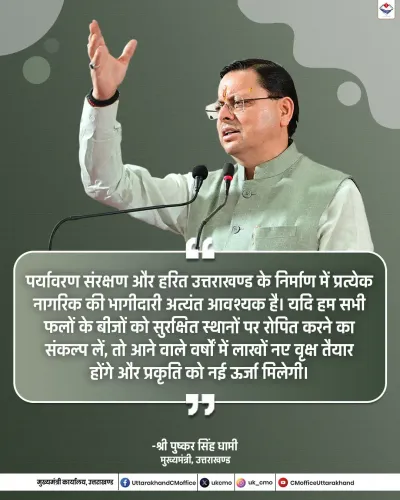
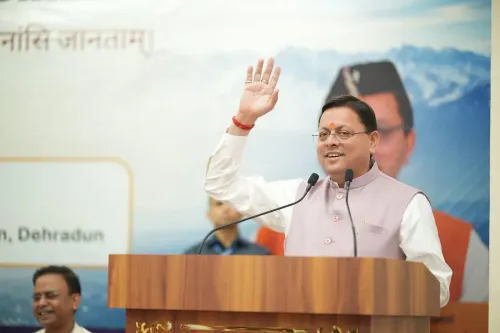
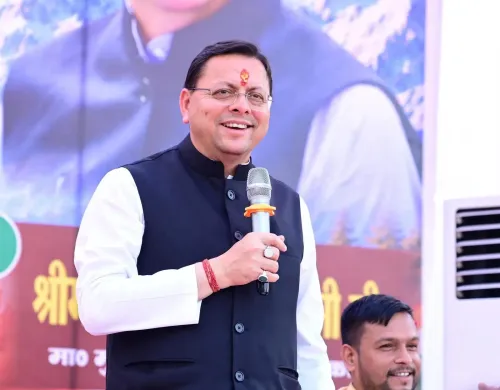
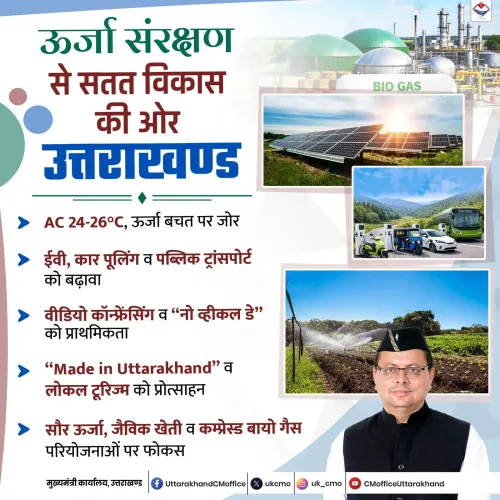
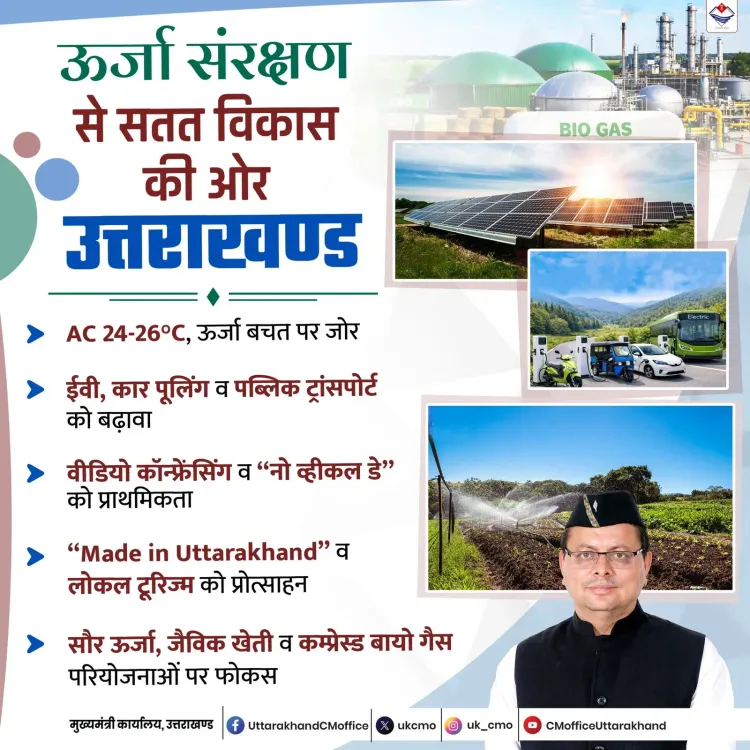
The Chief Minister's Office of Uttarakhand on Thursday, 28 May 2026, highlighted the state's ongoing push toward sustainable development through energy conservation, crediting Chief Minister Pushkar Singh Dhami's leadership for steering Uttarakhand in this direction.
The post, shared in Hindi, stated: 'मुख्यमंत्री श्री पुष्कर सिंह धामी के कुशल नेतृत्व में ऊर्जा संरक्षण से सतत विकास की ओर उत्तराखण्ड' — translating to 'Uttarakhand moving towards sustainable development through energy conservation under the able leadership of Chief Minister Shri Pushkar Singh Dhami.'
Context
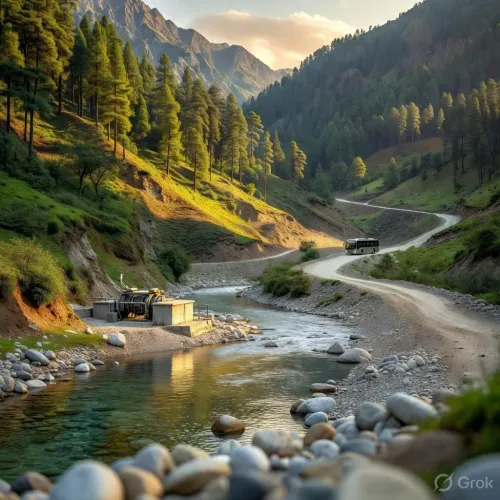
Uttarakhand is a Himalayan state with significant hydropower potential and a biodiversity-rich landscape that places it at the intersection of economic growth and ecological responsibility. Chief Minister Dhami, who has led the BJP government in the state since March 2021, has consistently positioned green development and infrastructure as twin pillars of his administration's agenda. The state's communication on energy conservation aligns with broader national commitments on climate action.
Policy Backdrop
Uttarakhand's sustainability framework has roots in the Uttarakhand State Action Plan on Climate Change (2014), which laid out strategies for energy efficiency, sustainable forestry, and low-carbon growth in line with national missions. At the central level, the Energy Conservation Act, 2001 and its subsequent amendments have provided the legislative backbone for state-level programmes covering LED adoption, building energy codes, and demand-side efficiency measures. India's updated Nationally Determined Contributions (NDCs) and its net-zero 2070 pledge have further reinforced the urgency for Himalayan states to lead on clean energy transitions.
Himalayan states occupy a unique position in India's energy story — they are both significant producers of renewable energy through hydropower and ecologically sensitive zones where unchecked development carries long-term environmental risks. Balancing these twin imperatives has shaped Uttarakhand's approach to energy policy over the past decade.
Stakeholders and Impact
The push for energy conservation touches multiple constituencies within the state. Residents across urban and rural areas stand to benefit from reduced energy costs and improved power reliability that efficiency programmes typically deliver. The hydropower development sector — a key economic driver in Uttarakhand — operates within a framework that increasingly demands environmental compliance alongside generation targets.
The tourism industry, one of the state's most important economic pillars, is also a direct stakeholder: sustainable development credentials are increasingly a factor in both domestic and international tourism choices, and a cleaner, greener Uttarakhand strengthens its appeal as a destination. Local communities in ecologically sensitive zones stand to gain from policies that protect forest cover and water resources integral to their livelihoods.
What's Next
Observers will watch the state budget allocations for 2026-27 for concrete commitments toward solar and micro-hydel projects that could give substance to the government's sustainable development messaging. Any announcements tied to national climate summits or central energy efficiency schemes in the coming months will indicate how firmly Uttarakhand intends to anchor its development model around conservation. The state's ability to translate high-level communication into measurable targets — in energy savings, renewable capacity addition, or emissions reduction — will be the real test of this policy direction.
Point of View
Spotlighting green credentials serves a dual purpose: it reinforces his administration's developmental image domestically while positioning Uttarakhand as a responsible Himalayan state in national policy conversations. The post's brevity — without citing specific schemes or data — suggests this is as much about political signalling as policy communication. The real measure will come when the 2026-27 budget reveals whether conservation rhetoric translates into rupee allocations for solar, micro-hydel, and energy efficiency programmes.
NationPress
11 Oct 2026
Frequently Asked Questions
What is Uttarakhand doing for energy conservation and sustainable development?
Uttarakhand, under Chief Minister Pushkar Singh Dhami, is pursuing sustainable development through energy conservation measures aligned with the Uttarakhand State Action Plan on Climate Change and national frameworks such as the Energy Conservation Act, 2001.
Who is Pushkar Singh Dhami and what is his role in Uttarakhand's green policies?
Pushkar Singh Dhami is the Chief Minister of Uttarakhand, serving since March 2021. His administration has emphasised green development, infrastructure, and tourism alongside ecological protection in the Himalayan state.
What is India's net-zero target and how does Uttarakhand fit in?
India has pledged to achieve net-zero carbon emissions by 2070 under its updated Nationally Determined Contributions. Himalayan states like Uttarakhand contribute through hydropower generation and demand-side energy efficiency programmes.
What is the Uttarakhand State Action Plan on Climate Change?
The Uttarakhand State Action Plan on Climate Change, formulated in 2014, outlines the state's strategies for energy efficiency, sustainable forestry, and low-carbon economic growth in alignment with national climate missions.
How does energy conservation benefit Uttarakhand's tourism sector?
Sustainable development and energy conservation enhance Uttarakhand's environmental credentials, making it a more attractive destination for eco-conscious domestic and international tourists, which is vital given tourism's central role in the state's economy.