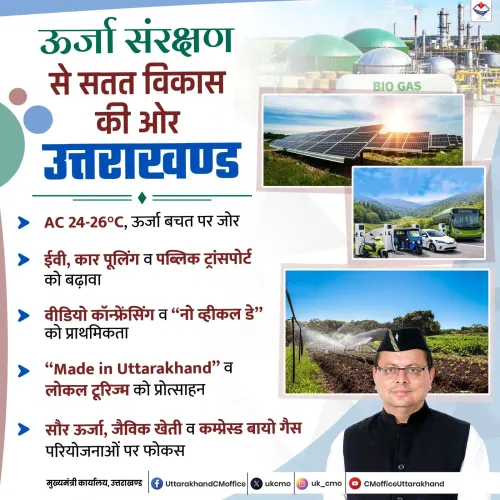
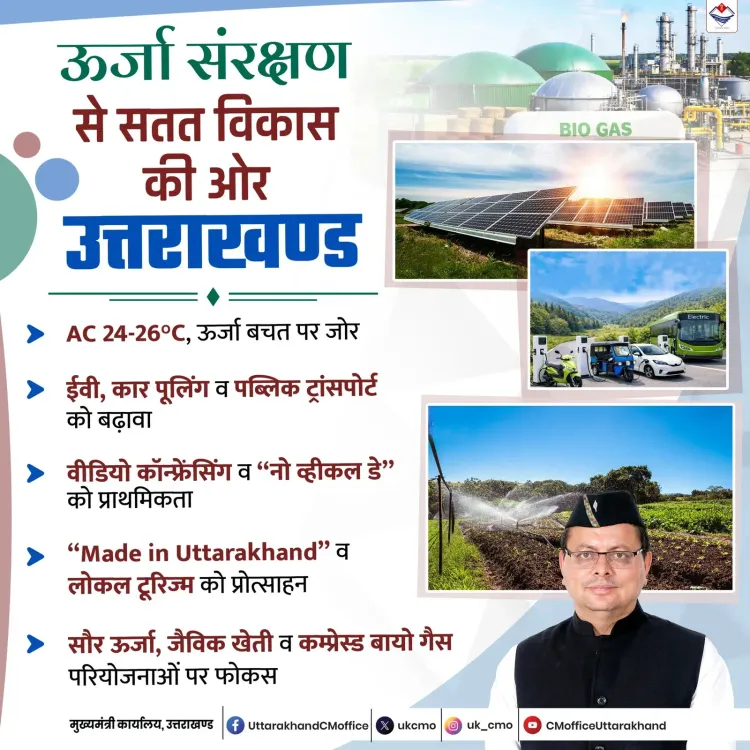
CM Office: Uttarakhand moves toward sustainable development via energy conservation
Synopsis
The Chief Minister's Office of Uttarakhand has signalled a firm policy direction linking energy conservation to sustainable development, reinforcing the Himalayan state's alignment with India's national climate and efficiency frameworks.
Key Takeaways
The Chief Minister's Office of Uttarakhand posted on 28 May 2026 emphasising energy conservation as the path to sustainable development.
The Hindi message translates as: 'Uttarakhand towards sustainable development through energy conservation.' Uttarakhand adopted its State Action Plan on Climate Change around 2014 , aligning with India's national climate mission.
The Bureau of Energy Efficiency , established in 2002 , underpins the national policy architecture that states like Uttarakhand implement.
As a Himalayan state with significant hydropower potential , Uttarakhand's conservation agenda carries ecological implications beyond its own borders.
No specific new scheme or numerical target was announced in the post.
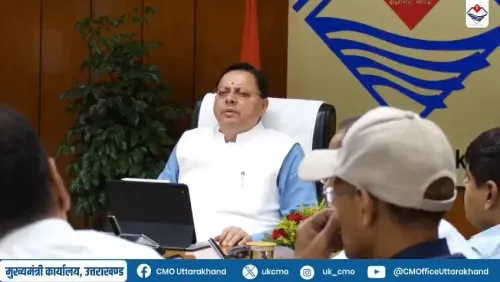
The Chief Minister's Office of Uttarakhand on Thursday, 28 May 2026, underscored the state's commitment to linking energy conservation with sustainable development, sharing a message that positions Uttarakhand as a model for ecologically sensitive growth among Himalayan states.
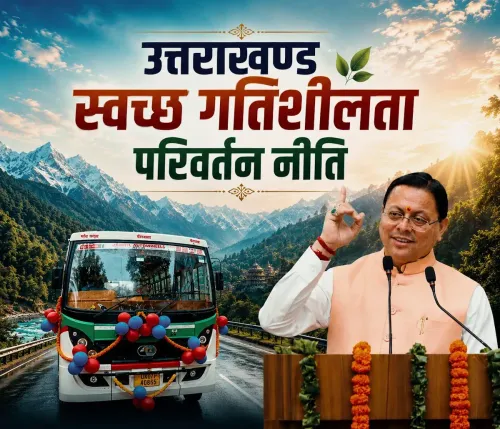
The post, in Hindi, reads: 'Urja sanrakshan se satat vikas ki or Uttarakhand' — 'Uttarakhand towards sustainable development through energy conservation.' The message is brief but deliberate, signalling an official policy emphasis on efficiency-led growth rather than resource-intensive development.
Context
Uttarakhand occupies a unique position in India's energy and environment landscape. As a Himalayan state, it holds significant hydropower potential while also bearing the ecological responsibilities that come with fragile mountain ecosystems. Any development pathway the state adopts carries consequences not just for its residents but for the river systems and biodiversity that extend far beyond its borders.
Energy conservation, in this context, is not merely an administrative target — it is a structural necessity. The state's terrain limits large-scale fossil-fuel infrastructure, making efficiency and renewables central to its long-term energy security.
Policy Backdrop
India's National Action Plan on Climate Change (2008) included the National Mission for Enhanced Energy Efficiency, which set the framework for states to pursue conservation-linked development. Uttarakhand formalised its alignment through its State Action Plan on Climate Change, adopted around 2014, integrating energy efficiency targets with broader sustainable development goals.
At the national level, the Bureau of Energy Efficiency (BEE), established in 2002 under the Ministry of Power, drives standards, labelling programmes and efficiency policies that state governments implement. Uttarakhand's messaging is consistent with this coordinated national-state architecture, which also feeds into India's commitments under the Paris Agreement and its stated net-zero pathway.
Stakeholders and Impact
The primary beneficiaries of sustained energy conservation policy are Uttarakhand's residents — particularly households and small businesses that bear the direct cost of energy consumption. Reduced energy demand also eases pressure on the state's hydropower infrastructure, extending the operational life of projects and reducing grid stress during peak seasons.
Himalayan states occupy a disproportionate role in India's climate narrative. Glacial retreat, shifting rainfall patterns and deforestation make conservation-first governance both an ecological imperative and a political signal to central planners and international climate bodies. When the Chief Minister's Office amplifies this message, it reinforces Uttarakhand's positioning as a state that ties growth to sustainability rather than treating them as competing goals.
What's Next
The post does not announce a specific scheme or target, but it signals that energy conservation will remain a stated priority for the Uttarakhand government in the near term. Observers will watch for follow-up announcements on state energy efficiency programmes, updated conservation targets, or new initiatives aligned with national frameworks. The broader pattern across Himalayan states suggests that sub-national governments are increasingly using official communication channels to reinforce climate-aligned governance as a core identity.
As India advances toward its long-term emissions goals, Uttarakhand's continued emphasis on conservation-led development could serve as a reference point for other ecologically sensitive states navigating the same tension between growth and sustainability.
Point of View
Framing conservation as the engine of growth — rather than its obstacle — is a calculated governance signal. It also positions Uttarakhand favourably in the competition for central climate-linked funding and international sustainability partnerships. The post is brief, but in the context of India's sub-national climate politics, brevity can itself be a statement of settled conviction.
NationPress
13 Oct 2026
Frequently Asked Questions
What did the Uttarakhand Chief Minister's Office post about energy conservation?
The Chief Minister's Office of Uttarakhand posted on 28 May 2026 that the state is moving 'towards sustainable development through energy conservation,' signalling it as a core policy priority.
What is Uttarakhand's energy conservation policy?
Uttarakhand follows its State Action Plan on Climate Change, adopted around 2014, which integrates energy efficiency targets with sustainable development goals in line with India's National Mission for Enhanced Energy Efficiency.
Why is energy conservation important for Uttarakhand?
As a Himalayan state with significant hydropower resources and ecologically sensitive terrain, Uttarakhand depends on conservation-led development to protect its environment, reduce grid stress and meet India's climate commitments.
What is the Bureau of Energy Efficiency and how does it relate to Uttarakhand?
The Bureau of Energy Efficiency is a central government agency established in 2002 that sets national energy efficiency standards and programmes. State governments, including Uttarakhand, implement these frameworks at the local level.
How does Uttarakhand's sustainability push connect to India's climate goals?
Uttarakhand's energy conservation messaging aligns with India's Paris Agreement commitments and net-zero pathway, reflecting the broader pattern of Himalayan states linking sub-national governance to national and international climate targets.