Uttarakhand CMO Flags Key State Decision on Lake Conservation
Synopsis
The Chief Minister's Office of Uttarakhand has announced an important state government decision for the conservation of lakes in the Himalayan state. The brief X post flagged the move under the #Uttarakhand tag but did not specify the lakes covered, the implementing agencies or the financial outlay, leaving operational details to follow.
Key Takeaways
The Chief Minister's Office of Uttarakhand posted the announcement on 3 June 2026 .
The post described the move as an 'important decision' by the state government for lake conservation.
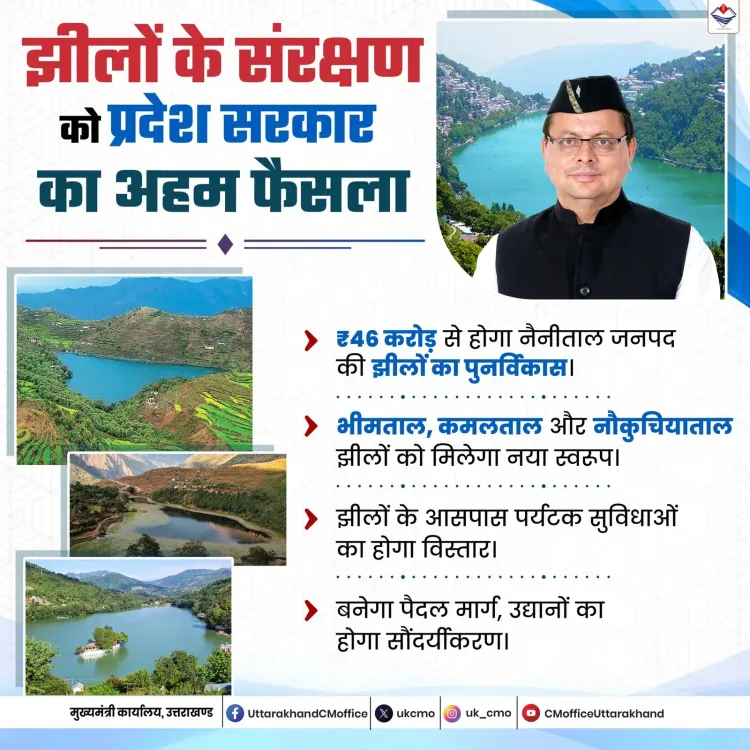
The message was in Hindi and tagged #Uttarakhand , accompanied by one image.
Specific lakes, timelines, agencies and budgetary details were not disclosed in the post.
The step fits a wider pattern of state action on Himalayan water bodies, forests and biodiversity.
Follow-up government orders or tenders will indicate the scope of implementation.
The Chief Minister's Office of Uttarakhand on Wednesday, 3 June 2026, announced that the state government has taken what it described as an 'important decision' for the conservation of lakes across the Himalayan state. The brief post, shared on X with a single image, signalled fresh policy attention to the protection of Uttarakhand's freshwater bodies.
In its post, written in Hindi, the office said: 'झीलों के संरक्षण हेतु प्रदेश सरकार का अहम फैसला' ('An important decision by the state government for the conservation of lakes'). The message was tagged #Uttarakhand but did not specify the names of the lakes covered, the agencies tasked with implementation, or the financial outlay attached to the move.
Context
Uttarakhand is home to several ecologically and economically significant lakes, including those that anchor hill-town tourism and supply drinking water to surrounding settlements. These water bodies sit within a fragile Himalayan landscape where catchment health, silt loads and shoreline construction have been recurring concerns for ecologists and local residents alike.
The post from the Chief Minister's Office arrives against this backdrop, framing lake protection as a government priority. While the announcement itself is short, it places the subject squarely on the state's public-policy agenda heading into the summer tourist season.
Policy backdrop
State authorities in Uttarakhand have, over successive administrations, periodically issued measures aimed at safeguarding lakes and other water bodies. Such steps typically respond to pressures from rising tourist footfall, expanding urbanisation along lake fringes and climate-linked shifts in precipitation and snowmelt patterns.
Lake-focused decisions in the state generally connect to a broader policy arc that includes forest-cover protection, river rejuvenation, spring-shed revival and biodiversity conservation. Government orders in this space have, in the past, dealt with issues such as construction setbacks, sewage interception, plastic restrictions around tourist lakes, and dredging or de-silting programmes.
Stakeholders and impact
The decision, once fully detailed, is expected to touch several constituencies. Local communities living around lake catchments are the most directly affected, both as users of these water bodies and as participants in tourism economies built around them.
The tourism sector, a major employer in hill districts, has a stake in the long-term health of lakes that draw domestic and international visitors. Environmental groups working in the Himalayan region have long pressed for stronger enforcement of pollution norms and catchment-area regulations, and will likely scrutinise the operational details of the new decision.
Hospitality operators, boat associations, municipal bodies and the state forest department are among the institutional actors that typically participate in lake-management frameworks in Uttarakhand.
What's next
The Chief Minister's Office post did not include the operative text of the decision, leaving key questions open: which lakes are covered, what restrictions or interventions are envisaged, what the timeline is, and how implementation will be funded. A formal government order or cabinet note is typically the next step that would clarify the scope.
Observers will be watching for follow-up notifications from the state secretariat, allocations in subsequent budget documents, and any project tenders or expressions of interest linked to lake conservation work. The pace at which the announcement translates into ground-level measures will determine its environmental footprint in a state where water bodies are both an ecological asset and a livelihood anchor.
Point of View
Even before the operative details are public. It fits a longer policy arc in which Himalayan states are increasingly framing water bodies, forests and catchments as part of a single ecological portfolio, rather than isolated tourism assets. The political read will turn on whether the decision is backed by enforceable rules and budgets, or stops at intent. With tourism pressures and climate variability both rising, the test will be implementation, not announcement.
NationPress
17 Oct 2026
Frequently Asked Questions
What did the Uttarakhand CMO announce about lakes?
The Chief Minister's Office of Uttarakhand announced on 3 June 2026 that the state government had taken an 'important decision' for the conservation of lakes in the state. The post did not specify the lakes, timelines or financial details.
Which lakes in Uttarakhand are covered by the decision?
The post from the Chief Minister's Office did not name the specific lakes covered by the decision. Details are expected to emerge through subsequent government orders or notifications.
Why is lake conservation important in Uttarakhand?
Lakes in Uttarakhand support drinking water supply, local livelihoods and a large hill-tourism economy, while sitting within a fragile Himalayan ecosystem. They face pressures from tourism footfall, urbanisation along their fringes and climate-linked shifts in rainfall and snowmelt.
When was the announcement made by the Uttarakhand CMO?
The announcement was posted on the official X account of the Chief Minister's Office of Uttarakhand on Wednesday, 3 June 2026. It was a short Hindi-language message accompanied by one image.
What happens next after the lake conservation decision?
The next steps are likely to involve formal government orders, departmental notifications and possibly budgetary allocations or project tenders detailing the conservation measures. These documents will clarify which lakes are covered and how the decision will be implemented.