CM Dhami: Ecology and Economy Both Vital for Uttarakhand

Synopsis
Chief Minister Pushkar Singh Dhami, in a statement tagged to Almora on 7 June 2026, declared that both ecology and economy must be strengthened for Uttarakhand's development — reaffirming the state's long-standing sustainable-growth framework for its fragile Himalayan terrain.
Key Takeaways
CM Pushkar Singh Dhami stated on 7 June 2026 that ecology and economy are both essential pillars for Uttarakhand's development.
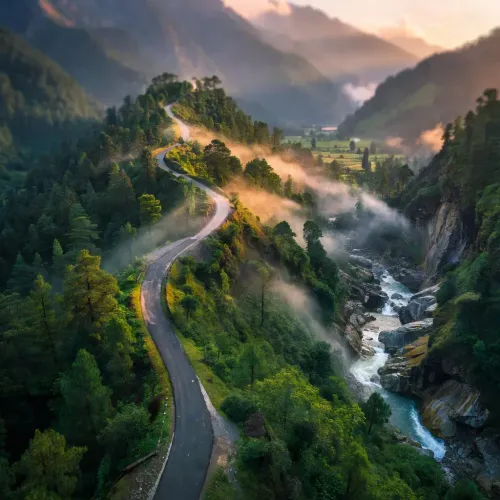
The statement was geotagged to Almora , a forested, agrarian district in the Kumaon region with a growing eco-tourism sector.
Uttarakhand was created in 2000 with an explicit mandate for sustainable Himalayan development, giving the statement deep policy lineage.
The Chipko movement of the 1970s , which originated in these hills, established early community-led precedents for balancing forest conservation and livelihoods.
Concrete follow-through may come through state budget allocations for green infrastructure , organic farming , or sustainable tourism in Kumaon districts.
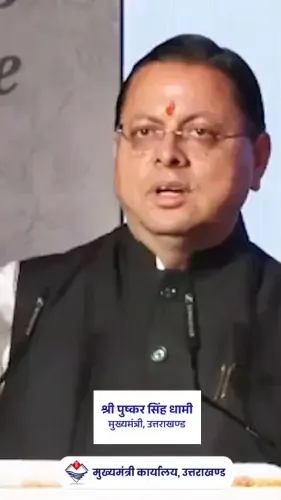
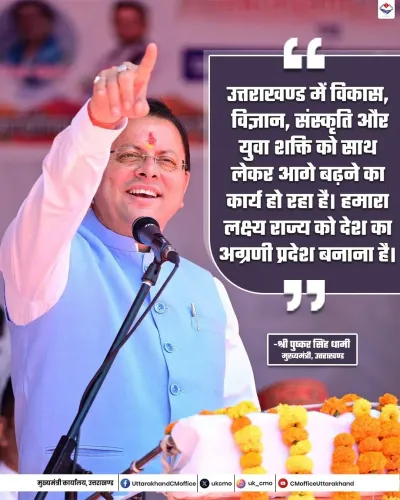
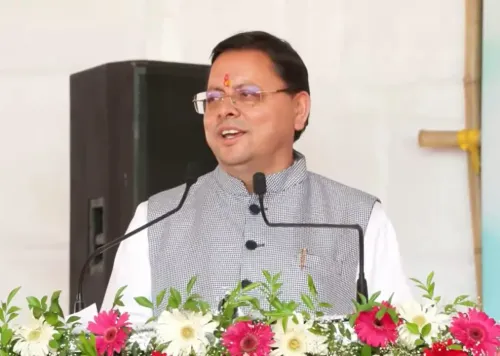
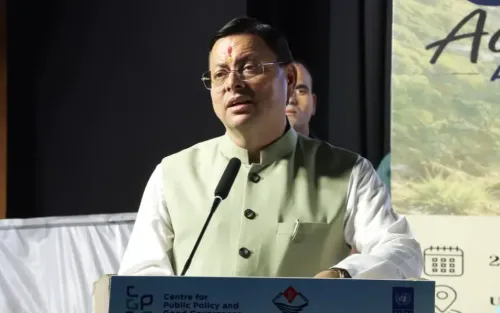
The Chief Minister's Office of Uttarakhand on Sunday, 7 June 2026, shared a statement by Chief Minister Pushkar Singh Dhami emphasising that both ecology and economy must be strengthened simultaneously for the state's development, with the remarks tagged to Almora in the Kumaon region.
Context
Dhami stated, 'Uttarakhand ke vikas ke liye ecology yaani paryavaran aur economy yaani arthvyavastha, in dono ka hi mazboot hona zaroori hai' — 'For the development of Uttarakhand, both ecology meaning environment and economy meaning the economy, it is essential that both are strong.' The statement was accompanied by a video and geotagged to Almora district, a predominantly agrarian and forested district in the Kumaon hills.
The framing is deliberate: by spelling out the Hindi equivalents — paryavaran for ecology and arthvyavastha for economy — Dhami addressed a local audience for whom the trade-off between forest conservation and livelihood is a lived reality.
Policy Backdrop
Uttarakhand was carved out of Uttar Pradesh in November 2000 with an explicit mandate for sustainable Himalayan development. The state's rugged terrain, dense forest cover, and dependence on glacier-fed rivers make ecological health a precondition for economic activity — a tension that has shaped policy since the Chipko movement of the 1970s, when hill communities in this region pioneered community-led forest conservation.
Nationally, frameworks such as the National Action Plan on Climate Change promote green growth in fragile ecosystems, and Uttarakhand has periodically updated its own climate action commitments. Statements that balance ecology and economy from the state's top office typically accompany or precede announcements on hydropower regulation, organic farming, or sustainable tourism — all sectors of direct relevance to Kumaon districts like Almora.
Stakeholders and Impact
Almora district is home to a mix of farming households, forest-dependent communities, and a growing eco-tourism economy. For these groups, any policy calibration between development clearances and environmental protection has immediate livelihood consequences. The district's forests are also critical to downstream water security across the Kumaon plains.
The tourism sector, which has expanded significantly across Uttarakhand's hill districts, is acutely sensitive to ecological degradation — landslides, deforestation, and river pollution directly affect visitor numbers and local incomes. Dhami's dual-pillar framing signals that the state government is aware of this interdependence and intends to address both sides of the equation in its planning.
What's Next
Observers will watch for concrete follow-through in state budget allocations and project clearances for green infrastructure across Kumaon districts. Possible updates to the Uttarakhand Climate Action Plan and new schemes targeting organic farming or eco-tourism in Almora could give operational content to the CM's stated principle.
The broader implication is that Uttarakhand is positioning ecological stewardship not as a constraint on growth but as a foundation for it — a framing that, if backed by policy, could serve as a model for other Himalayan states navigating the same development dilemma.
Point of View
But its deployment in Almora — a district where forest rights and tourism pressures intersect sharply — suggests the CM is laying rhetorical groundwork ahead of potential policy moves in Kumaon. The statement fits a broader pattern in which Himalayan state governments invoke green-growth language to pre-empt criticism of development clearances while also reassuring conservation constituencies. Whether the framing translates into measurable shifts in project approvals or budget priorities will determine its real significance. For now, it signals that the Dhami administration is conscious of the ecological-economic tension that defines governance in the Uttarakhand hills.
NationPress
22 Oct 2026
Frequently Asked Questions
What did CM Pushkar Singh Dhami say about ecology and economy in Uttarakhand?
CM Dhami stated on 7 June 2026 that both ecology (environment) and economy must be strengthened together for Uttarakhand's development, speaking in the context of Almora district.
Why is the ecology-economy balance important for Uttarakhand?
Uttarakhand's Himalayan terrain makes ecological health a precondition for economic activity — forests, glaciers, and rivers underpin agriculture, water supply, and tourism, all of which are core to the state's economy.
What is Almora known for in Uttarakhand?
Almora is a district in the Kumaon region of Uttarakhand, known for its forests, traditional agriculture, and growing eco-tourism economy, making it central to debates about sustainable development in the hills.
What is Uttarakhand's policy history on sustainable development?
Uttarakhand was formed in 2000 with a mandate for sustainable Himalayan development. The region also has a historic legacy from the Chipko movement of the 1970s, which pioneered community-led forest conservation.
What policy announcements could follow CM Dhami's Almora statement?
Analysts expect possible updates to the Uttarakhand Climate Action Plan and new budget allocations for green infrastructure, organic farming, or sustainable tourism in Kumaon districts as follow-through on the CM's stated principle.