CM Dhami: Uttarakhand growth must balance ecology and economy
Synopsis
Chief Minister Pushkar Singh Dhami has stated that Uttarakhand's development must be pursued in coordination with ecology, arguing that when environment and economy move together, a sustainable balance is achieved. The remark underscores the Himalayan state's ongoing challenge of reconciling infrastructure growth with fragile ecosystem conservation.
Key Takeaways
CM Pushkar Singh Dhami stated on 27 May 2026 that Uttarakhand's development must coordinate ecology and economy.
He asserted that when environment and development 'go hand in hand, a balance is established.' Uttarakhand , formed in 2000 , is one of India's most ecologically sensitive Himalayan states, facing persistent tensions between infrastructure expansion and conservation.
Key stakeholders include hill communities , the tourism industry , and forest-dependent groups across the state's 13 districts .
India's National Action Plan on Climate Change (2008) includes a dedicated Himalayan Ecosystem Mission that frames state-level sustainable development policy.
Concrete follow-through will be tracked in state budget decisions and project-level environmental safeguards for roads, hydropower, and tourism infrastructure.
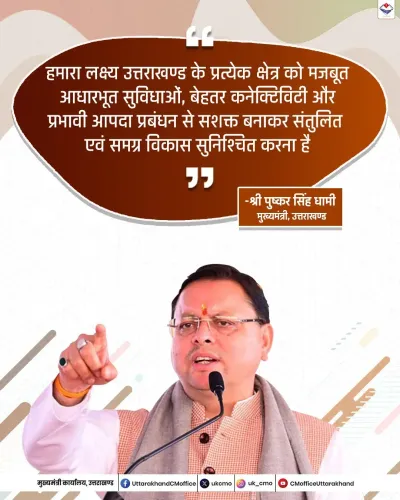
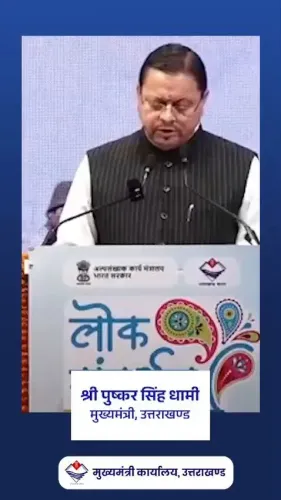
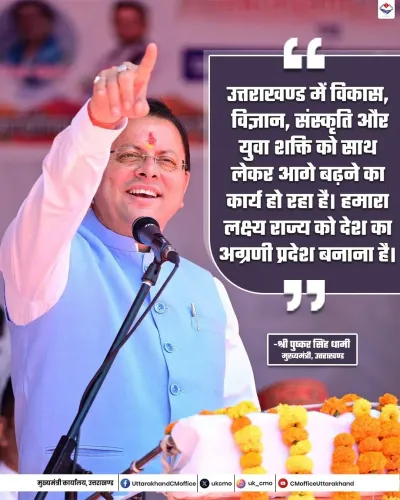
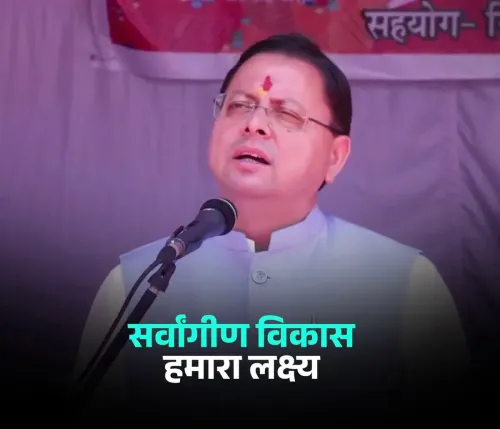
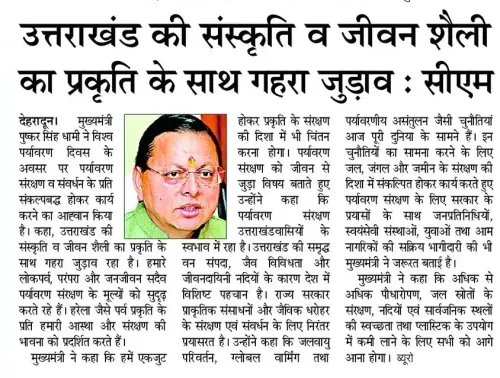
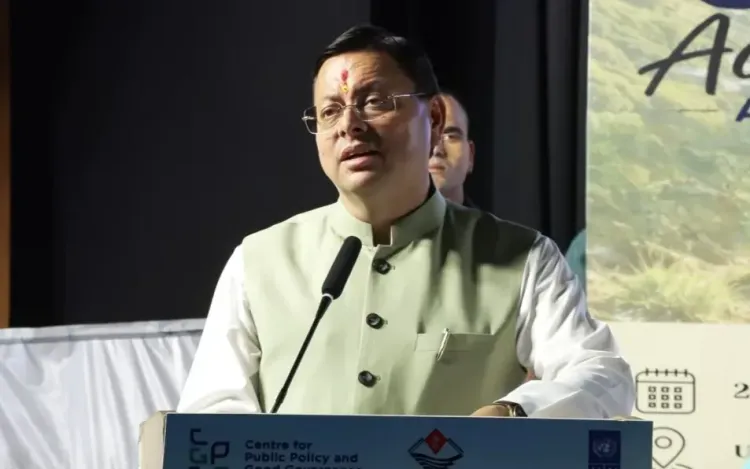
The Chief Minister's Office of Uttarakhand on Wednesday, 27 May 2026 shared a statement by Chief Minister Pushkar Singh Dhami stressing that the state's development must proceed in coordination with ecological considerations, asserting that harmony between environment and growth creates a sustainable balance.
Quoting the Chief Minister directly, the post read: 'प्रदेश का विकास इकोलॉजी और इकोनॉमी के समन्वय के साथ किया जाना चाहिए। जब पर्यावरण और विकास साथ-साथ चलते हैं तो एक संतुलन स्थापित होता है।' ('The development of the state should be carried out in coordination of ecology and economy. When environment and development go hand in hand, a balance is established.')
Context
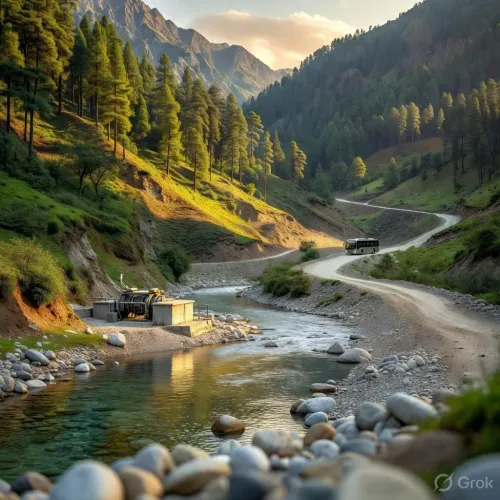
Uttarakhand, a Himalayan state formed in 2000, sits at the intersection of some of India's most ecologically sensitive terrain and some of its most pressing development needs. The state is home to dense forests, glacial river systems, and biodiversity corridors that are simultaneously vital to downstream water security and vulnerable to disruption from infrastructure expansion.
Chief Minister Dhami, who has led the state since 2021, has consistently framed his administration's agenda around reconciling economic uplift for hill communities with the imperatives of environmental stewardship. This statement reinforces that framing in explicit terms.
Policy Backdrop
The tension between ecology and economy in Himalayan states is long-standing. Since Uttarakhand's formation, successive governments have grappled with decisions on hydropower projects, road expansion under schemes like Char Dham Mahamarg Vikas Pariyojana, and tourism infrastructure — all of which carry significant environmental footprints in fragile hill terrain.
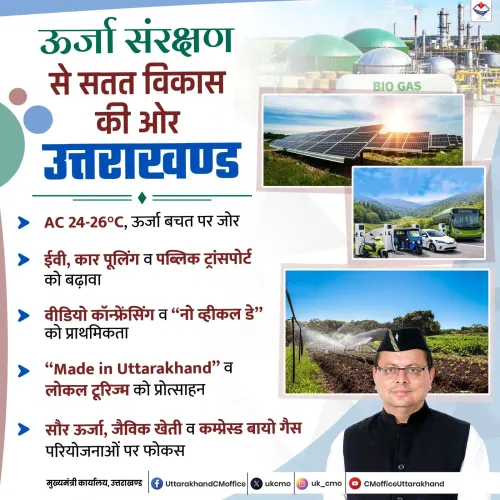
At the national level, India's National Action Plan on Climate Change, launched in 2008, laid out a framework for state-level sustainable development strategies, with a dedicated Himalayan Ecosystem Mission among its eight national missions. Uttarakhand's policy direction has broadly tracked these priorities, seeking green-growth pathways that do not compromise the ecological base on which the state's tourism and agriculture depend.
The BJP-led government's articulation of ecology-economy coordination also aligns with the broader national political narrative of 'development without destruction,' a phrase that has recurred in central government communications on forest and environmental policy through the 2010s and 2020s.
Stakeholders and Impact
Hill communities across Uttarakhand's 13 districts are the primary stakeholders in this balance. Livelihoods tied to agriculture, horticulture, and forest produce depend on ecosystem health, while the same communities also demand better roads, connectivity, and economic opportunity that infrastructure projects deliver.
The tourism industry — a pillar of the state economy drawing millions of pilgrims and leisure tourists annually to destinations like Kedarnath, Badrinath, Jim Corbett National Park, and Valley of Flowers — has a direct commercial stake in environmental quality. Degraded landscapes and increased disaster risk from unchecked construction directly threaten tourist footfall and investor confidence.
Forest-dependent groups, including tribal and van panchayat communities managing community forests, stand to benefit from policies that assign economic value to conservation, such as eco-tourism models and payment-for-ecosystem-services frameworks.
What's Next
The statement is a policy signal that observers will watch for concrete follow-through in upcoming state budget allocations, cabinet decisions on pending infrastructure projects, and any new guidelines on sustainable tourism or climate-resilient construction in hill zones. Uttarakhand's record on translating ecology-economy rhetoric into enforceable project-level safeguards will be the measure of this commitment.
With Himalayan states facing intensifying climate pressures — including erratic monsoons, glacial lake outburst flood risks, and increased landslide frequency — the political salience of getting this balance right is only likely to grow. How CM Dhami's administration operationalises this principle in specific project approvals will determine whether the statement marks a policy shift or remains an aspirational framing.
Point of View
But in Uttarakhand it carries particular urgency given the state's exposure to climate-driven disasters and its dependence on a healthy environment for tourism revenues. The statement's significance will ultimately be tested against specific project approvals — particularly hydropower and highway decisions — where the trade-offs between ecology and economy are not rhetorical but concrete. Analysts will watch whether this framing translates into measurable environmental conditionalities in state infrastructure policy or remains a political positioning statement ahead of budget season.
NationPress
20 Sept 2026
Frequently Asked Questions
What did CM Pushkar Singh Dhami say about ecology and economy in Uttarakhand?
CM Dhami stated that Uttarakhand's development should be carried out in coordination of ecology and economy, and that when environment and development go hand in hand, a sustainable balance is established.
Why is balancing ecology and economy important for Uttarakhand?
Uttarakhand is a fragile Himalayan state where forests, rivers, and biodiversity underpin both the tourism economy and the livelihoods of hill communities. Unchecked infrastructure development increases landslide and flood risks, making ecological balance a practical as well as environmental priority.
What is Uttarakhand's policy on sustainable development?
Uttarakhand's development policy broadly follows India's National Action Plan on Climate Change, which includes a Himalayan Ecosystem Mission. The state government has sought to align infrastructure growth — roads, hydropower, tourism facilities — with environmental safeguards, though implementation has been contested.
Who is Pushkar Singh Dhami and what is his role?
Pushkar Singh Dhami is the Chief Minister of Uttarakhand, serving since 2021 and representing the BJP. He oversees state governance including development planning, environmental policy, and disaster management in the Himalayan state.
What are the main environmental challenges facing Uttarakhand?
Uttarakhand faces intensifying climate pressures including erratic monsoons, glacial lake outburst flood risks, increased landslide frequency, and the environmental impact of large-scale infrastructure projects such as highways and hydropower dams in ecologically sensitive zones.