PM Modi Backs Cabinet Scheme for Critical Mineral Processing Plants
Synopsis
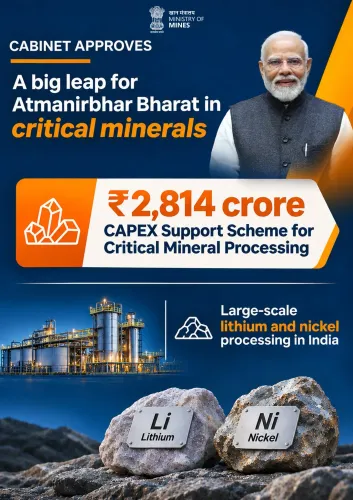
The Union Cabinet has approved a scheme to establish domestic critical mineral processing plants with capital subsidies, targeting lithium, nickel, and cobalt — minerals essential for EVs, batteries, electronics, and defence — to reduce India's dependence on imported refined materials.
Key Takeaways
The Union Cabinet approved a new scheme on 4 November 2026 to set up domestic critical mineral processing plants in India.
The scheme offers a capital subsidy designed to attract private-sector investment into the processing sector.
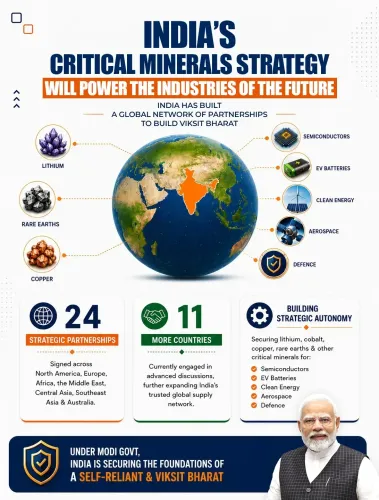
Target minerals include lithium, nickel, and cobalt — critical inputs for EVs, batteries, electronics, and defence systems.
The move builds on the 2023 Mines and Minerals Amendment Act and the 2021 PLI scheme for Advanced Chemistry Cells .
Detailed guidelines, plant locations, and subsidy timelines are yet to be formally notified.
The scheme aligns India with global efforts by major economies to onshore critical-mineral supply chains.
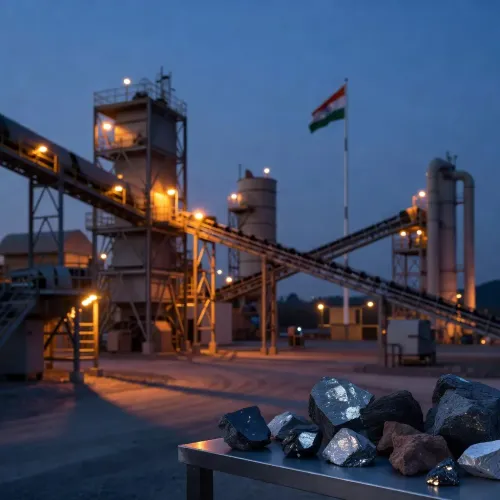
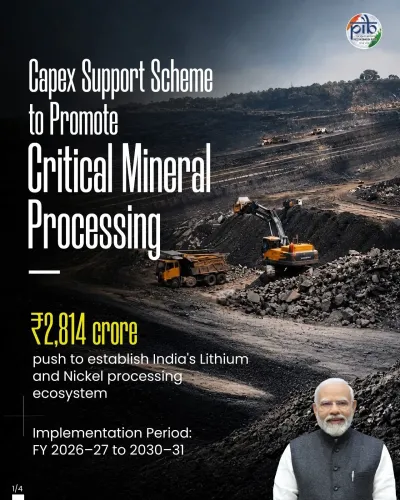
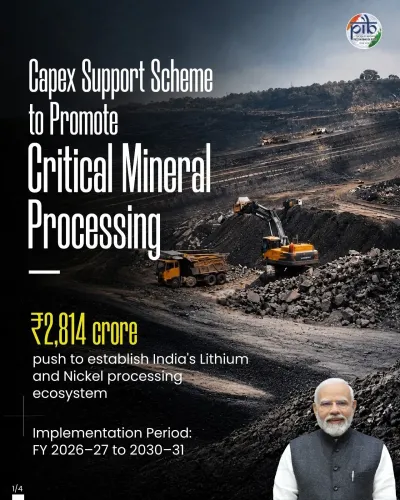
India is done waiting at the back of the global supply chain. Prime Minister Narendra Modi announced on Wednesday, 4 November 2026 that the Union Cabinet has approved a landmark scheme to build domestic processing capacity for critical minerals — lithium, nickel, and cobalt — the raw sinew of the country's electric-vehicle, battery, electronics, and defence ambitions.
Why India's import dependence became a national vulnerability
The minerals Modi named are not niche commodities. Lithium powers every EV battery on Indian roads. Cobalt and nickel are embedded in everything from smartphones to guided-missile systems. Yet for all the ore that may lie beneath Indian soil, the country has remained a buyer of refined materials — meaning value addition, strategic leverage, and jobs have all flowed abroad.
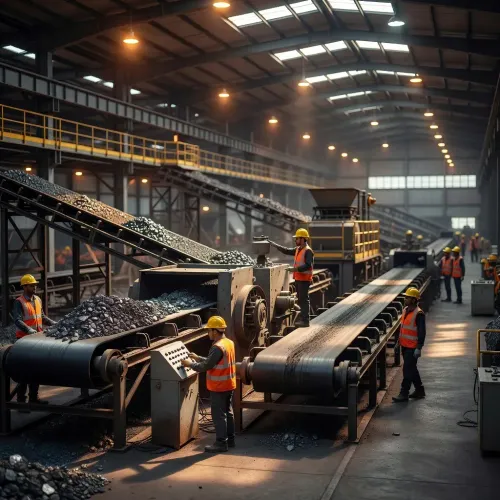
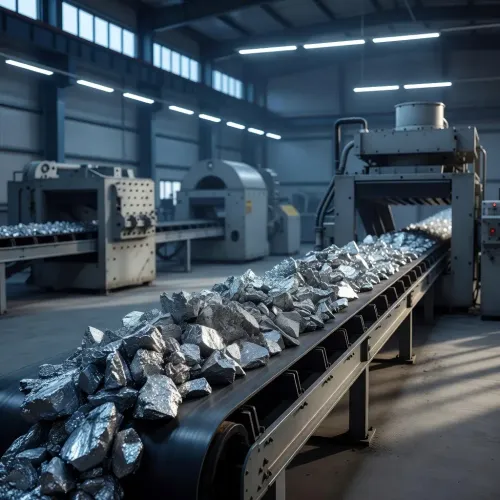
That asymmetry is exactly what the Cabinet has moved to close. The approved scheme introduces new critical mineral processing plants, a capital subsidy to draw private investment, and a mandate for greater domestic value addition — aiming to build supply chains that do not snap the moment a foreign supplier or government decides to tighten the tap.
The policy arc: from mining rights to processing muscle
This is not India's first step down this road. The Mines and Minerals (Development and Regulation) Amendment Act of 2023 expanded the official list of critical minerals and cracked open exploration and mining to private players. A year earlier, the Production Linked Incentive scheme for Advanced Chemistry Cells, notified in 2021, began pushing domestic battery manufacturing forward. The Cabinet's latest move is the missing link: processing infrastructure that sits between raw ore and finished cell.
Detailed guidelines, plant locations, and subsidy disbursement timelines are still to be formally notified. State-owned efforts to secure overseas mineral assets — an important parallel track — are also expected to continue.
Modi's rhetorical challenge — and what it signals to industry
'Do you feel India should depend on other countries for processing the critical minerals that power our future? I certainly don't!' Modi wrote, framing the announcement not as a bureaucratic approval but as a civilisational posture. The principle, he said, is unambiguous: 'India must have capabilities to build technologies of the future.'
For EV manufacturers, battery producers, and the defence industry — all of whom currently navigate volatile import markets — the signal is direct: the government is backing domestic processing with real capital incentives, not just aspiration. The scheme arrives as global economies from the United States to the European Union race to onshore their own critical-mineral supply chains, and India is now formally in that race.
The measure of success will be in the plants that actually come online, the gigawatt-hours of domestically processed material that reach Indian factories, and the degree to which India's EV and defence sectors stop counting foreign refiners among their single points of failure.
Point of View
Addressed in 2023, to the downstream refining chokepoint where real strategic vulnerability has always sat. By pairing a capital subsidy with a domestic value-addition mandate, the government is signalling that it wants industrial outcomes, not merely policy frameworks. The timing is astute: as the US, EU, and China all tighten their grip on refined-mineral supply, India risks being priced out of the EV and defence technology race unless it commands its own processing capacity. The credibility test, however, will arrive with plant-commissioning dates and offtake volumes — metrics that have historically lagged ambition in India's heavy-industry programmes.
NationPress
4 Nov 2026
Frequently Asked Questions
What critical minerals does India's new Cabinet scheme cover?
The scheme targets minerals including lithium, nickel, and cobalt — the key inputs for EV batteries, consumer electronics, and defence applications — where India currently depends heavily on imported refined materials.
What does the Cabinet-approved critical mineral processing scheme actually do?
It establishes new domestic processing plants for critical minerals, provides a capital subsidy to attract investment, mandates greater domestic value addition, and aims to build more resilient supply chains within India.
Why is India dependent on imports for critical minerals?
While India may have some underlying mineral resources, it has lacked domestic refining and processing infrastructure, forcing manufacturers to import refined lithium, cobalt, and nickel — primarily from overseas suppliers — to feed EV, battery, and electronics industries.
How does this scheme connect to Atmanirbhar Bharat?
It directly extends the Atmanirbhar Bharat (self-reliant India) framework into the critical-minerals sector, following earlier moves like the 2023 Mines and Minerals Amendment Act and the 2021 PLI scheme for Advanced Chemistry Cells, to localise the full value chain from ore to finished product.
When will the critical mineral processing plants be operational?
Detailed guidelines, plant locations, and subsidy disbursement timelines had not been formally notified as of the Cabinet approval announcement on 4 November 2026 — those specifics are expected in subsequent official notifications.