CM Sai Launches Helmet Bank at Jashpur Police Lines
Synopsis
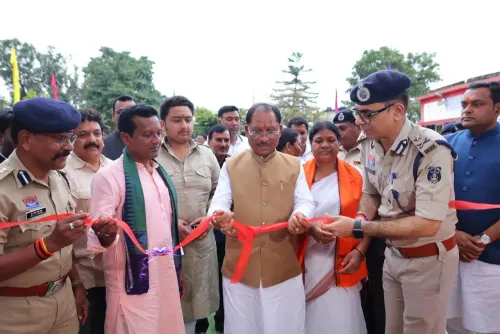
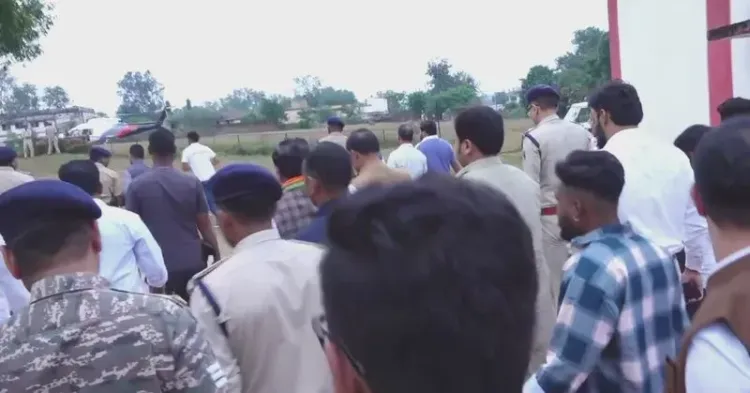
Chhattisgarh Chief Minister Vishnu Deo Sai launched a Helmet Bank at Jashpur Police Lines on 4 November 2026, giving two-wheeler riders in the tribal district access to helmets and reinforcing the state's road-safety push.
Key Takeaways
CM Vishnu Deo Sai inaugurated the Helmet Bank at Police Lines, Jashpur on 4 November 2026 .
The initiative targets two-wheeler riders in Jashpur , a northern Chhattisgarh district with a large tribal population.
Helmet Banks allow riders to borrow helmets, lowering barriers to compliance with the Motor Vehicles Act .
Chhattisgarh Police is a key operational partner in the scheme's rollout.
The model has precedent across Indian states as a tool to reduce road-accident fatalities from head injuries.
Post-launch helmet usage and accident data in Jashpur will be the measure of real impact.
A road-safety push reached the tribal heartland of northern Chhattisgarh on Wednesday, 4 November 2026, as Chhattisgarh Chief Minister Vishnu Deo Sai inaugurated a Helmet Bank at the Police Lines in Jashpur — putting helmets within reach of two-wheeler riders who might otherwise ride without one.
What a Helmet Bank actually does
The concept is straightforward but the impact is real: a Helmet Bank, hosted at a police station or police lines, allows two-wheeler riders to borrow helmets — bridging the gap between intent and compliance under the Motor Vehicles Act. Indian states have used this model periodically to cut head-injury fatalities, recognising that cost and inconvenience often keep riders helmetless even when they know the law.
Jashpur, a district in northern Chhattisgarh with a predominantly tribal population, presents a specific road-safety challenge: rural and semi-urban roads, rising two-wheeler penetration, and enforcement gaps that make community-level access points more effective than fines alone.
Chhattisgarh's road-safety momentum
Chhattisgarh Police has run several traffic-awareness drives in recent years alongside stepped-up enforcement of helmet rules. The Jashpur launch fits that pattern — moving from awareness to access. When helmets are available at the police lines themselves, the excuse of 'I don't have one' evaporates.
CM Sai, who took office in December 2023, has positioned community-level policing initiatives as a governance priority in districts like Jashpur where state presence and public trust are both actively being built. A helmet bank, modest as it sounds, is a visible, tangible signal of that intent.
The number that matters next
The real test will come in the months ahead. Analysts and district health officials will watch whether helmet usage on Jashpur's roads measurably rises — and whether road-accident fatality data for the district trends downward. A successful model here could travel to other tribal districts across the state.
One inauguration, one police lines compound, one district — but the question it poses is bigger: can a borrow-a-helmet booth move the needle on a statistic that kills thousands across India every year?
Point of View
Visible community-safety gestures carry disproportionate political weight. It also slots neatly into the BJP's broader 'last-mile governance' narrative — taking welfare and safety services physically to the people rather than waiting for people to seek them out. Whether the initiative scales beyond one district, and whether it comes with sustained enforcement, will determine if it is a model or a moment.
NationPress
4 Nov 2026
Frequently Asked Questions
What is a Helmet Bank and how does it work?
A Helmet Bank is a facility — typically at a police station — where two-wheeler riders can borrow helmets. It aims to close the gap between awareness and compliance by making helmets physically accessible at no immediate cost, reducing head-injury fatalities in road accidents.
Where was the Helmet Bank launched in Chhattisgarh?
Chief Minister Vishnu Deo Sai launched the Helmet Bank at the Police Lines in Jashpur , a district in northern Chhattisgarh, on 4 November 2026 .
Why was Jashpur chosen for this road-safety initiative?
Jashpur is a predominantly tribal district in northern Chhattisgarh with rising two-wheeler usage and enforcement challenges on rural roads. Community-level access points like a Helmet Bank can be more effective there than enforcement-only approaches.
Who is Vishnu Deo Sai?
Vishnu Deo Sai is the Chief Minister of Chhattisgarh and a senior BJP leader. He assumed office in December 2023 and represents a tribal constituency, making initiatives in districts like Jashpur particularly significant for his political profile.
Has Chhattisgarh run road-safety drives before?
Yes. Chhattisgarh Police has conducted multiple road-safety awareness and helmet-enforcement drives in recent years under the Motor Vehicles Act . The Jashpur Helmet Bank is an extension of that effort, moving from awareness campaigns to direct access.