CM Dhami: Ecology and Economy Must Go Hand in Hand for Uttarakhand
Synopsis
Chief Minister Pushkar Dhami has stated that Uttarakhand's development hinges on balancing ecology and economy, arguing that preserving the state's soil and water is the foundation of its economic strength. The statement reinforces a long-standing policy framing in Indian Himalayan governance.
Key Takeaways
CM Pushkar Dhami stated on June 6, 2026 that both ecology and economy must be strengthened for Uttarakhand's development.
He argued that preserving soil and water is a precondition for economic resilience, not a trade-off against it.
Uttarakhand has operated under the State Action Plan on Climate Change (2014) and the National Mission for Sustaining the Himalayan Ecosystem (2010) .
The state's economy depends on tourism, pilgrimage, hydropower and horticulture — all directly tied to ecological health.
The 2013 Kedarnath floods exposed the risks of unchecked Himalayan development and have shaped environmental policy in the state since.
Budget allocations for eco-tourism and watershed programmes in 2026-27 will be a key indicator of whether the principle translates into policy.
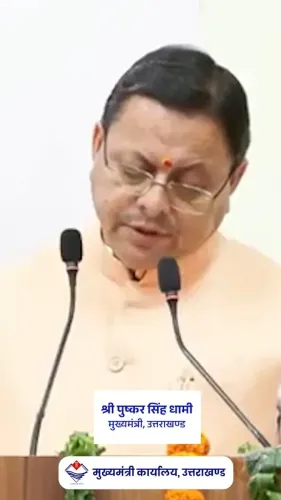
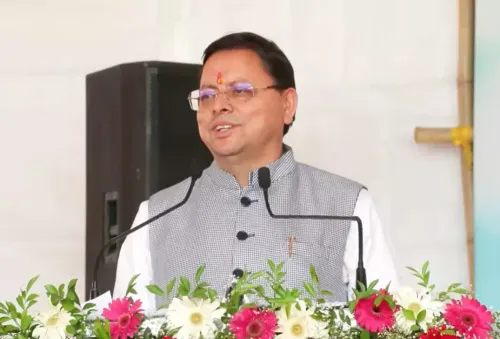
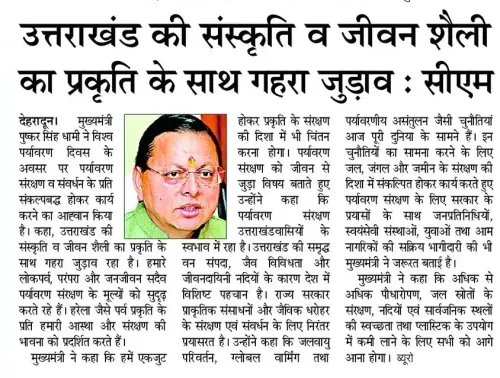
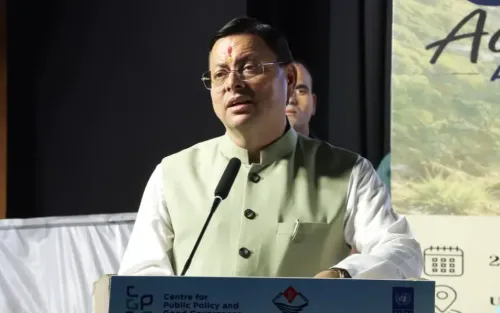
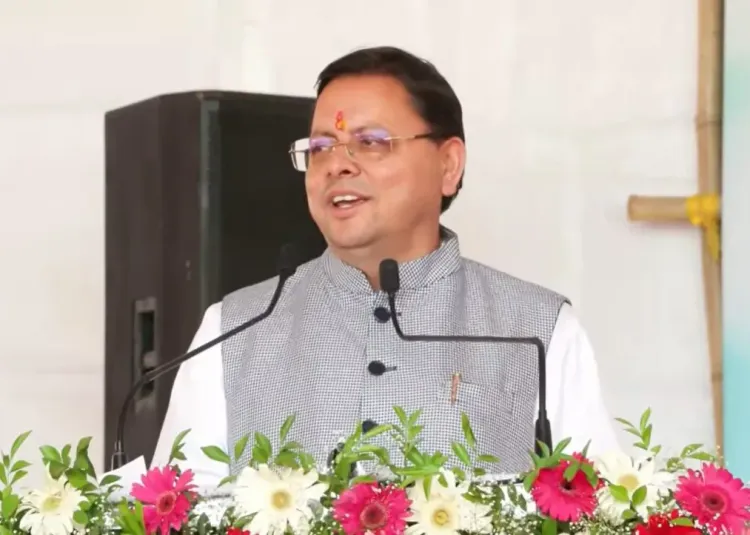
The Chief Minister's Office of Uttarakhand on Saturday, June 6, 2026, shared a statement by Chief Minister Pushkar Singh Dhami underscoring that the state's development cannot be achieved by prioritising economy over ecology or vice versa — both must be strengthened together.
Context
CM Dhami stated: 'उत्तराखण्ड के विकास के लिए इकोलॉजी यानी पर्यावरण और इकोनॉमी यानी अर्थव्यवस्था दोनों का मजबूत होना जरूरी है' — 'For the development of Uttarakhand, both ecology meaning environment and economy meaning the financial system need to be strong.' He added that a better balance must be struck between the two, and that only if the state's ecology, soil and water are preserved will its economic condition also strengthen.
The statement positions environmental integrity not as a constraint on growth but as a precondition for it — a framing that carries particular weight in a Himalayan state where livelihoods in tourism, pilgrimage, horticulture and hydropower are directly tied to the health of watersheds and forests.
Policy Backdrop
Uttarakhand has operated under the Uttarakhand State Action Plan on Climate Change (2014), which set targets for sustainable development balancing forest cover with economic activity. At the national level, the National Mission for Sustaining the Himalayan Ecosystem (2010), one of the eight missions under India's National Action Plan on Climate Change, specifically prioritised ecological security in mountain states including Uttarakhand.
Successive state governments have navigated a difficult path between rapid infrastructure expansion — including the Char Dham road-widening project and multiple hydropower schemes — and court-mandated environmental restrictions, particularly after the catastrophic 2013 Kedarnath floods exposed the vulnerability of Himalayan development models. CM Dhami, in office since 2021 and re-elected in 2022, has repeatedly invoked the ecology-economy balance in his public communications on state development.
Stakeholders and Impact
Hill communities across Uttarakhand's rural districts depend directly on intact forests and clean water sources for agriculture and daily life, making ecological degradation an immediate livelihood threat. Tourism and pilgrimage operators — who drive a significant share of the state's revenue, particularly along the Char Dham circuit — are equally exposed to the risks of landslides, glacial events and environmental degradation that accompany unchecked development.
Hydropower developers and horticulture farmers represent constituencies where the tension between ecological limits and economic ambition is most acute. Any shift in state policy toward stricter environmental safeguards would directly affect project clearances and land-use decisions in these sectors.
What's Next
Observers will watch the state budget for 2026-27 for concrete allocations toward eco-tourism infrastructure and watershed restoration programmes that could give substance to CM Dhami's stated principle. Follow-up notifications on pending hydropower or road projects will serve as a practical test of how the government resolves the ecology-economy balance in specific decisions.
If the framing translates into enforceable policy, Uttarakhand could emerge as a template for other Indian Himalayan states grappling with the same tension — demonstrating that ecological preservation and economic growth can be pursued as complementary rather than competing goals.
Point of View
Where the principle meets political economy. If followed through with measurable policy, it could set a precedent for mountain-state governance across the region.
NationPress
23 Oct 2026
Frequently Asked Questions
What did CM Pushkar Dhami say about Uttarakhand's environment and economy?
CM Dhami stated that both ecology and economy must be strengthened together for Uttarakhand's development, and that preserving the state's soil and water is the foundation of its economic strength.
Why is the ecology-economy balance important for Uttarakhand?
Uttarakhand's key economic sectors — tourism, pilgrimage, hydropower and horticulture — depend directly on healthy forests, clean water and stable land, making ecological degradation a direct economic threat.
What is Uttarakhand's policy on climate change and environment?
Uttarakhand operates under its State Action Plan on Climate Change (2014) and benefits from the National Mission for Sustaining the Himalayan Ecosystem (2010), both of which set frameworks for balancing development with ecological security.
How did the 2013 Uttarakhand floods affect environmental policy in the state?
The 2013 Kedarnath floods, which caused massive loss of life and infrastructure, led to court-mandated environmental restrictions on projects like the Char Dham road widening and heightened scrutiny of hydropower schemes in ecologically sensitive zones.
What should we watch for after CM Dhami's ecology-economy statement?
Key indicators will include state budget 2026-27 allocations for eco-tourism and watershed restoration, and any government notifications on pending hydropower or road projects that test how the ecology-economy balance is applied in practice.