Uttarakhand CMO Highlights Green Energy Push, Solar Growth
Synopsis
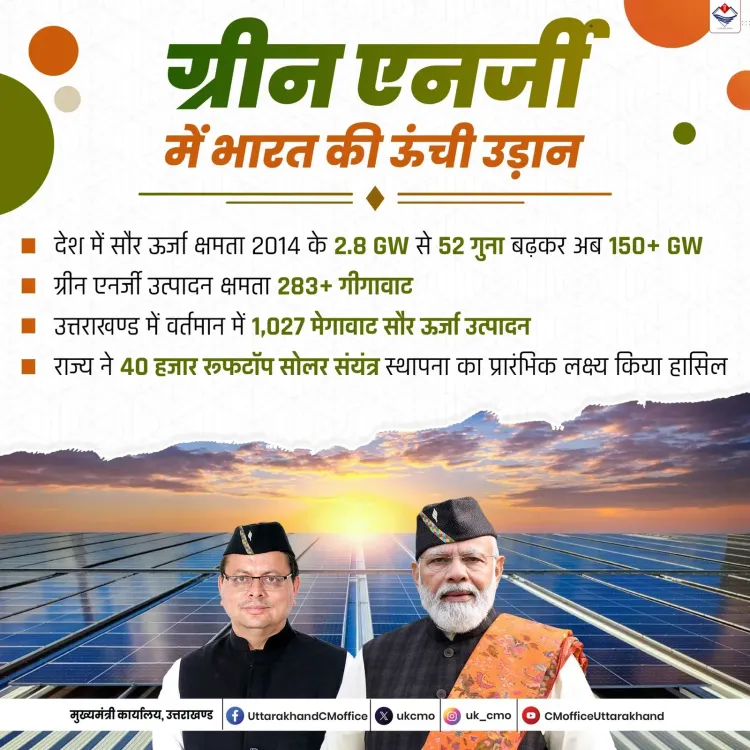
The Chief Minister's Office of Uttarakhand on 10 June 2026 announced expansion of green energy and increased solar power generation in the state, linking the push to the #12YearsOfGaribKalyan welfare campaign and India's broader renewable energy targets.
Key Takeaways
The Chief Minister's Office of Uttarakhand announced green energy expansion and growth in solar power production on 10 June 2026 .
The announcement was tagged #12YearsOfGaribKalyan , framing solar energy access as a welfare outcome for lower-income groups.
Uttarakhand's solar push aligns with India's commitment to 50 per cent non-fossil fuel electricity capacity by 2030 under the Paris Agreement .
The state's terrain supports both hydropower and distributed solar generation , giving it a dual renewable advantage.
Central schemes such as PM-KUSUM provide additional pathways for solar deployment, especially for farmers and rural households.
Observers will watch for solar park tenders and capacity figures in upcoming state budget disclosures.
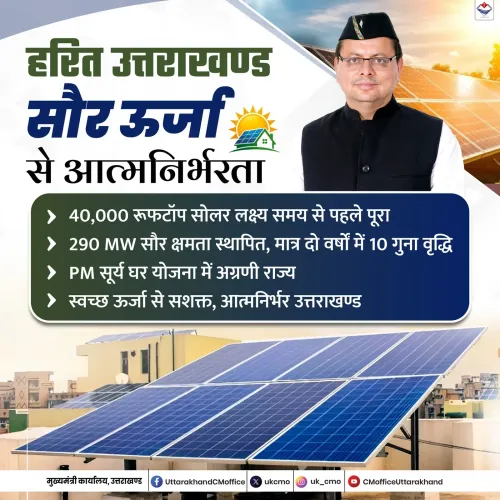
The Chief Minister's Office of Uttarakhand on Wednesday, 10 June 2026 highlighted the state's expanding green energy footprint, citing growth in solar power generation as part of a broader renewable energy drive under the #12YearsOfGaribKalyan campaign.
Context
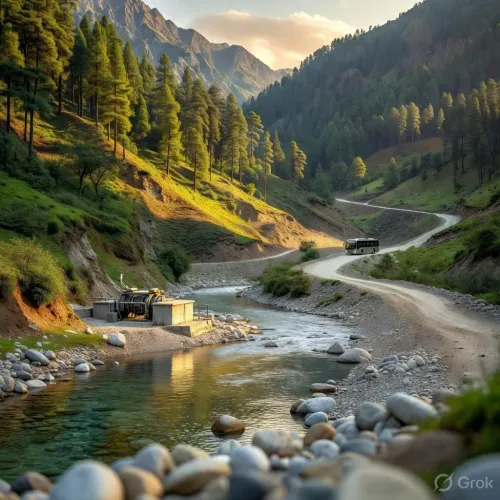
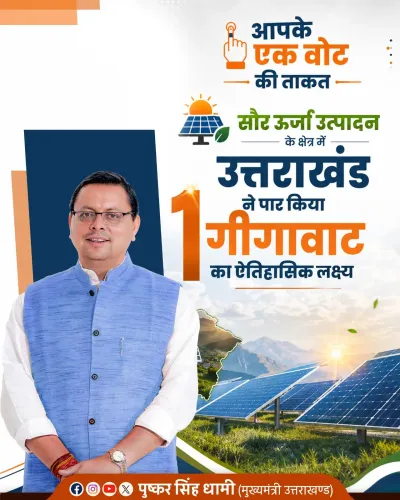
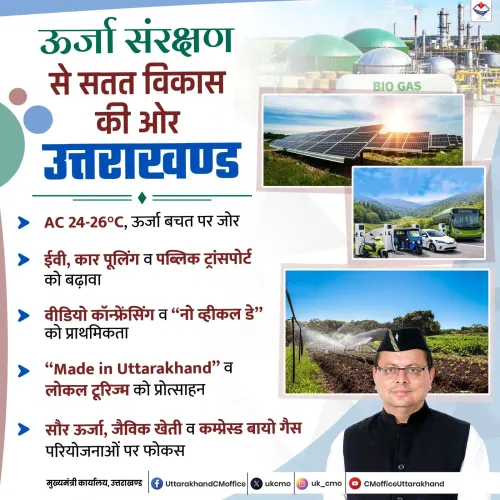
The post, shared from the official CMO account, announced "Uttarakhand mein Green Energy vistar, solar urja utpadan mein vriddhi" — broadly translated as 'Green energy expansion in Uttarakhand, increase in solar power production.' The message was accompanied by an image and tagged with #Uttarakhand, #GreenEnergy, and #12YearsOfGaribKalyan, linking the state's renewable push to a wider welfare narrative.
Uttarakhand, a Himalayan state in northern India, has historically relied on hydropower owing to its river-rich terrain. In recent years, however, state policy has pivoted toward diversifying into solar generation, particularly distributed and rooftop systems suited to the region's topography.
Policy Backdrop
India's National Solar Mission, launched in 2010 under the National Action Plan on Climate Change, set the template for state-level solar capacity addition. The country subsequently raised its ambition at the 2015 Paris climate summit, committing to 175 GW of renewable energy capacity by 2022 — including 100 GW of solar — and later pledging 50 per cent non-fossil fuel electricity capacity by 2030 under the Paris Agreement.
Uttarakhand's solar expansion aligns with these national targets. Policy observers note that the state's terrain offers complementary potential: hydropower for base-load and solar for distributed generation in remote villages and agricultural belts. Central schemes such as PM-KUSUM, which supports solar pumps for farmers, have also created additional deployment pathways in hill states.
Stakeholders and Impact
The primary beneficiaries of expanded solar generation in Uttarakhand are rural households and smallholder farmers, particularly in areas where grid connectivity remains intermittent. Distributed solar installations reduce dependence on diesel generators and lower energy costs for low-income groups — a connection the #12YearsOfGaribKalyan framing makes explicit, tying energy access to welfare outcomes.
Renewable energy developers and state utilities stand to gain from fresh tender pipelines, while the broader Himalayan ecosystem benefits from reduced fossil fuel consumption. The messaging also reinforces Uttarakhand's positioning as a model 'green state' — a branding the government has pursued alongside its ecotourism and organic farming agendas.
What's Next
Analysts tracking the state's energy sector will watch for concrete follow-through: new solar park tenders, capacity addition figures in the next state budget, or fresh integration with central welfare schemes. The #12YearsOfGaribKalyan hashtag suggests this announcement is part of a coordinated communication campaign, which may be accompanied by further disclosures on project timelines and beneficiary data.
If Uttarakhand sustains its solar momentum, it could emerge as a reference point for other Himalayan states seeking to balance ecological sensitivity with clean energy ambition — a balance that will grow more consequential as India approaches its 2030 climate commitments.
Point of View
Anchoring a state-level clean energy narrative to the central government's Garib Kalyan welfare brand — a pattern seen across BJP-governed states seeking to align development optics with New Delhi's political messaging. Uttarakhand's dual hydro-solar potential gives it credible standing in India's renewable story, but the absence of specific capacity figures keeps the announcement in the realm of intent rather than achievement. The move signals that green energy is no longer merely an environmental talking point in hill states but is being woven into social equity arguments about energy access for the poor. Whether the rhetoric translates into measurable megawatts will determine how this narrative ages against India's 2030 climate scorecard.
NationPress
25 Oct 2026
Frequently Asked Questions
What is Uttarakhand's green energy expansion about?
The Chief Minister's Office of Uttarakhand announced on 10 June 2026 that the state is expanding green energy infrastructure and increasing solar power generation, as part of India's broader renewable energy push and the #12YearsOfGaribKalyan campaign.
What is the #12YearsOfGaribKalyan hashtag in the context of energy?
#12YearsOfGaribKalyan is a campaign hashtag used by BJP-aligned governments to mark welfare milestones. In this context, it links solar energy access to the welfare of lower-income and rural communities in Uttarakhand.
How does Uttarakhand contribute to India's solar energy targets?
Uttarakhand contributes through distributed and rooftop solar installations suited to its hilly terrain, complementing its existing hydropower base and helping India work toward its Paris Agreement target of 50 per cent non-fossil fuel electricity capacity by 2030.
What is PM-KUSUM and how does it relate to Uttarakhand?
PM-KUSUM is a central government scheme that supports solar-powered pumps for farmers. It provides an additional deployment channel for solar energy in Uttarakhand's agricultural and rural areas.
What should we watch for next on Uttarakhand solar energy?
Key developments to track include new solar park tenders, capacity addition data in the state budget, and further announcements under central welfare schemes linking energy access to rural households.