Uttarakhand CMO Pushes Solar Energy for Self-Reliance
Synopsis
The Chief Minister's Office of Uttarakhand on 1 June 2026 promoted solar energy as the foundation of 'Green Uttarakhand', calling for self-reliance through clean power. The message reinforces the state's push to bring reliable, renewable electricity to remote hill communities and aligns with India's 500 GW non-fossil fuel target by 2030.
Key Takeaways
The Chief Minister's Office of Uttarakhand posted the Green Uttarakhand: Solar Energy Self-Reliance message on 1 June 2026 .
Uttarakhand , a Himalayan state formed in 2000 , has long relied on hydropower but faces energy deficits in remote areas.
India's National Solar Mission (launched 2010 ) provides the central policy framework for state-level solar expansion.
India aims to achieve 500 GW of non-fossil fuel power capacity by 2030 , with Himalayan states playing a role.
Key beneficiaries include rural households and hill communities where conventional grid infrastructure is limited.
Rooftop and ground-mounted solar systems are seen as practical solutions to terrain and transmission challenges in the state.
The Chief Minister's Office of Uttarakhand on Monday, 1 June 2026 shared a message championing solar energy as the path to self-reliance under its Green Uttarakhand initiative, reinforcing the state government's commitment to renewable energy for its hill communities.
Context
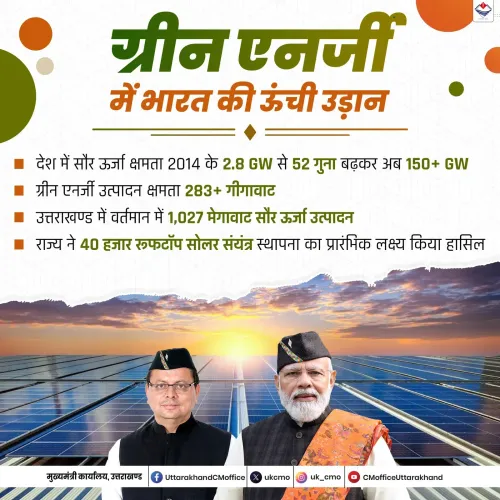
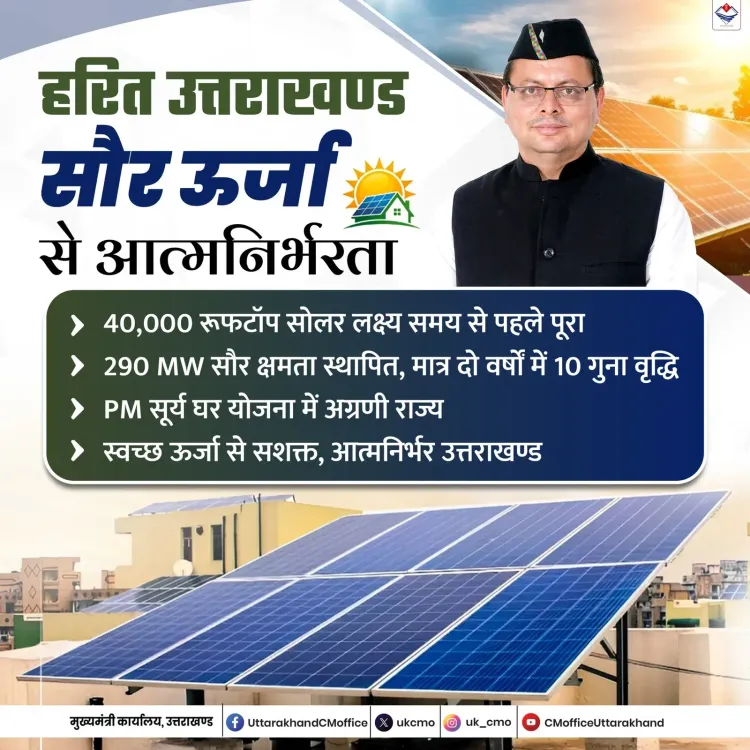
The post, captioned 'Harit Uttarakhand: Saur Urja se Aatmanirbharta' ('Green Uttarakhand: Self-reliance through solar energy'), signals the state's continued push to position solar power as a cornerstone of its energy future. Uttarakhand, a Himalayan state formed in 2000, has historically depended on hydropower but faces persistent energy deficits in its remote and high-altitude regions where grid connectivity remains a challenge.
The Green Uttarakhand messaging aligns with a broader state-level effort to harness clean energy and reduce dependence on fossil fuels, particularly for rural households and hill communities that are hardest to serve through conventional transmission infrastructure.
Policy Backdrop
India's National Solar Mission, launched in 2010, laid the foundation for state-level solar expansion by promoting both grid-connected and off-grid installations across the country. Uttarakhand's solar ambitions sit within this national framework, which is anchored to India's broader target of achieving 500 GW of non-fossil fuel power capacity by 2030.
Hilly terrain, seasonal variability, and the high cost of transmission lines make large-scale grid expansion difficult in states like Uttarakhand. Rooftop solar and decentralised off-grid systems have emerged as practical alternatives to bring reliable electricity to remote villages, reducing both energy poverty and carbon emissions simultaneously.
Stakeholders and Impact
The primary beneficiaries of a solar-led energy push in Uttarakhand are rural households and hill communities in districts where power supply is irregular or absent. Solar installations — whether rooftop panels on homes or ground-mounted arrays — can provide consistent daytime power and, when paired with storage, extend supply through evenings.
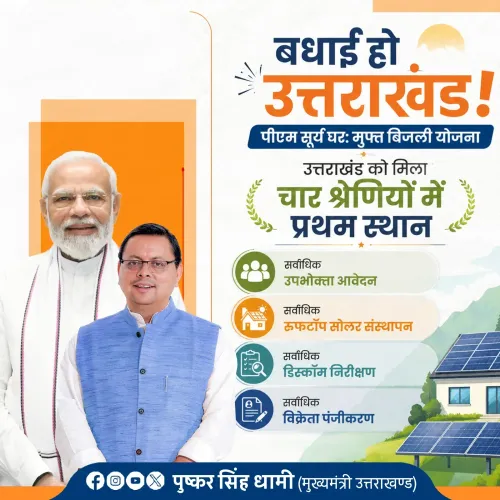
Local economies also stand to gain: reliable electricity supports small businesses, cold-chain agriculture, and digital connectivity in areas that have historically lagged behind the plains. State and central subsidies under solar schemes can lower the upfront cost barrier for low-income families.
What's Next
Observers will watch for concrete announcements on installation targets, subsidy disbursal timelines, and the rollout of rooftop and ground-mounted projects under state and central schemes. The Green Uttarakhand framing suggests the government may be building toward a broader policy package that ties solar energy to the state's environmental and tourism identity.
As India's 2030 clean energy deadline draws closer, Himalayan states like Uttarakhand face both an opportunity and a responsibility to demonstrate that difficult terrain is no barrier to a renewable energy transition.
Point of View
Applied to the state's specific energy geography. For a mountain state where hydropower dominates but seasonal variation and terrain limit its reach, solar represents both a practical supplement and a political signal of modernisation. The Green Uttarakhand branding also serves the state's tourism and environmental image, positioning clean energy as inseparable from its identity as a hill destination. Whether this messaging translates into measurable installation targets or subsidy announcements will determine its policy weight beyond symbolism.
NationPress
15 Oct 2026
Frequently Asked Questions
What is Green Uttarakhand and what does it aim to do?
Green Uttarakhand is a state government initiative that promotes environmental sustainability and clean energy, with solar power positioned as a key pillar for achieving energy self-reliance, particularly in remote hill communities.
Why is solar energy important for Uttarakhand?
Uttarakhand's hilly terrain and remote villages make conventional grid expansion expensive and difficult. Solar energy, especially rooftop and off-grid systems, offers a practical way to deliver reliable electricity to areas that hydropower and transmission lines struggle to reach.
What is India's National Solar Mission?
India's National Solar Mission was launched in 2010 to scale up solar power generation across the country through grid-connected and off-grid installations, providing a framework that state governments including Uttarakhand use for their own renewable energy programmes.
What is India's renewable energy target for 2030?
India has set a target of 500 GW of non-fossil fuel power capacity by 2030. States like Uttarakhand are expected to contribute through solar and hydro projects as part of this national goal.
Who benefits from solar energy expansion in Uttarakhand?
The primary beneficiaries are rural households and hill communities in Uttarakhand's remote districts, where irregular power supply limits daily life, small businesses, and agricultural activity. Subsidies under central and state schemes aim to make solar installations affordable for low-income families.