CM Dhami: Solar Energy Is No Longer Optional, It's the Future
Synopsis
Chief Minister Pushkar Singh Dhami declared solar energy a national necessity rather than an option, signalling Uttarakhand's intent to accelerate solar adoption across its Himalayan terrain and align with India's 500 GW clean energy goal by 2030.
Key Takeaways
CM Pushkar Singh Dhami stated on 30 May 2026 that solar energy is no longer optional but a future necessity for Uttarakhand .
Uttarakhand has been diversifying its energy mix beyond hydro power, with a solar policy first introduced in 2013 and subsequently updated.
India's National Solar Mission (launched 2010 ) and the national target of 500 GW non-fossil capacity by 2030 form the policy framework underpinning the state's push.
Rural and remote hill communities in Uttarakhand are the primary beneficiaries of expanded decentralised solar deployment.
The statement is expected to precede concrete policy actions such as new state solar tenders or programme announcements.
The Chief Minister's Office of Uttarakhand on Saturday, 30 May 2026, shared a statement from Chief Minister Pushkar Singh Dhami declaring that solar energy has moved beyond being a mere alternative and is now an essential requirement for the state's future.
Context
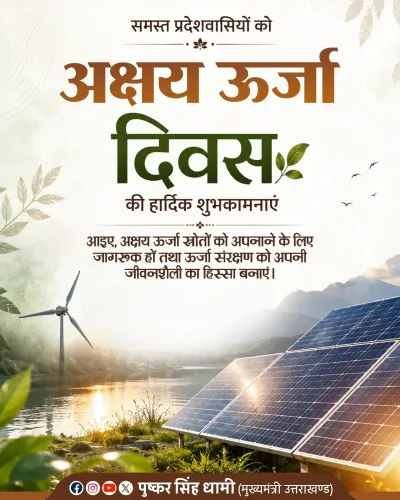
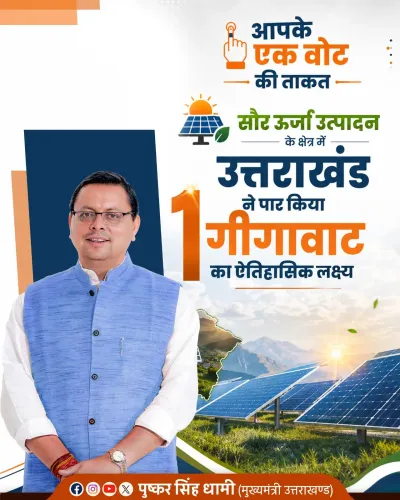
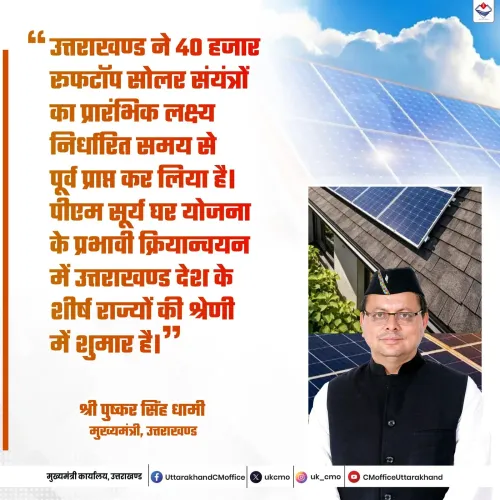
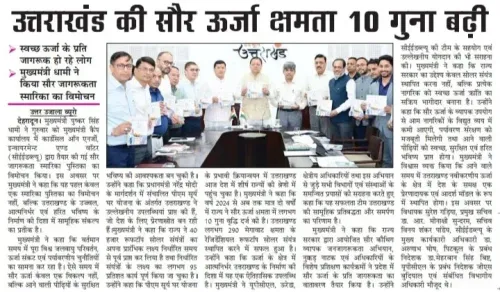
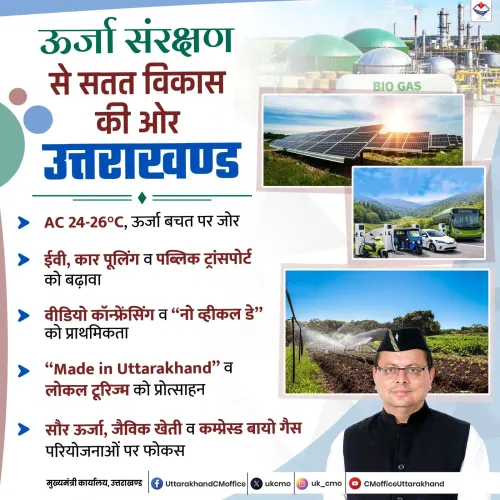
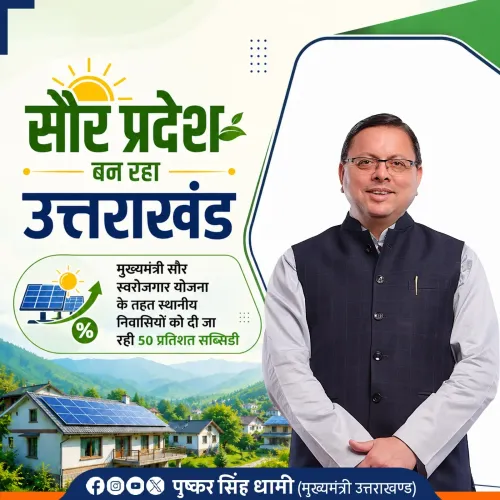
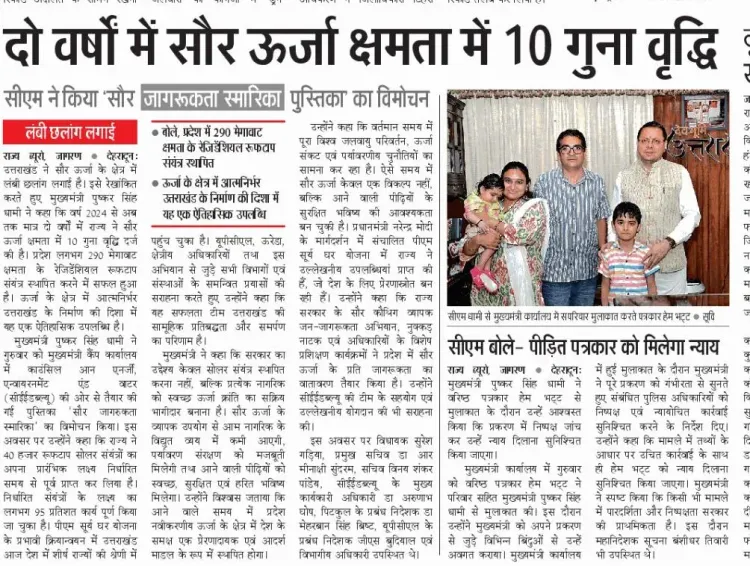
The post carries a declarative assertion from CM Dhami: 'Saur urja ab sirf vikalp nahin, bhavishy ki aavashyakta' ('Solar energy is no longer just an option — it is the necessity of the future'). The statement signals a firm policy orientation from the state government toward accelerating solar adoption across Uttarakhand. The post was accompanied by four images, suggesting a formal event, site visit, or programme launch related to solar energy.
Policy Backdrop
Uttarakhand, a Himalayan state with historically hydro-dominant power generation, has been gradually diversifying its renewable energy portfolio. The state introduced its first Solar Energy Policy in 2013, which has since been updated to attract private investment and scale capacity in both grid-connected and off-grid segments. India's broader National Solar Mission, launched in 2010, set the framework for state-level solar expansion, and the country has committed to achieving 500 GW of non-fossil fuel capacity by 2030 as part of its net-zero pathway. Hilly and remote regions like Uttarakhand present unique opportunities for decentralised solar deployment, particularly in villages where conventional grid extension remains costly and ecologically disruptive.
The state's shift in emphasis — from hydro as the default to solar as a co-equal priority — reflects a wider national pattern of diversifying away from large infrastructure projects in ecologically sensitive zones toward smaller, distributed renewable solutions.
Stakeholders and Impact
Rural households in Uttarakhand's remote hill districts stand to benefit most directly from expanded solar access, gaining reliable electricity where grid connectivity is limited. Renewable energy developers and project implementers are watching for new state tenders and policy incentives that could follow such high-level endorsements. The statement also carries significance for local bodies and gram panchayats that have been piloting rooftop solar and solar-powered community infrastructure under central schemes such as PM Surya Ghar: Muft Bijli Yojana.
For Uttarakhand's broader economy, greater solar penetration could reduce dependence on imported power during lean hydro seasons — typically the winter months — and lower energy costs for households and small enterprises in the hills.
What's Next
The statement from CM Dhami is likely to be followed by concrete policy announcements, state-level solar tenders, or programme rollouts, though specific details have not yet been disclosed. Observers will watch for updates on rooftop solar targets, ground-mounted project approvals, and any revisions to the state's solar energy policy. The alignment of Uttarakhand's renewable push with India's 2030 clean energy targets and 2070 net-zero commitment means that the political signal from the Chief Minister's Office carries weight well beyond the state's borders.
Point of View
This signals a genuine strategic pivot, not merely optics. The statement fits a broader pattern of hill-state governments repositioning themselves as solar frontrunners to attract central scheme funds and private investment. If backed by concrete tenders or policy revisions, Uttarakhand could emerge as a model for decentralised solar deployment in ecologically sensitive mountain geographies.
NationPress
14 Oct 2026
Frequently Asked Questions
What did CM Pushkar Singh Dhami say about solar energy?
CM Pushkar Singh Dhami declared that solar energy is no longer just an alternative but has become a necessity for the future, signalling a stronger state commitment to solar adoption in Uttarakhand.
What is Uttarakhand's solar energy policy?
Uttarakhand introduced its Solar Energy Policy in 2013 and has updated it since to attract investment in grid-connected and off-grid solar projects, particularly in remote hill areas.
How does Uttarakhand's solar push relate to India's national energy goals?
India has set a target of 500 GW of non-fossil fuel capacity by 2030 and aims for net-zero emissions by 2070. Uttarakhand's solar expansion is part of state-level efforts to contribute to these national commitments.
Who benefits from solar energy expansion in Uttarakhand?
Rural and remote households in Uttarakhand's hill districts benefit most, gaining reliable electricity where conventional grid access is limited. Renewable energy developers also gain from new project opportunities.
Why is solar energy important for hilly states like Uttarakhand?
Hilly states face challenges in grid extension and are ecologically sensitive, making decentralised solar a cost-effective and environmentally sound alternative to large infrastructure projects. Solar also reduces dependence on imported power during lean hydro seasons.