CM Dhami: Solar Energy to Brighten Uttarakhand's Future
Synopsis
Chief Minister Pushkar Singh Dhami has declared that solar energy will brighten the future of Devbhoomi, signalling Uttarakhand's intent to scale up renewables alongside its traditional hydro base and align with India's 500 GW clean energy target by 2030.
Key Takeaways
CM Pushkar Singh Dhami declared on 29 May 2026 that solar energy will illuminate the future of Devbhoomi (Uttarakhand) .
Uttarakhand is expanding its energy mix beyond hydropower to include solar, aligning with India's national target of 500 GW non-fossil fuel capacity by 2030 .
The state's mountainous terrain offers high solar irradiance potential in select zones, making decentralised solar viable for remote communities.
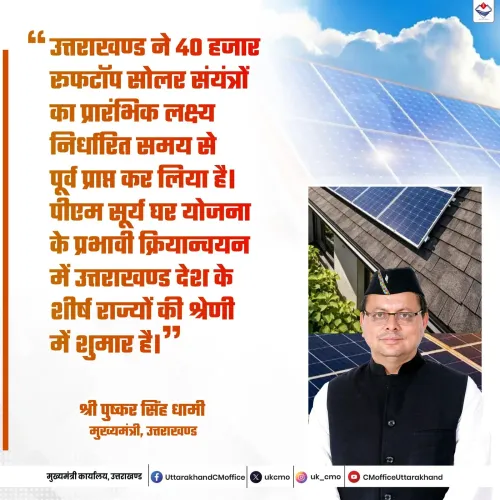
Integration with the central government's PM Surya Ghar Muft Bijli Yojana rooftop solar scheme is a key implementation pathway.
Rural residents in remote hill villages stand to benefit most from reduced dependence on diesel and unreliable grid supply.
State-level solar tenders and budgetary allocations will be the next concrete indicators of policy follow-through.
The Chief Minister's Office of Uttarakhand on Friday, 29 May 2026 shared a statement from Chief Minister Pushkar Singh Dhami declaring that solar energy will illuminate the future of Devbhoomi — the sacred Himalayan state — signalling a renewed push for renewable energy expansion in the region.
Context
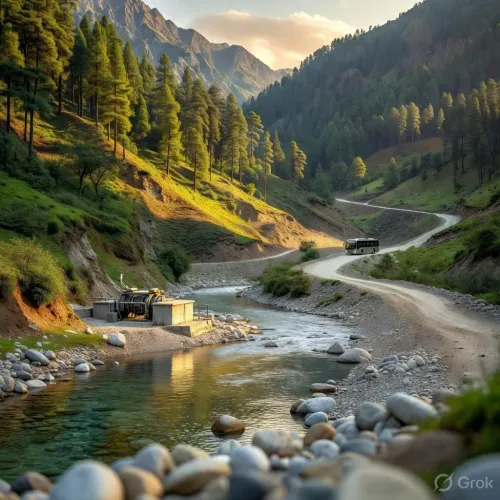
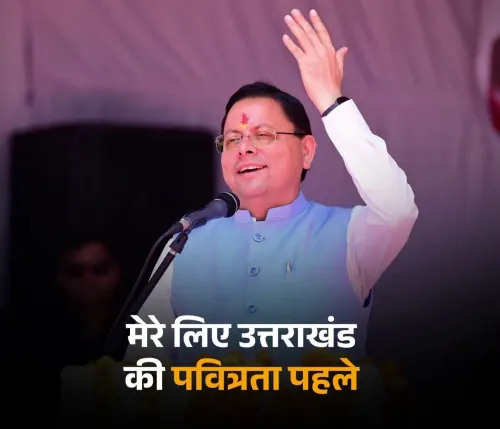
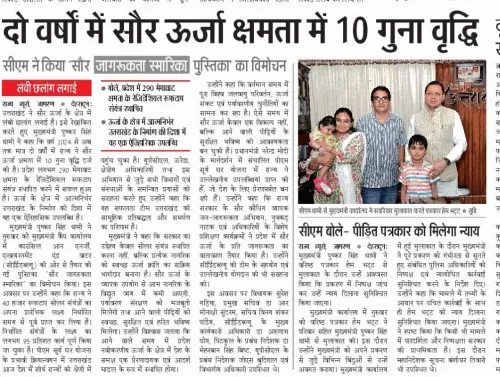
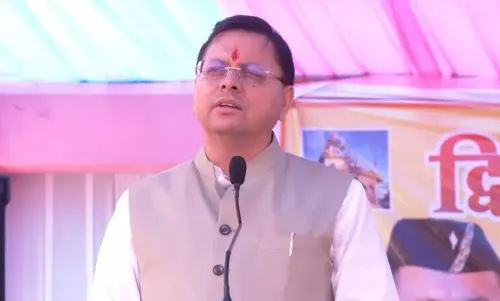
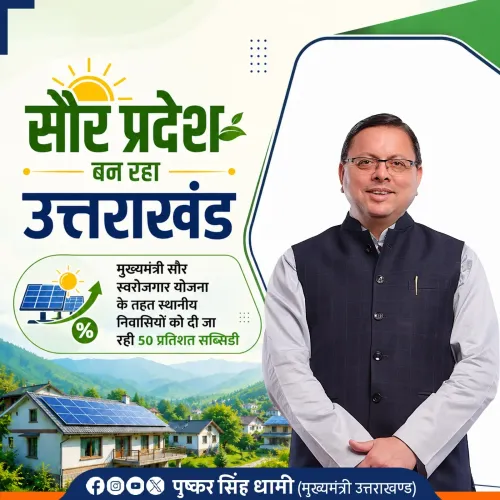
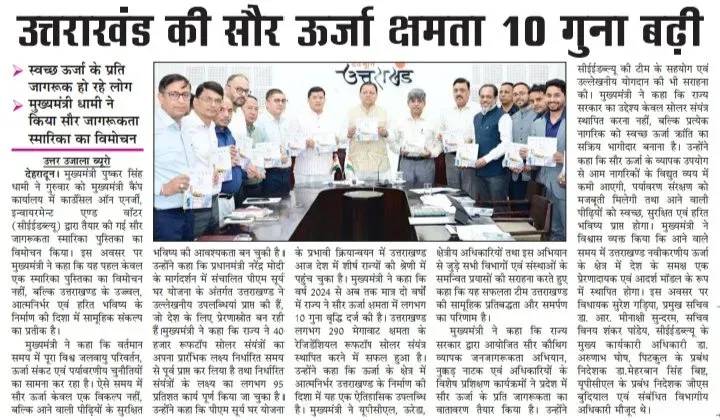
The post, shared in Hindi, quotes CM Dhami directly: 'Saur urja se ujjwal hoga Devbhoomi ka bhavishy' ('Solar energy will brighten the future of Devbhoomi'). The statement comes as Uttarakhand — long associated with hydropower drawn from its Himalayan rivers — increasingly looks toward solar as a complementary and sustainable energy source. The Chief Minister's Office accompanied the post with four images, underlining the government's intent to communicate a visual narrative around the initiative.
Policy Backdrop
India's National Solar Mission, launched in 2010, set the framework for large-scale solar deployment across the country, and successive central governments have built on it with ambitious capacity targets. The current national goal of achieving 500 GW of non-fossil fuel electricity capacity by 2030 has pushed every state, including hill states with historically hydro-dominant grids, to identify and develop solar potential. Uttarakhand's mountainous terrain, while posing logistical challenges for large solar farms, offers zones of high solar irradiance — particularly in its mid-hill and plateau regions — that remain underexploited. The state's alignment with the central government's PM Surya Ghar Muft Bijli Yojana — a rooftop solar scheme aimed at reducing household electricity bills — is one channel through which this vision is being operationalised at the grassroots level.
Stakeholders and Impact
Uttarakhand's roughly 10 million residents, many of whom live in remote hill villages with unreliable grid connectivity, stand to benefit most directly from decentralised solar deployment. For rural households, rooftop and community solar installations can reduce dependence on diesel generators and costly grid extensions across difficult terrain. The renewable energy sector — including equipment manufacturers, project developers, and local installers — also stands to gain as the state government signals policy intent and potentially accelerates project tenders. Environmentally, a greater solar share reduces the pressure on river ecosystems already stressed by existing hydropower infrastructure.
What's Next
Observers will watch for concrete follow-through in the form of state-level solar project tenders, capacity addition targets, and budgetary allocations in the coming months. Integration with central schemes and potential tie-ups with public sector undertakings in the energy space will be key indicators of how swiftly CM Dhami's stated vision translates into commissioned capacity. If Uttarakhand successfully scales solar alongside its traditional hydro base, it could serve as a replicable model for other Himalayan states navigating the same energy and ecology balance.
Point of View
Making this as much a Centre-state alignment move as a local policy declaration. For a state whose development narrative has long leaned on pilgrimage tourism and hydropower, adding solar to the brand carries both economic and political logic. The real test will be whether tendering and budgetary action follows the rhetoric in the near term.
NationPress
12 Oct 2026
Frequently Asked Questions
What did CM Dhami say about solar energy in Uttarakhand?
CM Pushkar Singh Dhami stated that solar energy will brighten the future of Devbhoomi (Uttarakhand), signalling the state government's commitment to expanding renewable energy beyond its traditional hydropower base.
Why is Uttarakhand focusing on solar energy?
Uttarakhand is expanding into solar energy to complement its hydropower resources, reduce reliance on imported fuels, improve electricity access in remote hill villages, and align with India's national target of 500 GW non-fossil fuel capacity by 2030.
What is PM Surya Ghar Muft Bijli Yojana and how does it relate to Uttarakhand?
PM Surya Ghar Muft Bijli Yojana is a central government rooftop solar scheme aimed at reducing household electricity bills. Uttarakhand's solar push is expected to integrate with this scheme to bring benefits to residents at the grassroots level.
Does Uttarakhand have good solar energy potential?
Yes, while Uttarakhand's mountainous terrain poses logistical challenges for large solar farms, certain mid-hill and plateau zones receive high solar irradiance, making decentralised and rooftop solar installations viable, especially for remote communities.
What should we watch for next in Uttarakhand's solar energy plans?
Key indicators will include state-level solar project tenders, specific capacity addition targets, budgetary allocations, and formal integration with central renewable energy schemes in the months ahead.