CM Dhami's Office: Uttarakhand — Development and Heritage Together
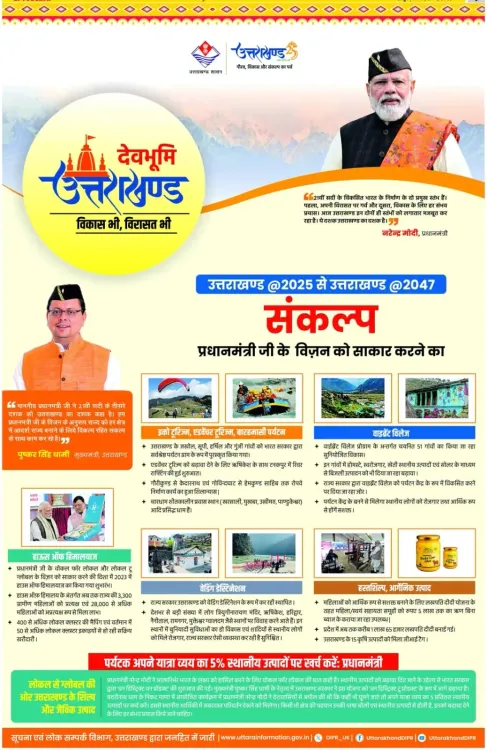
Synopsis
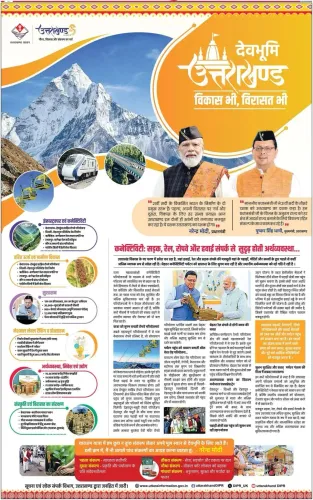
The Chief Minister's Office of Uttarakhand on 24 May 2026 reposted its signature governing slogan — 'development and heritage together' — reaffirming CM Pushkar Singh Dhami's dual focus on infrastructure expansion and cultural preservation in the Himalayan state known as Devbhoomi.
Key Takeaways
The Chief Minister's Office of Uttarakhand posted the message 'Vikas bhi, Virasat bhi' ('development and heritage too') on 24 May 2026 .
Chief Minister Pushkar Singh Dhami has anchored his administration's identity around balancing infrastructure growth with protection of Uttarakhand's religious and cultural heritage.
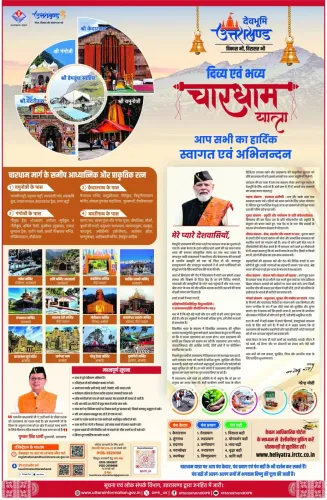
The Char Dham Mahamarg Vikas Pariyojana , approved by the Union Cabinet in 2016 , is the flagship expression of this dual agenda, connecting four major pilgrimage shrines via all-weather roads.
Key stakeholders include pilgrims , local mountain communities , and the tourism sector , all of whom are directly affected by the pace and quality of infrastructure development.
Environmental clearances for Himalayan road projects and state budget allocations for sustainable tourism remain the key metrics to watch for this policy agenda.
The Chief Minister's Office of Uttarakhand on Sunday, 24 May 2026 reaffirmed the state government's twin-track agenda of infrastructure development and cultural preservation, posting a message that encapsulates its governing philosophy: 'Devbhoomi Uttarakhand — Vikas bhi, Virasat bhi' ('Uttarakhand, the Land of Gods — development too, heritage too').
Context
The post distils a governing slogan that Chief Minister Pushkar Singh Dhami's administration has consistently projected since 2021. Uttarakhand, carved out as a separate state in 2000, carries the official identity of Devbhoomi — a land revered across India for its dense concentration of Hindu pilgrimage sites, including the Char Dham shrines of Badrinath, Kedarnath, Gangotri, and Yamunotri. The phrase 'development and heritage' is not incidental rhetoric; it signals a deliberate policy posture that the state government has tied to its budget priorities, infrastructure projects, and tourism promotion.
Policy Backdrop
The most visible expression of this dual mandate is the Char Dham Mahamarg Vikas Pariyojana, the all-weather road connectivity project that received Union Cabinet approval in 2016 to upgrade pilgrimage routes across the Himalayas. The project has moved through successive rounds of environmental scrutiny, reflecting the tension inherent in building modern road infrastructure through ecologically sensitive mountain terrain. State governments in Uttarakhand have consistently argued that improved connectivity serves both pilgrims and local communities while generating tourism revenue that can fund heritage conservation.
This balancing act mirrors approaches adopted by other Himalayan and hill states, where administrators must reconcile the economic imperative of opening remote regions to visitors with the ecological and cultural sensitivities that make those regions worth visiting in the first place.
Stakeholders and Impact
The constituencies most directly affected by this dual agenda are pilgrims who undertake the Char Dham yatra each season, local communities in mountain villages whose livelihoods depend on tourism and related trade, and the broader tourism sector that channels visitors from across India and abroad into the state's fragile Himalayan corridors. For pilgrims, all-weather road access reduces the physical hardship and safety risks of reaching high-altitude shrines. For local residents, improved infrastructure can mean better market access, emergency services, and connectivity to state capitals.
Heritage stakeholders — including religious trusts, temple committees, and cultural organisations — watch closely to ensure that the pace of infrastructure expansion does not erode the character of pilgrimage towns or damage ecologically sensitive zones that are themselves part of the region's spiritual identity.
What's Next
Observers will track Uttarakhand's state budget allocations for sustainable tourism initiatives and any fresh updates on environmental clearances or heritage bylaws linked to the Char Dham road project. The Dhami government's ability to demonstrate measurable progress on both fronts — new infrastructure commissioned and heritage sites protected — will determine how credibly the 'Vikas bhi, Virasat bhi' slogan translates from communication strategy into policy outcome. With the yatra season drawing pilgrims in large numbers each year, the pressure to deliver on both promises remains acute.
Point of View
Virasat bhi' formulation is more than a social-media slogan — it is a political compact that the Dhami government has struck with two distinct voter blocs: those who want modern roads and economic opportunity, and those who fear that rapid development will erode the spiritual character of Devbhoomi. By keeping both imperatives in the same sentence, the Chief Minister's Office signals that neither can be sacrificed for the other, a posture that has become a template for BJP-governed hill states navigating similar tensions. The real test lies in execution: environmental controversies around Himalayan road projects have repeatedly forced judicial intervention, and any fresh clearance disputes could complicate this narrative. Sustaining the dual mandate credibly will require the state to move beyond messaging and demonstrate concrete, auditable outcomes on both development and heritage fronts.
NationPress
7 Oct 2026
Frequently Asked Questions
What does 'Vikas bhi, Virasat bhi' mean in the context of Uttarakhand?
It translates to 'development too, heritage too' and is the governing slogan of Chief Minister Pushkar Singh Dhami's administration, signalling a policy commitment to building infrastructure while preserving Uttarakhand's religious and cultural identity as Devbhoomi.
What is the Char Dham Mahamarg Vikas Pariyojana?
It is a major all-weather road connectivity project approved by the Union Cabinet in 2016 to upgrade pilgrimage routes linking the four Char Dham shrines — Badrinath, Kedarnath, Gangotri, and Yamunotri — in Uttarakhand's Himalayan terrain.
Who is the Chief Minister of Uttarakhand in 2026?
Pushkar Singh Dhami is the Chief Minister of Uttarakhand, serving since 2021 and leading the BJP government in the state.
Why is Uttarakhand called Devbhoomi?
Uttarakhand is called Devbhoomi, meaning 'Land of the Gods,' because of its dense concentration of Hindu pilgrimage sites, including the Char Dham shrines and numerous temples and rivers considered sacred in Hindu tradition.
What are the main challenges in Uttarakhand's development agenda?
The primary challenges include obtaining environmental clearances for infrastructure projects in ecologically sensitive Himalayan terrain, balancing tourism revenue generation with cultural and ecological preservation, and ensuring that improved connectivity benefits local mountain communities equitably.