Uttarakhand CMO: 'Development and Heritage Together'
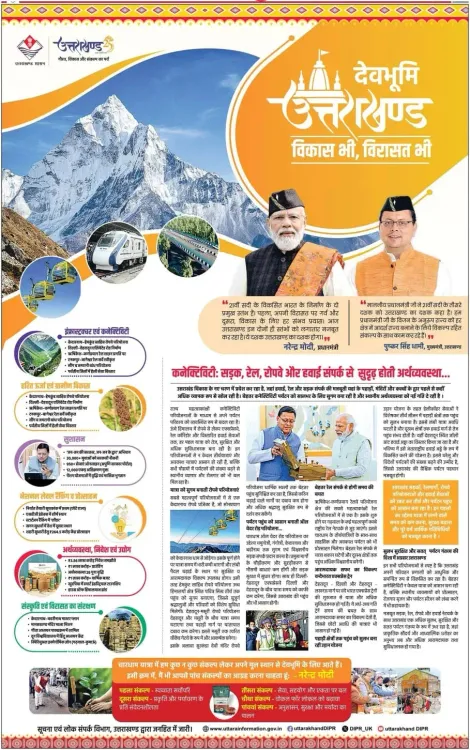
Synopsis
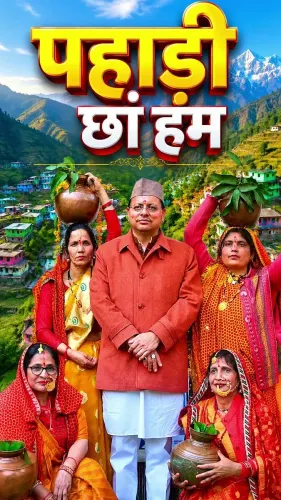
The Chief Minister's Office of Uttarakhand posted 'Vikas bhi, Virasat bhi' — development and heritage both — on 7 June 2026, reaffirming the state's governing philosophy of pairing Himalayan infrastructure growth with the preservation of Devbhoomi's religious and ecological identity.
Key Takeaways
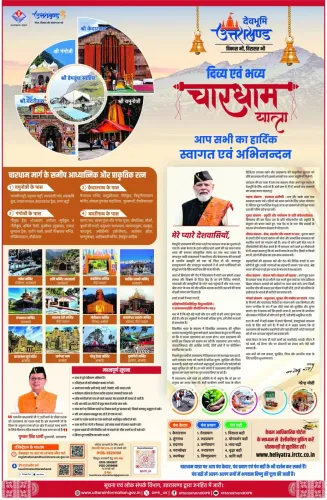
The Chief Minister's Office of Uttarakhand posted on 7 June 2026 with the message 'Devbhoomi Uttarakhand: Vikas bhi, Virasat bhi' — 'Development too, Heritage too.' Uttarakhand is home to the Char Dham pilgrimage circuit — Yamunotri, Gangotri, Kedarnath and Badrinath — making the balance of infrastructure and sanctity a core governance challenge.
The Char Dham all-weather road project , launched in 2016 , exemplifies the tension between connectivity goals and environmental safeguards in the state.
Key stakeholders include pilgrims, local communities dependent on tourism, and environmentalists monitoring ecological impact in the Himalayan zone.
The post signals governing intent rather than a specific new scheme; observers will watch for follow-up policy notifications on eco-tourism and heritage conservation.
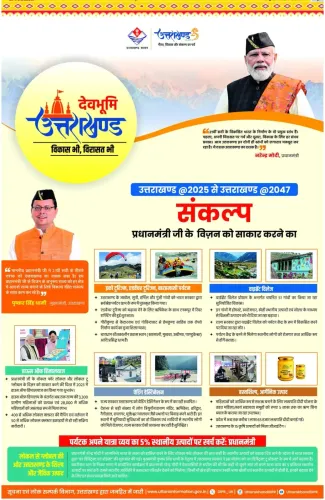
The Chief Minister's Office of Uttarakhand on Sunday, 7 June 2026, posted a message on X reaffirming the state government's dual commitment to infrastructure-led growth and the preservation of Devbhoomi — the land of gods — as twin, inseparable goals.
The post, in Hindi, reads: 'Devbhoomi Uttarakhand: Vikas bhi, Virasat bhi' — translated as 'Uttarakhand, the Land of Gods: Development too, Heritage too.' The phrase is a concise articulation of the state government's long-standing governance philosophy: that economic and physical progress must not come at the cost of the region's religious, cultural and ecological identity.
Context
Uttarakhand, carved out of Uttar Pradesh in 2000, is formally nicknamed Devbhoomi — a Sanskrit term meaning 'Land of the Gods' — owing to its extraordinary density of Hindu pilgrimage sites. The state is home to the Char Dham circuit: Yamunotri, Gangotri, Kedarnath and Badrinath, which together draw millions of pilgrims and tourists each year. Managing the tension between surging visitor numbers and the fragility of Himalayan ecosystems has defined state policy since formation. The seven-word post, though brief, carries significant symbolic weight. It signals to pilgrims, investors, environmentalists and local communities alike that the government does not see growth and preservation as competing priorities.Policy Backdrop
The dual framing of development and heritage has concrete policy expression. The Char Dham all-weather road project, announced in 2016, sought to improve year-round connectivity to the four pilgrimage towns — a project that also attracted sustained scrutiny over its environmental footprint in a seismically sensitive, ecologically vulnerable mountain zone. The project became a reference point in national debates about balancing infrastructure ambition with ecological responsibility. Beyond roads, the state has pursued ropeway projects, eco-tourism corridors and heritage-conservation bylaws as instruments of this dual agenda. The consistent messaging from the Chief Minister's Office frames these not as trade-offs but as complementary investments — physical access that serves pilgrims while regulatory safeguards protect the sanctity and ecology of sacred landscapes.Stakeholders and Impact
Pilgrims and religious tourists are the most direct stakeholders: better infrastructure reduces travel hardship and improves safety on high-altitude routes. Local communities — including traders, hoteliers, priests and transport operators in towns like Kedarnath, Badrinath and Rishikesh — depend on visitor footfall for livelihoods and are acutely sensitive to any policy shift that could restrict access or alter the character of pilgrimage sites. Environmentalists and ecologists form a third constituency, watching closely to ensure that road-widening, ropeway construction and tourism infrastructure do not accelerate landslide risk or degrade the river catchments of the Ganga and Yamuna, both of which originate in Uttarakhand. The state's messaging is, in part, a response to this ongoing scrutiny.What's Next
The post does not announce a specific scheme, project or policy decision. It functions as a statement of governing intent — a reminder, issued publicly, of the framework within which the state government says it operates. Observers will watch for follow-through in the form of environmental clearances for pending infrastructure projects, new eco-tourism notifications and heritage-conservation bylaws that give the slogan operational meaning. For a Himalayan state that sits at the intersection of faith, ecology and development, the ability to hold both commitments simultaneously — 'Vikas bhi, Virasat bhi' — will be tested each time a new project is approved or a pilgrimage season breaks records.Point of View
Compressing a complex governance dilemma into a slogan that pre-empts criticism from both pro-development and pro-conservation constituencies. It reflects a broader pattern among Himalayan states — and indeed across India's pilgrimage-economy belt — of using dual-framing language to hold together coalitions of infrastructure advocates and cultural conservatives. The real test of this philosophy lies not in messaging but in the environmental clearances and project designs that follow. Sustained repetition of the 'development plus heritage' frame, without visible policy trade-offs, risks becoming a rhetorical shield rather than a governing principle.
NationPress
23 Oct 2026
Frequently Asked Questions
What does 'Devbhoomi' mean and why is Uttarakhand called that?
'Devbhoomi' is a Sanskrit term meaning 'Land of the Gods.' Uttarakhand is called Devbhoomi because it hosts an extraordinary concentration of Hindu pilgrimage sites, including the Char Dham circuit of Yamunotri, Gangotri, Kedarnath and Badrinath.
What is the Char Dham all-weather road project in Uttarakhand?
The Char Dham all-weather road project, announced in 2016, aims to provide year-round road connectivity to the four Char Dham pilgrimage towns in Uttarakhand. It has drawn attention for both its infrastructure benefits and its environmental impact in a sensitive Himalayan zone.
What did the Uttarakhand Chief Minister's Office post on 7 June 2026?
The Chief Minister's Office of Uttarakhand posted 'Devbhoomi Uttarakhand: Vikas bhi, Virasat bhi,' meaning 'Uttarakhand, the Land of Gods: Development too, Heritage too,' reaffirming the state's dual commitment to growth and heritage preservation.
How does Uttarakhand balance development and environmental protection?
Uttarakhand pursues infrastructure projects such as roads and ropeways to improve pilgrimage and tourism access while simultaneously implementing eco-tourism policies and heritage-conservation bylaws intended to protect the state's Himalayan ecology and religious character.
Who are the main stakeholders affected by Uttarakhand's development policies?
The main stakeholders include pilgrims and religious tourists who use Char Dham routes, local communities in pilgrimage towns dependent on visitor footfall, and environmentalists monitoring the impact of construction on Himalayan ecosystems and the Ganga and Yamuna river catchments.