CM Dhami Pushes Solar Self-Employment Scheme in Uttarakhand
Synopsis
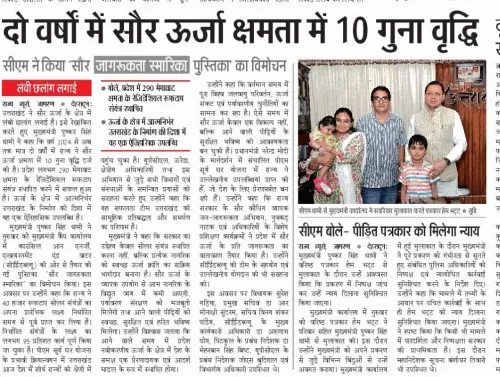
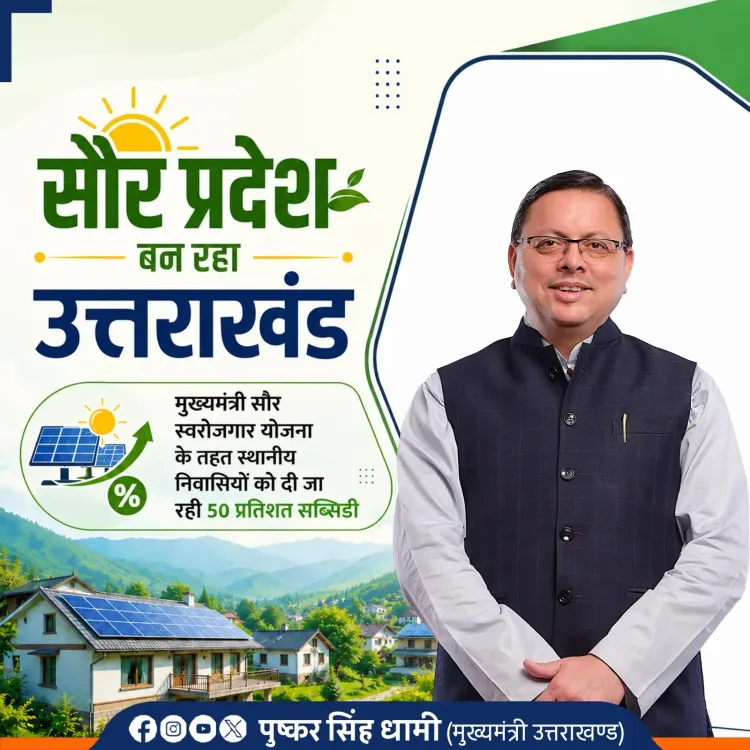
Uttarakhand CM Pushkar Singh Dhami on 24 May 2026 reaffirmed his government's push to make the state energy self-reliant, spotlighting the Mukhya Mantri Saur Swarozgar Yojana which offers local residents a 50 percent subsidy on solar installations to generate clean energy and local employment.
Key Takeaways
CM Pushkar Singh Dhami publicly reaffirmed the state's goal of making Uttarakhand a self-reliant, green energy state on 24 May 2026 .
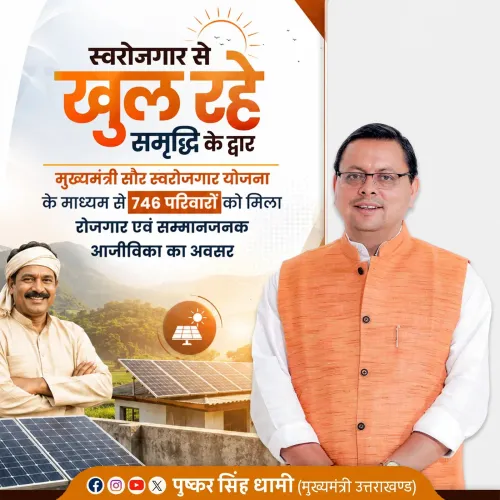
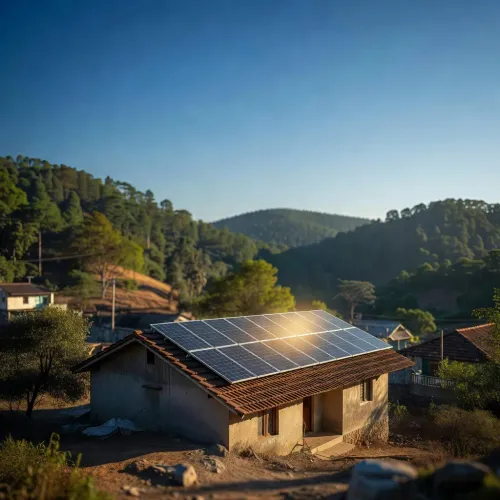
The Mukhya Mantri Saur Swarozgar Yojana , launched in 2021 , provides up to 50 percent subsidy on solar power plant installations for local residents.
The scheme targets rural youth and local residents , combining clean energy production with self-employment generation.
Uttarakhand is diversifying away from large hydro projects toward decentralised solar, driven partly by climate-related risks to river flows.
The initiative aligns with India's national renewable energy targets and international climate commitments.
Future milestones to watch include state budget expansions of renewable targets and quarterly data on solar capacity installed under the scheme.
Uttarakhand Chief Minister Pushkar Singh Dhami on Sunday, 24 May 2026, reaffirmed his government's commitment to making Uttarakhand energy self-reliant and green, highlighting the Mukhya Mantri Saur Swarozgar Yojana — a state scheme that offers local residents a 50 percent subsidy on solar power installations to promote both clean energy and self-employment.
Context
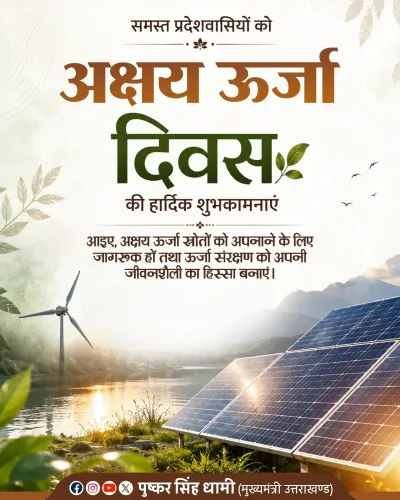
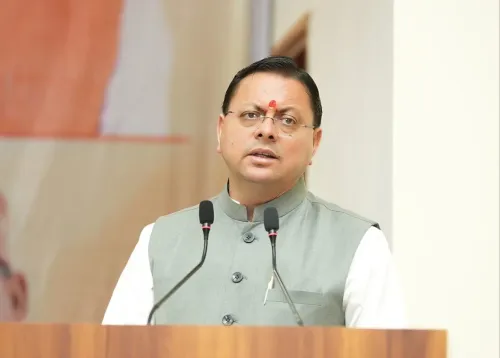
In his post, CM Dhami wrote: 'देवभूमि उत्तराखण्ड को ऊर्जा के क्षेत्र में आत्मनिर्भर और हरित प्रदेश बनाने की दिशा में हमारी सरकार निरंतर कार्य कर रही है' ['Our government is continuously working towards making Devbhoomi Uttarakhand self-reliant and green in the energy sector']. He described the initiative as not merely an energy programme, but a 'strong resolve for a clean environment, sustainable development, and a self-reliant Uttarakhand for future generations.'
The post signals a continued policy push by the BJP-led state government to anchor Uttarakhand's development narrative around renewable energy and local economic empowerment.
Policy Backdrop
The Mukhya Mantri Saur Swarozgar Yojana was launched in 2021 to enable residents — particularly rural youth — to set up solar power plants with up to 50 percent state subsidy, generating both electricity and income at the household level. The scheme is designed to decentralise energy production across the state's dispersed hill geography, where grid connectivity has historically been a challenge.
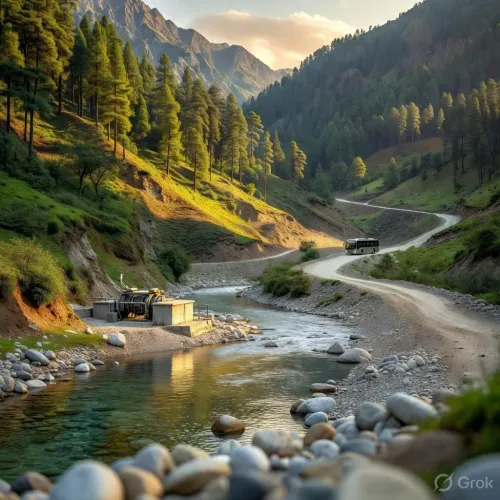
Uttarakhand, branded Devbhoomi (Land of the Gods), has long relied on large hydroelectric projects for power. However, increasing climate-related risks to river flows have pushed the state to diversify into solar and other renewables. This scheme represents a structural pivot toward distributed, community-level energy generation.
Stakeholders and Impact
The primary beneficiaries are local residents and rural youth across Uttarakhand, who gain both reduced electricity costs and a potential source of income by feeding surplus power into the grid. For a predominantly agrarian and tourism-dependent economy, the dual promise of energy security and self-employment carries significant weight.
The scheme also aligns with India's broader national renewable energy targets and its commitments under international climate frameworks. Decentralised solar models similar to this have been adopted in other Himalayan and hill states, but Uttarakhand's subsidy depth at 50 percent positions it among the more aggressive state-level interventions in the sector.
What's Next
Analysts and stakeholders will watch for state budget announcements that could expand renewable energy targets or integrate battery storage solutions to address intermittency in hill regions. Quarterly data on installed solar capacity and subsidy disbursal under the scheme will be key indicators of ground-level progress. CM Dhami's public restatement of the scheme's goals ahead of what is expected to be an active legislative session suggests the government intends to keep energy self-reliance at the centre of its governance pitch to voters.
Point of View
Timed to reinforce the BJP government's green-development credentials in a state where energy security and youth employment are perennial electoral concerns. By framing the solar subsidy programme as a multi-generational commitment rather than a transactional welfare measure, the government is attempting to elevate a state scheme into a broader ideological narrative of Aatmanirbhar Bharat at the sub-national level. The pivot from hydro-dependence to distributed solar also carries practical urgency: Himalayan hydrology is increasingly unpredictable, and Uttarakhand needs a resilient energy baseline. Whether the scheme's disbursal and installation numbers match the rhetorical ambition will determine how durable this political positioning proves to be.
NationPress
8 Oct 2026
Frequently Asked Questions
What is the Mukhya Mantri Saur Swarozgar Yojana in Uttarakhand?
The Mukhya Mantri Saur Swarozgar Yojana is an Uttarakhand state government scheme launched in 2021 that provides up to 50 percent subsidy to local residents for setting up solar power plants, with the dual aim of generating clean energy and creating self-employment opportunities.
Who is eligible for the solar subsidy under this Uttarakhand scheme?
Local residents of Uttarakhand, particularly rural youth, are the primary target beneficiaries of the Mukhya Mantri Saur Swarozgar Yojana's 50 percent solar installation subsidy.
Why is Uttarakhand focusing on solar energy instead of hydropower?
While Uttarakhand has traditionally relied on large hydroelectric projects, increasing climate-related risks to river flows have pushed the state to diversify into solar and other renewables for greater energy security.
What did CM Dhami say about Uttarakhand's energy goals?
CM Pushkar Singh Dhami stated that his government is continuously working to make Uttarakhand self-reliant and green in the energy sector, describing the solar scheme as a resolve for a clean environment and sustainable development for future generations.
How does Uttarakhand's solar scheme connect to India's national energy targets?
The Mukhya Mantri Saur Swarozgar Yojana supports India's broader national renewable energy goals by promoting decentralised solar generation at the community level, in line with the country's international climate commitments.