CM Dhami: Uttarakhand hits 40,000 rooftop solar target ahead of schedule
Synopsis
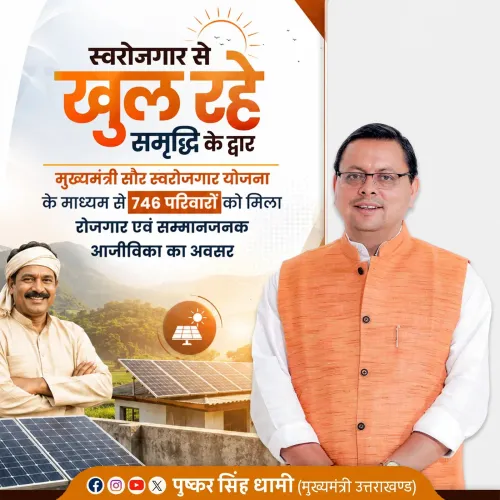
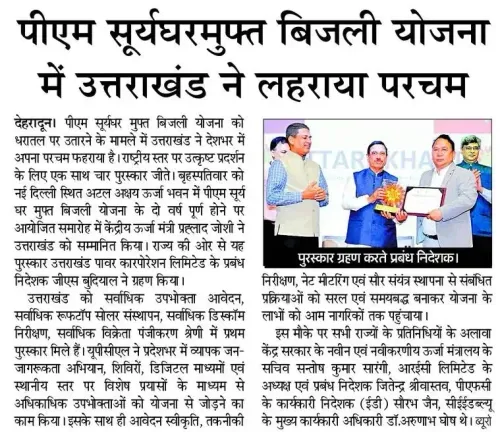
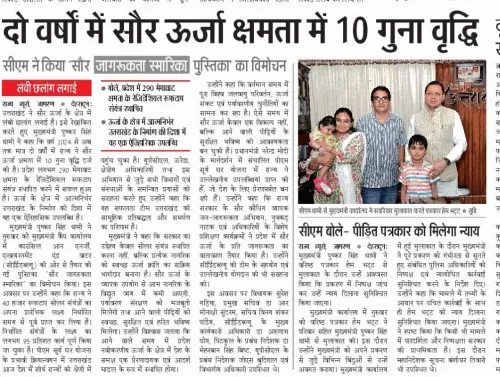
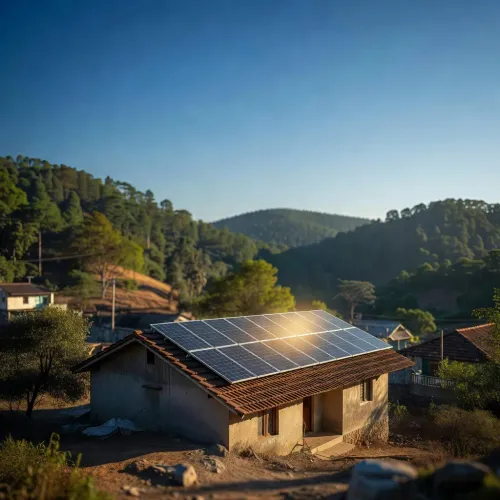
Uttarakhand has completed its initial target of 40,000 rooftop solar installations ahead of schedule, Chief Minister Pushkar Singh Dhami announced on 2 June 2026, marking a significant milestone in the state's renewable energy push under the central PM Surya Ghar Muft Bijli Yojana scheme.
Key Takeaways
Uttarakhand has achieved its initial target of 40,000 rooftop solar installations ahead of the set deadline, as announced on 2 June 2026 .
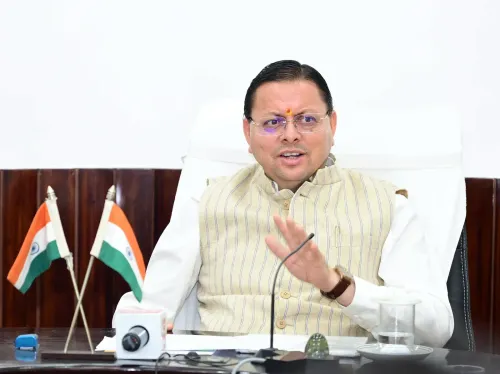
Chief Minister Pushkar Singh Dhami made the announcement via the official Chief Minister's Office account on X.
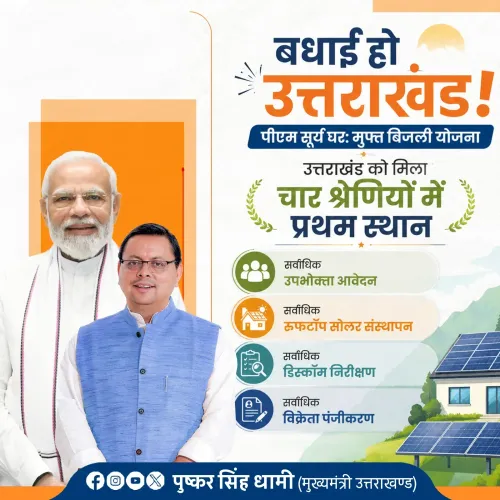
The achievement is linked to the PM Surya Ghar Muft Bijli Yojana , a central scheme launched in 2024 providing subsidies for household rooftop solar.
The state's rooftop solar push complements its existing hydropower infrastructure , diversifying the energy mix.
Primary beneficiaries are residential households across the state, with the broader renewable energy sector also gaining from sustained demand.
Focus now shifts to a potential revised, higher target beyond the initial 40,000 units and integration with hydropower projects.
The Chief Minister's Office of Uttarakhand announced on Tuesday, 2 June 2026, that the state has achieved its initial target of 40,000 rooftop solar installations ahead of the stipulated deadline, with Chief Minister Pushkar Singh Dhami personally highlighting the milestone.
Context
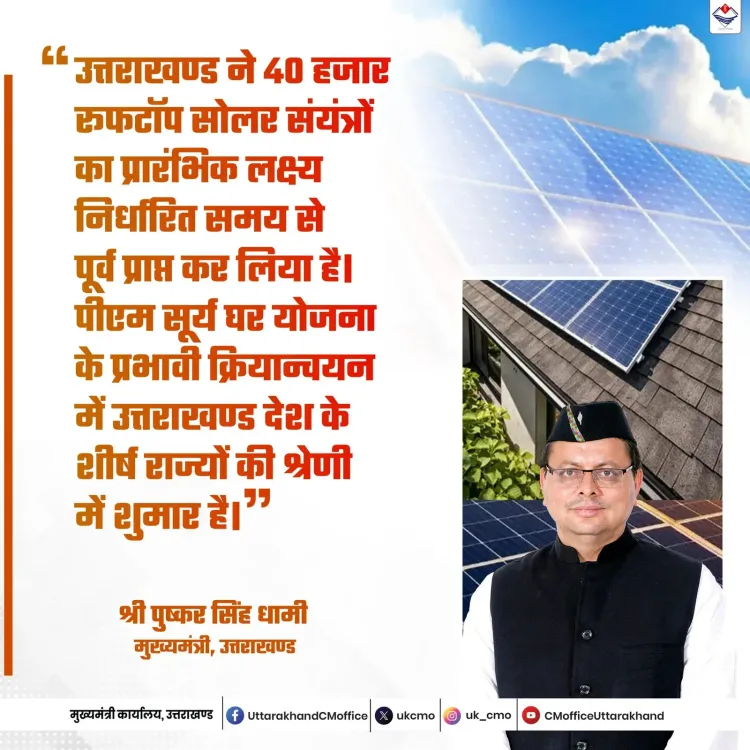
Quoting Chief Minister Pushkar Singh Dhami, the official post stated: 'Uttarakhand ne 40 hazaar rooftop solar sanyantraon ka prarambhik lakshya nirdhaarit samay se poorv prapt kar liya hai' ('Uttarakhand has achieved its initial target of 40,000 rooftop solar plants ahead of the set timeline'). The announcement signals that the Himalayan state has moved faster than its own schedule on distributed renewable energy, a benchmark that carries significance both for state energy policy and for national climate commitments.
Policy Backdrop
The achievement is closely linked to the PM Surya Ghar Muft Bijli Yojana, a central government scheme launched in 2024 that provides subsidies for household rooftop solar installations to expand decentralised renewable capacity across India. Before this scheme, the Ministry of New and Renewable Energy had already set state-wise rooftop solar targets under the National Solar Mission framework beginning in 2015, with targets revised upward in successive years. Uttarakhand, as a predominantly mountainous state, has worked to integrate rooftop solar into its broader energy mix alongside its substantial hydropower infrastructure.
India's federal framework has encouraged states to accelerate rooftop solar deployment to meet national renewable energy capacity goals and reduce peak electricity demand. Uttarakhand's early completion of the 40,000-unit target places it among states that have outpaced their own initial planning timelines under the central subsidy programme, a pattern seen across several Himalayan and plains states in recent years.
Stakeholders and Impact
The primary beneficiaries are residential households across Uttarakhand who have had rooftop solar panels installed, gaining access to reduced electricity bills and, in many cases, the ability to feed surplus power back to the grid. The renewable energy sector — including equipment suppliers, installers, and financing intermediaries — also stands to benefit from the state's demonstrated appetite for further expansion. For a state that hosts a significant portion of India's installed hydropower capacity, adding distributed solar generation diversifies the energy portfolio and reduces seasonal dependency on river flows.
The announcement by CM Dhami also carries political weight, reinforcing the state government's positioning on environment and sustainable development ahead of any future target revision or central review of scheme performance.
What's Next
Attention now turns to whether Uttarakhand will announce a revised, higher rooftop solar target beyond the initial 40,000 installations, and how the state plans to integrate this decentralised solar capacity with its existing hydropower projects. The central government's ongoing evaluation of PM Surya Ghar Muft Bijli Yojana performance across states may also prompt updated allocations or enhanced subsidies for early achievers. If Uttarakhand sets a bolder second-phase target, it could serve as a model for other hill states navigating the dual challenge of terrain-specific installation constraints and growing household energy demand.
Point of View
000 rooftop solar target is a tangible administrative win for CM Pushkar Singh Dhami, coming at a time when state governments are under pressure to demonstrate measurable climate action. The announcement fits into a broader national pattern where early-mover states leverage central subsidy schemes to build political capital around green governance. For a hill state where large-scale solar parks face terrain constraints, distributed rooftop solar represents a strategically sound path — and beating the deadline strengthens Uttarakhand's case for enhanced central allocations in the next phase. The real test will be whether the state can translate this momentum into a credible second-phase target backed by grid-integration and financing infrastructure.
NationPress
20 Oct 2026
Frequently Asked Questions
Has Uttarakhand achieved its rooftop solar target?
Yes. Uttarakhand has achieved its initial target of 40,000 rooftop solar installations ahead of the stipulated deadline, as announced by Chief Minister Pushkar Singh Dhami on 2 June 2026 .
What is the PM Surya Ghar Muft Bijli Yojana?
The PM Surya Ghar Muft Bijli Yojana is a central government scheme launched in 2024 that provides subsidies for household rooftop solar installations across India to expand decentralised renewable energy capacity.
What is Uttarakhand's rooftop solar target?
The initial rooftop solar target set for Uttarakhand was 40,000 installations , a goal the state has now completed ahead of schedule.
Who announced Uttarakhand's solar milestone?
Chief Minister Pushkar Singh Dhami announced the milestone through the official Chief Minister's Office of Uttarakhand on 2 June 2026 .
What comes next for Uttarakhand rooftop solar?
The state is expected to consider a revised, higher rooftop solar target beyond the initial 40,000 units , with potential integration of this distributed solar capacity with Uttarakhand's existing hydropower projects.