CM Dhami Links 746 Families to Solar Self-Employment in Uttarakhand
Synopsis
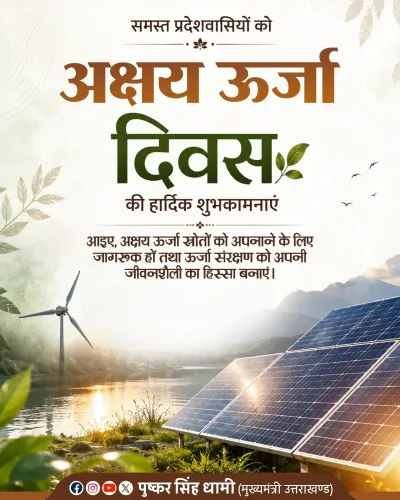
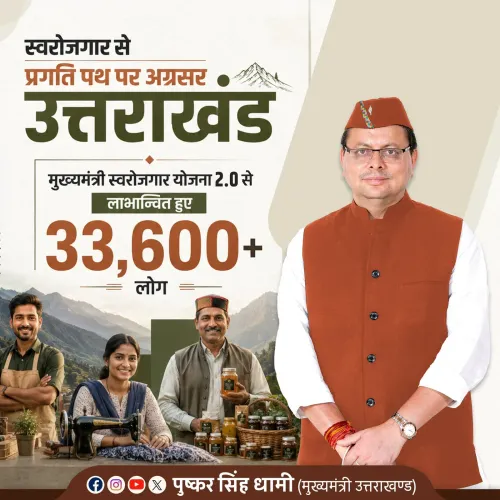
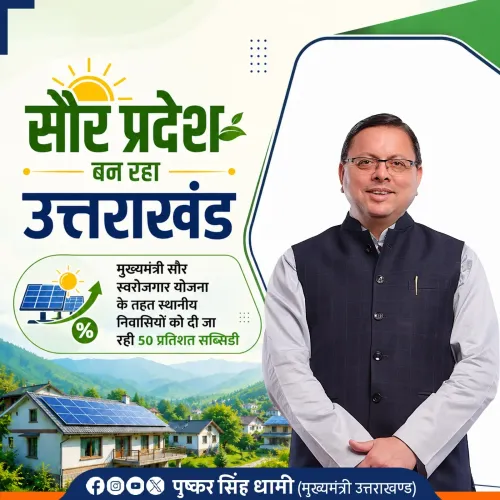
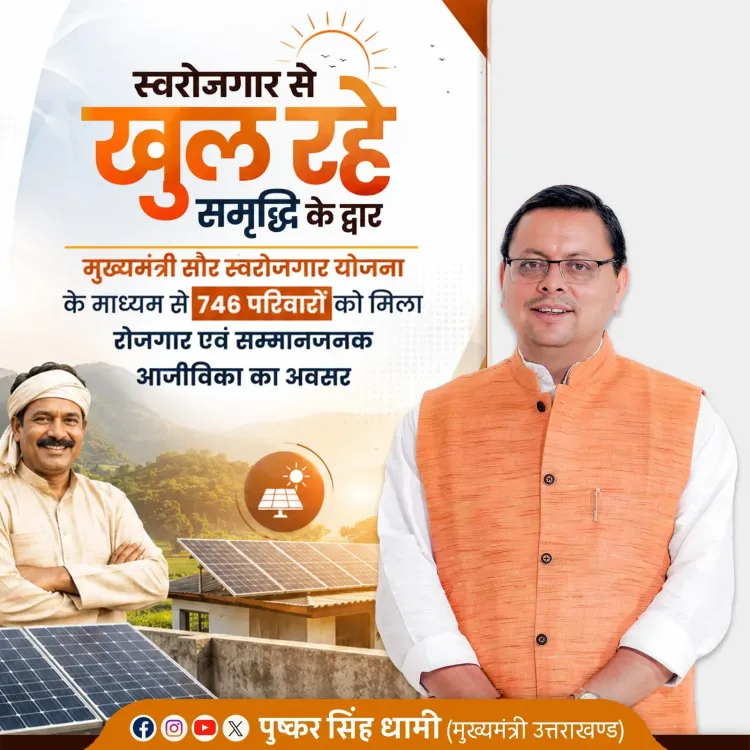
Uttarakhand CM Pushkar Singh Dhami announced on 2 August 2026 that the Mukhya Mantri Saur Swarozgar Yojana has brought 746 families into solar-based self-employment, linking green energy expansion with dignified rural livelihoods.
Key Takeaways
746 families in Uttarakhand have been connected to employment through the Mukhya Mantri Saur Swarozgar Yojana , according to CM Dhami.
The scheme provides solar energy installations as both an asset and an income stream, targeting rural and semi-urban beneficiaries.
Dhami framed the milestone as an expression of 'good governance' — delivering opportunity, dignity and self-confidence to citizens, not just policy documents.
The initiative advances Uttarakhand's green energy goals while addressing out-migration pressure in a hill state with limited agricultural land.
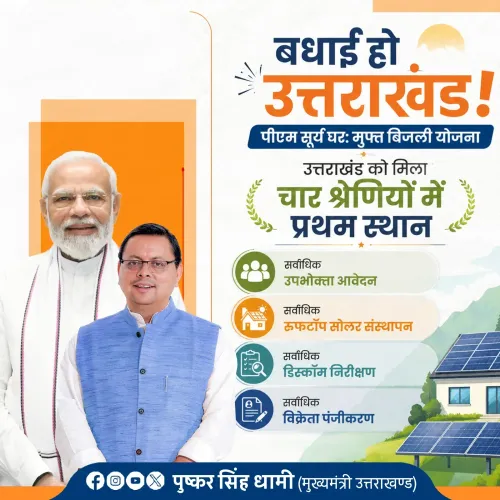
The scheme's philosophy aligns with the national Atmanirbhar Bharat agenda and may converge with central solar programmes such as PM Surya Ghar .
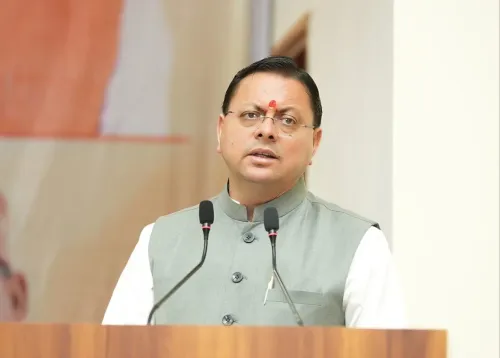
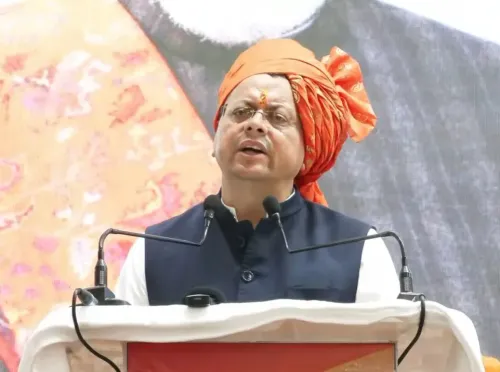
Solar panels on Himalayan hillsides, a steady income replacing seasonal uncertainty — that is the promise Uttarakhand Chief Minister Pushkar Singh Dhami says his government is delivering. On Sunday, 2 August 2026, Dhami took to X to announce that the state's Mukhya Mantri Saur Swarozgar Yojana has connected 746 families to employment and dignified livelihoods, framing the milestone as proof that good governance is about more than drafting plans.
Dhami wrote — 'सुशासन का वास्तविक उद्देश्य केवल योजनाएं बनाना नहीं बल्कि प्रत्येक नागरिक के जीवन में अवसर, सम्मान और आत्मविश्वास का संचार करना है' — 'The true purpose of good governance is not merely to create schemes, but to infuse opportunity, dignity and confidence into the life of every citizen.' The scheme, he added, is simultaneously advancing green energy and charting a new direction for self-reliance, prosperity and sustainable development across the state.
What the Saur Swarozgar Yojana Actually Does
The Mukhya Mantri Saur Swarozgar Yojana is an Uttarakhand state scheme that enables individuals — particularly in rural and semi-urban areas — to set up solar energy installations and earn a livelihood by supplying power to the grid or local consumers. It sits at the intersection of two policy imperatives: expanding renewable energy capacity and generating self-employment in a hill state where flat agricultural land is scarce and migration to the plains remains a persistent challenge.
The scheme's beneficiary model hands participants both an asset — a solar unit — and an income stream, rather than a one-time cash transfer. That structural choice is what Dhami's post leans into: the language of samman (dignity) and aatmavishwas (self-confidence) signals an intent to position the programme as an empowerment vehicle, not just an energy subsidy.
Green Energy as a Governance Argument
Uttarakhand's BJP government has consistently pitched sustainable development as a core identity — the state's Himalayan geography makes it both vulnerable to climate stress and naturally suited to solar and hydro generation. By tying an employment scheme directly to green energy output, the administration is making a dual claim: that it is hitting renewable targets while also keeping families in their home districts rather than pushing them toward urban migration.
The messaging aligns with the national Atmanirbhar Bharat framework and echoes the ambition of central programmes like PM Surya Ghar, which aims to bring rooftop solar to millions of households. Whether the state scheme will formally integrate with central solar pipelines — and unlock additional funding — is a question that upcoming assembly sessions and budget announcements are likely to answer.
Seven hundred and forty-six families is a concrete number in a state of roughly 10 million people. It is a start, not a finish line — and Dhami's post reads like a marker planted mid-journey, not a victory lap.
Point of View
Solar self-employment serves double duty: it feeds into the party's national Atmanirbhar Bharat narrative while addressing a state-specific anxiety about rural out-migration. The framing of dignity and self-confidence alongside green energy signals that the government is positioning welfare delivery as identity politics — citizens as entrepreneurs, not recipients. Watch for whether beneficiary numbers scale significantly before the next state election cycle, as that trajectory will determine whether this remains a talking point or becomes a signature programme.
NationPress
17 Sept 2026
Frequently Asked Questions
What is the Mukhya Mantri Saur Swarozgar Yojana in Uttarakhand?
It is an Uttarakhand state government scheme that provides individuals with solar energy installations to generate self-employment and a sustainable income, while also contributing to the state's renewable energy capacity.
How many families have benefited from the Saur Swarozgar Yojana?
According to CM Pushkar Singh Dhami's post on 2 August 2026, the scheme has connected 746 families to employment and dignified livelihoods.
What did CM Dhami say about the scheme on X?
Dhami said the true purpose of good governance is to infuse opportunity, dignity and confidence into every citizen's life, and cited the Saur Swarozgar Yojana as an example of that vision in action.
How does the Uttarakhand solar scheme relate to the central PM Surya Ghar programme?
Both target solar energy adoption at the household or community level and align with the Atmanirbhar Bharat framework, though any formal integration between the state scheme and PM Surya Ghar has not yet been announced.
Why is solar self-employment particularly significant for Uttarakhand?
Uttarakhand is a hill state with limited flat agricultural land and high out-migration pressure; solar self-employment schemes offer rural families an income source that keeps them in their home districts while advancing the state's green energy goals.