CM Dhami Pitches Skill Schemes as Uttarakhand's Youth Engine
Synopsis
CM Pushkar Singh Dhami on 1 August 2026 outlined Uttarakhand's layered youth employment strategy — combining the Mukhyamantri Swarozgar Yojana, Mukhyamantri Yuva Protsahan Yojana, DDU-GKY, and a growing startup ecosystem to build economic and technical self-reliance among the state's youth.
Key Takeaways
CM Pushkar Singh Dhami on 1 August 2026 outlined Uttarakhand's multi-scheme youth employment and skill development strategy.
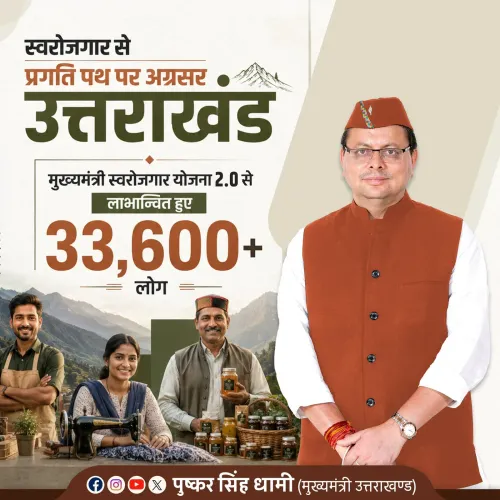
The Mukhyamantri Swarozgar Yojana offers financial support and training for youth-led ventures in Uttarakhand.
The Mukhyamantri Yuva Protsahan Yojana provides entrepreneurship incentives and skill support to young people in the state.
The Deen Dayal Upadhyay Gramin Kaushal Vikas Yojana , a central programme launched in 2014 , forms the rural skill backbone of this effort.
Dhami explicitly cited 'startup culture' as part of the push, signalling ambitions beyond subsistence self-employment.
Upcoming state budget announcements are expected to reveal beneficiary counts and fiscal allocations that will test these schemes' on-ground impact.
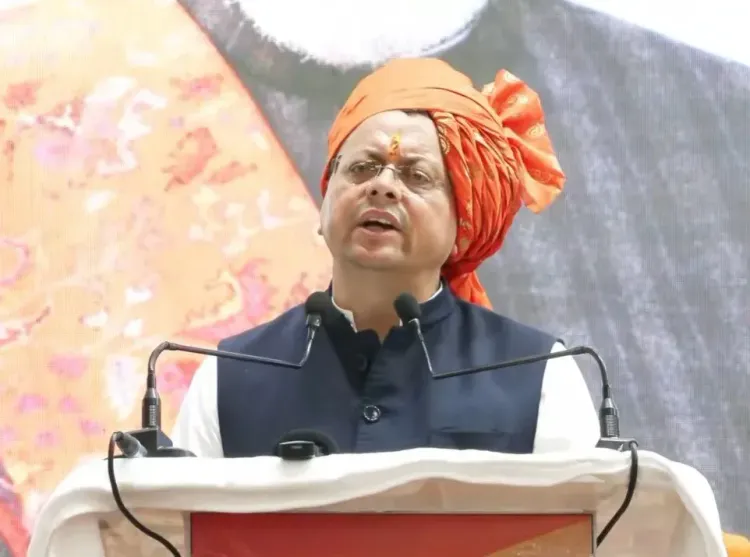
Uttarakhand is betting on a layered strategy of state-run employment schemes and a growing startup culture to keep its young population home — and working. Chief Minister Pushkar Singh Dhami, speaking on 1 August 2026, outlined the state government's multi-pronged push to make youth economically and technically self-reliant across Uttarakhand.
Quoting the Chief Minister directly, the Chief Minister's Office of Uttarakhand shared his words: 'From promoting startup culture in the state to the Mukhyamantri Swarozgar Yojana, Mukhyamantri Yuva Protsahan Yojana, and Deen Dayal Upadhyay Gramin Kaushal Vikas Yojana — we are not only giving youth world-class training, but also making them economically and technically self-reliant.'
Three Schemes, One Goal: Stop the Exodus
Uttarakhand's challenge is structural. A hilly, landlocked state with limited industrial base has long watched its young people migrate to the plains for work. The government's answer is a stack of schemes designed to create opportunity locally. The Mukhyamantri Swarozgar Yojana provides financial support and training to youth looking to start their own ventures. The Mukhyamantri Yuva Protsahan Yojana layers on top with entrepreneurship incentives and skill support. Together, they form the state's homegrown response to a decades-old problem.
DDU-GKY: The Central Backbone
Anchoring the rural end of this push is the Deen Dayal Upadhyay Gramin Kaushal Vikas Yojana (DDU-GKY), a Ministry of Rural Development programme launched nationally in 2014 to skill and place unemployed rural youth. Uttarakhand's adoption of DDU-GKY slots its state-level ambitions into the wider national Skill India framework that took shape from 2015 onward — giving it both central funding muscle and a broader training infrastructure.
Startups as the New Frontier
CM Dhami's explicit mention of 'startup culture' signals an ambition beyond subsistence self-employment. The state has been cultivating an entrepreneurship ecosystem alongside its traditional pillars of tourism and agriculture — a pattern increasingly common among smaller hill states trying to attract investment without the land or infrastructure advantages of larger plains states. World-class training, as Dhami frames it, is the bridge between these schemes and that aspiration.
The real test will come in the numbers: beneficiary counts, placement rates, and how many startups actually survive their first year. Those figures, expected to surface in upcoming state budget announcements and fiscal reviews, will determine whether this multi-scheme architecture delivers on its promise — or remains an ambitious blueprint waiting for proof.
Point of View
Positioning the government as forward-looking rather than merely welfare-driven. This mirrors a broader trend among BJP-governed hill states that are trying to fuse Skill India's national credibility with locally branded schemes. The real political dividend, however, will only materialise if verifiable beneficiary outcomes emerge before the next electoral cycle.
NationPress
15 Sept 2026
Frequently Asked Questions
What is the Mukhyamantri Swarozgar Yojana in Uttarakhand?
The Mukhyamantri Swarozgar Yojana is an Uttarakhand state scheme that provides financial support and training to youth who want to start their own business ventures, aimed at reducing unemployment and out-migration.
What is the Mukhyamantri Yuva Protsahan Yojana?
The Mukhyamantri Yuva Protsahan Yojana is a state scheme in Uttarakhand that encourages youth entrepreneurship through incentives and skill development support.
What is DDU-GKY and how does it apply to Uttarakhand?
The Deen Dayal Upadhyay Gramin Kaushal Vikas Yojana (DDU-GKY) is a central government rural skill development programme launched in 2014 that provides training and placement support to unemployed rural youth; Uttarakhand uses it as part of its broader youth employment strategy.
What is CM Pushkar Singh Dhami doing for youth employment in Uttarakhand?
CM Dhami is promoting a combination of state schemes — Mukhyamantri Swarozgar Yojana and Mukhyamantri Yuva Protsahan Yojana — alongside the central DDU-GKY programme and a push for startup culture to make Uttarakhand's youth economically and technically self-reliant.
Why does Uttarakhand focus so much on youth self-employment schemes?
Uttarakhand faces persistent youth out-migration due to limited industrial employment in the hilly state; self-employment and skill development schemes are designed to create local livelihood opportunities and retain the young workforce.