CM Dhami: Uttarakhand tops nation in PM Surya Ghar scheme
Synopsis
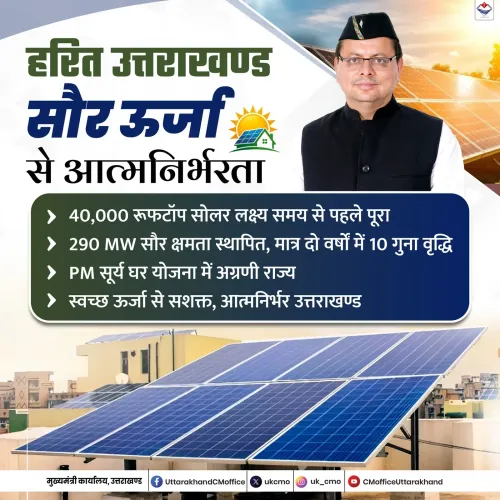
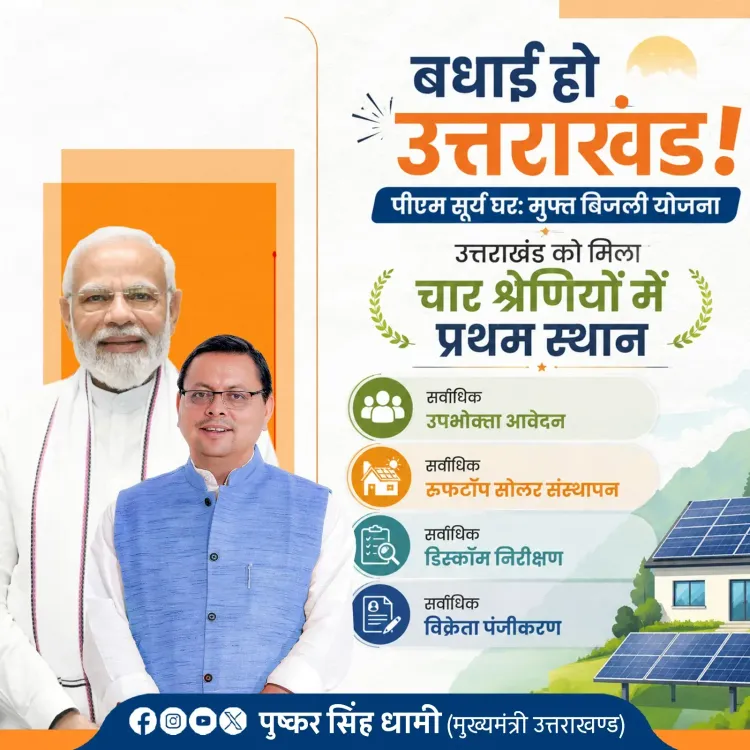
Uttarakhand Chief Minister Pushkar Singh Dhami announced on 6 June 2026 that the state has ranked first in the country across four categories under the PM Surya Ghar: Muft Bijli Yojana rooftop solar scheme, crediting PM Modi's leadership and the state's 'double engine government' for the achievement.
Key Takeaways
Uttarakhand has secured first position nationally in four categories under the PM Surya Ghar: Muft Bijli Yojana , according to Chief Minister Pushkar Singh Dhami .
The PM Surya Ghar: Muft Bijli Yojana was announced in the February 2024 Union Budget and provides up to 300 units of free monthly electricity to eligible households via rooftop solar.
Chief Minister Dhami attributed the ranking to the guidance of Prime Minister Narendra Modi and the performance of the state's 'double engine government.' The achievement aligns with India's national target of 500 GW non-fossil fuel capacity by 2030 and net-zero emissions by 2070 .
State-level implementation rankings under centrally sponsored schemes serve as key accountability and political communication tools for BJP-governed states.
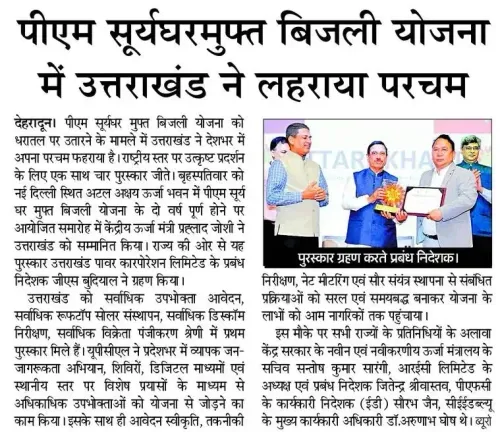
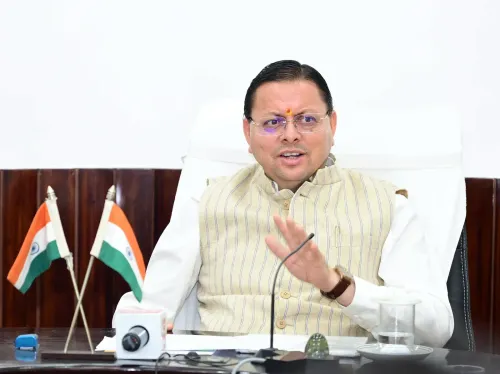
Uttarakhand Chief Minister Pushkar Singh Dhami on Saturday, 6 June 2026, announced that Uttarakhand has secured the first position in the country across four key categories under the PM Surya Ghar: Muft Bijli Yojana, the Centre's flagship rooftop solar scheme. Dhami attributed the achievement to the effective implementation of the scheme under the guidance of Prime Minister Narendra Modi.
Posting in Hindi on X, the Chief Minister wrote: 'पीएम सूर्य घर: मुफ्त बिजली योजना के प्रभावी क्रियान्वयन के परिणामस्वरूप उत्तराखंड ने चार महत्वपूर्ण श्रेणियों में देश में प्रथम स्थान प्राप्त किया है' — ('As a result of the effective implementation of PM Surya Ghar: Muft Bijli Yojana, Uttarakhand has secured first place in the country in four important categories.')
Context
The PM Surya Ghar: Muft Bijli Yojana was announced in the February 2024 Union Budget to accelerate rooftop solar adoption at the household level across India. The scheme provides eligible households with up to 300 units of free electricity per month, backed by central financial assistance. States are responsible for on-ground implementation, and their performance is tracked through a national dashboard that generates competitive rankings.
Uttarakhand, a Himalayan state with significant renewable energy potential, has been positioning itself as a leader in sustainable and green development under the current BJP government. Chief Minister Dhami framed the ranking as evidence of what he called the 'double engine government' — a term used by BJP to describe alignment between a BJP-ruled state and the BJP-led Centre — delivering on clean energy commitments.
Policy Backdrop
India's clean energy ambitions are anchored in a national target of 500 GW of non-fossil fuel power capacity by 2030 and net-zero emissions by 2070. Rooftop solar is a critical component of this roadmap, and the PM Surya Ghar scheme is among the most prominent instruments designed to drive household-level adoption at scale. The scheme builds on the foundation of the National Solar Mission, which was launched in 2010 to expand grid-connected solar capacity across the country.
Central schemes of this nature rely heavily on state machinery for last-mile delivery, making state-level execution a key determinant of national outcomes. Rankings produced by the central dashboard serve both as accountability tools and, frequently, as political communication opportunities for state governments that perform well.
Stakeholders and Impact
The primary beneficiaries of the scheme are households in Uttarakhand who gain access to subsidised or free electricity through rooftop solar installations, reducing their monthly energy expenditure. The renewable energy sector — including solar equipment manufacturers, installers, and distribution companies — also benefits from the expanded demand generated by the scheme's rollout.
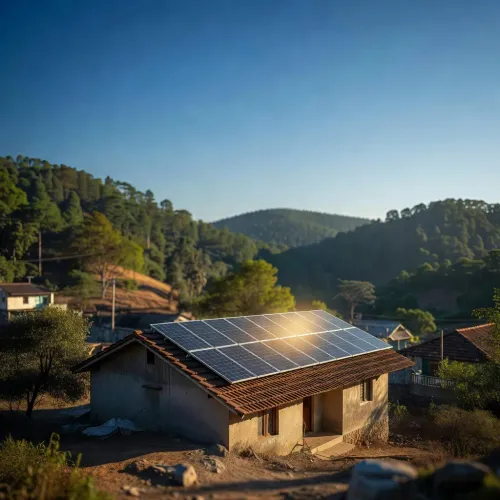
For Uttarakhand, a state with a predominantly hilly terrain, rooftop solar offers a decentralised energy solution that can reduce dependence on grid infrastructure in remote areas. A top national ranking across multiple categories signals strong administrative coordination between state agencies and central nodal bodies overseeing the scheme.
What's Next
Attention will now turn to the next quarterly update of the national PM Surya Ghar implementation dashboard, which will either consolidate or revise Uttarakhand's standing. Observers will also watch for any state budget announcements that expand solar subsidies, set new installation targets, or introduce complementary programmes to sustain the momentum. The broader test will be whether the state's top ranking translates into measurable, long-term gains in household energy access and renewable capacity addition across Uttarakhand's diverse geography.
Point of View
Where alignment between state and central leadership is presented as the driver of superior outcomes. The post is notable for its timing in June 2026, as India approaches the midpoint of its 2030 renewable energy targets, making state-level rankings politically and administratively significant. Uttarakhand's claim of four simultaneous top-category finishes — if borne out by the national dashboard — would represent a meaningful administrative achievement for a small Himalayan state competing against larger, more industrialised counterparts. The broader arc points toward increasing inter-state competition in clean energy delivery as a feature, not a side effect, of India's cooperative federalism model.
NationPress
21 Oct 2026
Frequently Asked Questions
What is PM Surya Ghar Muft Bijli Yojana?
The PM Surya Ghar: Muft Bijli Yojana is a central government scheme announced in the February 2024 Union Budget that installs rooftop solar panels on households and provides up to 300 units of free electricity per month through central financial assistance.
Why has Uttarakhand ranked first in PM Surya Ghar scheme?
Chief Minister Pushkar Singh Dhami credited effective state-level implementation, the 'double engine government' alignment with the Centre, and Prime Minister Narendra Modi's leadership for Uttarakhand securing first place in four categories of the scheme's national rankings.
What are the four categories in which Uttarakhand ranked first?
The specific four categories have been cited by Chief Minister Dhami in his post but have not been individually detailed in publicly available central government records as of this report; the rankings are tracked through the national PM Surya Ghar implementation dashboard.
What is the double engine government concept?
'Double engine government' is a term used by the BJP to describe states where both the state government and the central government are led by the BJP, arguing that political alignment leads to faster and more effective delivery of central schemes.
What is India's renewable energy target for 2030?
India has set a national target of 500 GW of non-fossil fuel electricity capacity by 2030 , with rooftop solar schemes like PM Surya Ghar: Muft Bijli Yojana forming a key part of the strategy to meet that goal.