105 US lawmakers urge FBI probe into Illinois Hindu temple attack as hate crime

Synopsis
A neo-Nazi suspect with a manifesto, a malfunctioning rifle, and a temple full of worshippers — including a US congressman. Now 105 bipartisan lawmakers are demanding the FBI treat the Aurora incident as a federal hate crime, backed by data showing a 240% surge in anti-South Asian hate posts online. The federal response could set a precedent for how the US government protects diaspora religious communities.
Key Takeaways
105 bipartisan US lawmakers have urged the FBI to investigate the alleged Aurora, Illinois Hindu temple attack as a federal hate crime.
Suspect Alexandros Paporakis , 19, allegedly drove to the Sri Venkateswara Swami (Balaji) Temple on 11 October 2026 with a rifle that malfunctioned; he was arrested the same day.
Paporakis, who reportedly identified as a neo-Nazi, allegedly prepared an eight-page white supremacist manifesto targeting people of Indian descent.
Investigators recovered a rifle, hundreds of rounds of ammunition , body armour, and white supremacist imagery.
A September 2026 study found more than 542,000 anti-South Asian hateful posts on X between January 2025 and June 2026 — a 240% rise in monthly volume.
The FBI has been asked to respond in writing by 29 October 2026 .
A bipartisan group of 105 US lawmakers has urged the Federal Bureau of Investigation (FBI) to investigate an alleged attempted mass shooting at a Hindu temple in Aurora, Illinois as a possible federal hate crime, warning that the incident reflects a broader pattern of rising threats against Indian-Americans and other South Asian communities. The congressional appeal, sent in a letter to FBI Director Kash Patel on 21 October 2026, represents one of the largest coordinated legislative responses to an anti-South Asian incident in recent US history.
What Happened at the Aurora Temple
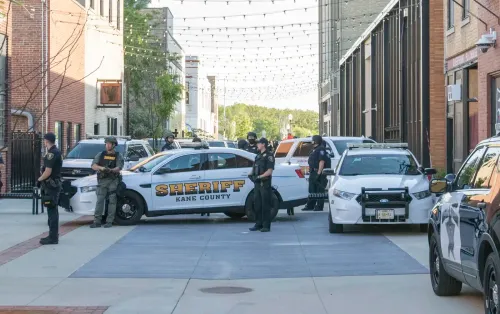
According to prosecutors, 19-year-old Alexandros Paporakis, a resident of Palatine, Illinois, drove to the Sri Venkateswara Swami (Balaji) Temple in Aurora on 11 October 2026 with the intent to carry out a shooting. His rifle reportedly malfunctioned, causing him to flee the scene. He was arrested later the same day after a coworker alerted police to his alleged plans to return.
Investigators recovered a rifle, hundreds of rounds of ammunition, body armour, and white supremacist imagery from the suspect. Prosecutors allege that Paporakis, who identified himself as a neo-Nazi, had prepared an eight-page white supremacist manifesto describing violence against people of Indian descent at a Hindu place of worship. He has been charged with making a terrorist threat and unlawful possession of weapons. The allegations have not been established in court.
Who Led the Congressional Push
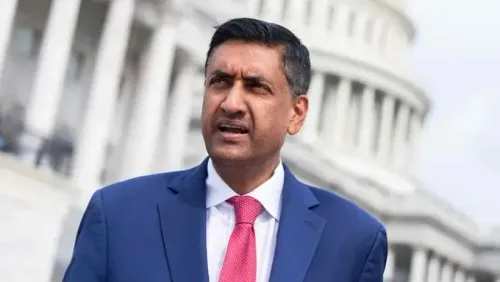
The bipartisan appeal was led by Indian-American Congressman Raja Krishnamoorthi, who was worshipping with his family at the temple when the alleged attack was attempted. The letter's signatories include all Indian-American members of Congress, the entire Illinois House Democratic delegation, and Senators Dick Durbin, Tammy Duckworth, Andy Kim, and Chris Van Hollen.
'The alleged combination of targeted racial hatred, a religious setting, and preparations for mass violence demands a comprehensive federal response,' the lawmakers wrote in their letter.
Growing Online Hostility Against South Asians
The letter also raised concerns about a documented rise in online hostility targeting South Asian communities. Citing a September 2026 study by the Center for the Study of Organized Hate, the lawmakers noted that more than 542,000 anti-South Asian hateful posts appeared on X between January 2025 and June 2026 — with monthly volume rising approximately 240 per cent between January 2024 and June 2026. A separate Carnegie Endowment survey found that 48 per cent of Indian-American respondents reported frequently encountering racist online posts targeting their community since the beginning of 2025.
Notably, this comes amid broader concerns about federal agency messaging. The lawmakers criticised a September Department of Homeland Security (DHS) post depicting a Sikh man with the caption, 'Get off our roads, you don't know how to drive Mr. Singh.' The post was subsequently removed following criticism; DHS maintained that it referred to a particular individual accused in a fatal traffic accident. The letter also cited a Department of Education post following complaints about South Asian spectators at a University of Texas football game. 'We believe such messaging risks lending governmental legitimacy to racial and religious stereotyping,' the lawmakers wrote.
What the Lawmakers Are Demanding
The congressional letter called for a comprehensive federal investigation into whether racial and religious hatred motivated the suspect, and whether others assisted in planning or encouraging the alleged attack. The lawmakers specifically asked the FBI to explain whether investigators were examining online communications linked to the alleged Aurora plot, the agency's capacity to identify credible threats, and how intelligence is shared with local authorities to protect vulnerable places of worship.
The letter requested a written response from the FBI by 29 October 2026, including clarification on whether the investigation was examining both racial and religious bias. The lawmakers acknowledged the FBI's reported assistance to local investigators thus far.
Broader Context and What Comes Next
Indian-Americans are among the largest Asian-origin communities in the United States, with significant populations in Illinois and beyond. Hindu temples, Sikh gurdwaras, and other religious institutions serve as vital centres of community life. 'No one should fear being targeted because of their ancestry, appearance, or faith, and no congregation should have to wonder whether gathering for worship will make its members targets of mass violence,' the lawmakers wrote.
The FBI's response — expected by 29 October — will be closely watched by civil rights groups and diaspora organisations as a signal of how seriously federal authorities treat hate-motivated threats against South Asian religious spaces.
Point of View
Yet the real accountability question is whether the FBI formally designates this a hate crime, which would unlock a different investigative and prosecutorial toolkit. The simultaneous criticism of federal agency posts that appeared to stereotype Sikhs and South Asians adds a layer of institutional contradiction that mainstream coverage has underplayed: the same government being asked to protect Indian-Americans has, critics argue, been contributing to the climate that emboldens attackers. That tension deserves as much scrutiny as the suspect's manifesto.
NationPress
21 Oct 2026
Frequently Asked Questions
What happened at the Hindu temple in Aurora, Illinois?
On 11 October 2026, 19-year-old Alexandros Paporakis allegedly drove to the Sri Venkateswara Swami (Balaji) Temple in Aurora, Illinois, intending to carry out a mass shooting. His rifle reportedly malfunctioned and he fled; he was arrested the same day after a coworker tipped off police. He has been charged with making a terrorist threat and unlawful possession of weapons, though the allegations have not been established in court.
Why are 105 US lawmakers writing to the FBI?
The lawmakers, led by Indian-American Congressman Raja Krishnamoorthi, are urging the FBI to investigate the incident as a possible federal hate crime, arguing that the alleged combination of racial hatred, a religious setting, and preparations for mass violence demands a comprehensive federal response. They are also seeking answers about online networks that may have supported or encouraged the alleged plot.
Who is the suspect and what evidence was found?
The suspect, Alexandros Paporakis of Palatine, Illinois, reportedly identified himself as a neo-Nazi and allegedly wrote an eight-page white supremacist manifesto targeting people of Indian descent. Investigators recovered a rifle, hundreds of rounds of ammunition, body armour, and white supremacist imagery, according to the congressional letter.
What does the data say about anti-South Asian hate in the US?
A September 2026 study by the Center for the Study of Organized Hate found more than 542,000 anti-South Asian hateful posts on X between January 2025 and June 2026, with monthly volume rising approximately 240% between January 2024 and June 2026. A separate Carnegie Endowment survey found that 48% of Indian-American respondents said they had frequently encountered racist online posts targeting their community since early 2025.
What is the FBI expected to do next?
The lawmakers have requested a written response from the FBI by 29 October 2026, including details on whether the investigation is examining both racial and religious bias, the agency's capacity to detect credible threats, and how it shares intelligence with local authorities to protect places of worship.